Deepfake Detection API Reasons why Businesses should use it to enhance security

Apr 28, 2026
7 min read
2 views
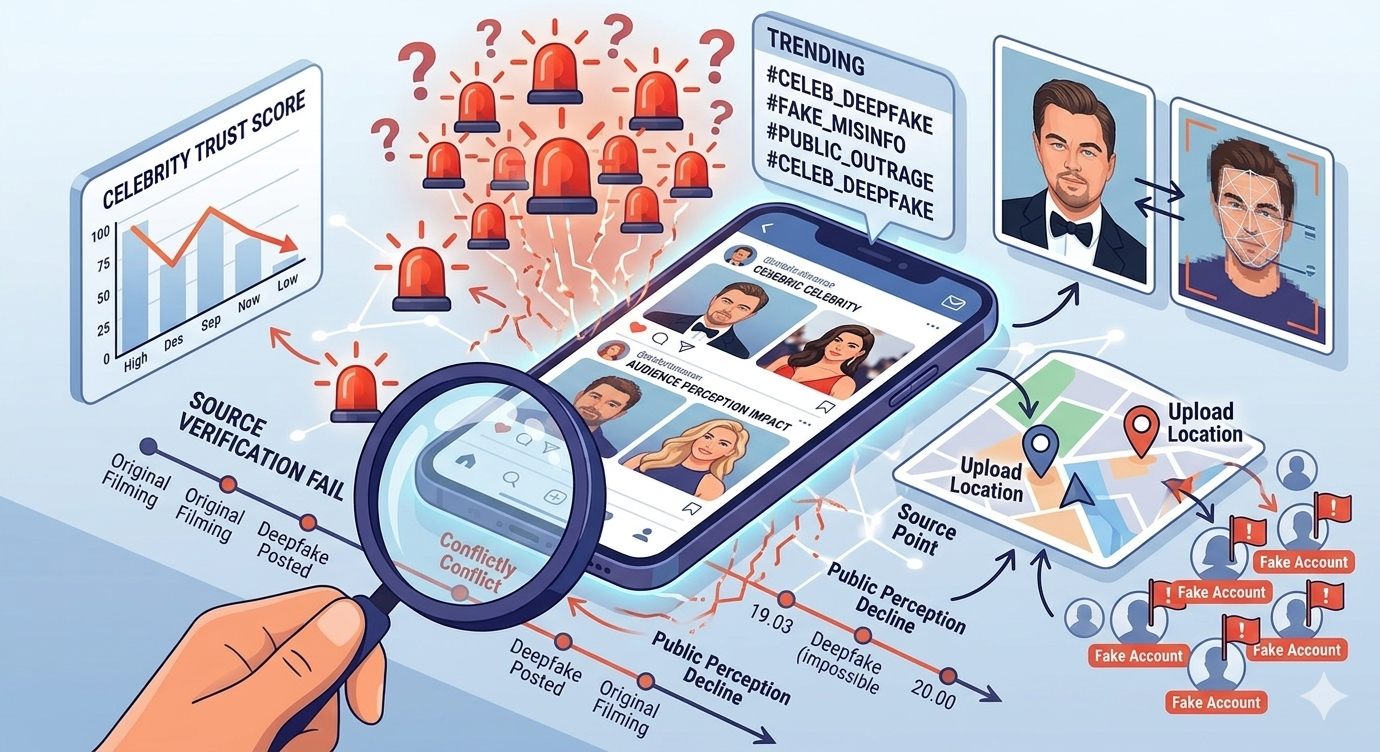
The modern, digital-first world places companies in more sophisticated, beyond the traditional hackers and phishing attacks, cyber-threats. Deepfake technology is one of the fastest-evolving threats based on artificial intelligence technology to reproduce high-quality, but absolutely fake audio, video, and images. These fake media files can be employed to impersonate executives, manipulate the customers, and misinformation at scale. A deepfake spotting API has become a vital component of the current cybersecurity system as this menace is advancing constantly.
A Deepfake Detection API allows companies to automatically scan online content in real-time and decide whether it was created or doctored. This functional deterrent is essential to the retention of trust, safeguarding of brand integrity, and safeguarding of online communication means.
Introduction to Deepfakes and the Danger it brings about
Deepfakes are generated with the help of the intensive machine learning tools, in particular, generative adversarial networks (GANs). They are developed on the basis of huge samples of actual images or videos, and then, these systems produce synthetic ones that precisely resemble actual human behaviours, facial expressions, and voices.
Although the technology has some legitimate applications in entertainment and media production, it is also potentially a serious security challenge. Deepfakes may be used by cybercriminals to deceive CEOs during a video call, fake interactions with the customer care services, or produce political misinformation.
This is becoming a danger of increasing proportions because it is extremely hard to differentiate genuine and fake content when individuals and organizations lack specialized resources, such as deepfake detection software.
What Is a Deepfake Detection API?
Deepfake detection API is an interface in the form of a software that enables the integration of the deepfake analysis features into the applications. Businesses have an opportunity to send images, videos, or audio files instead of scrutinizing the data manually to the API so that they can be analyzed automatically.
It then processes the input with machine learning models used to find anomalies in facial movement, audio patterns, light, and pixel-lift artifacts. It gives out an outcome that shows the possibility of the content being either real or synthetic. As compared to individual deepfake detectors, an API can be scaled and is created to be integrated, unlike those that are not, and should be used in an enterprise-level application that has large amounts of user data and requires each datum to be analysed in an approximately short period.
The reason why businesses are becoming more at risk
Present-day businesses exist within an extremely connected ecosystem with communication taking place through various digital platforms including video conference, social media, and messaging. This provides numerous points of access to attacks based on deepfakes.
A highly risky way of using AI in fraudulent activities involves CEO fraud, as an attacker creates the voice or video with the help of AI and pretends to be an executive and asks the employees to provide money or sensitive information. These attacks are very realistic and can circumvent the conventional security awareness training.
The customer trust is also threatened. False or falsified media or fake endorsements! This may hurt brand reputation, and mislead consumers. Even in the financial sector, medical care, and online shopping, a single instance of a deepfake may have far-reaching implications in the long run.
Application of Deepfake Detection Technologies in Cybersecurity
The technology of detecting deepfakes is crucial in preventing harmful synthetic media prior to its detection. The machines used to examine these systems examine minor discrepancies that are not readily noticeable by human vision.
To illustrate, deepfake videos can include irregular blinking, unnatural movements of the face, or disordered lighting within the frames. Inconsistencies of tone, pitch, or background noise, can be demonstrated in audio deepfakes.
Through the application of deepfake detection, companies will have a chance to screen overlaying information prior to it reaching a decision-maker or an end user. This goes a long way in curbing the chances of fraud and propagation of misinformation in the corporate world.
The Deepfake Detection API works by using the Concept-Shifting mechanism
Detection API A deepfake detection API can have a complex workflow:
The system is first fed with input data consisting of a video file, image or audio clip. This undergoes pre-processing in order to isolate some features or personality, such as facial landmarks, voice frequency, or frame consistency.
Then, the machine learning models will compare these features to the patterns that were trained on actual and fake datasets. The system analyses the availability of indicators of manipulation in the content.
Lastly, the API gives out a score or a classification finding that indicates the probability that the content is artificial or not. Applications can in turn use this output to generate alerts, block content or mark to be reviewed manually.
Value of Deepfake Detection Tools in Business Process
Although manually checking deepfake detection is widely employed, enterprises need automated operations due to the massive operations. APIs also enable them to build detections directly into their workflows, including video conferencing systems, identity theft, and content moderation workflows.
An example is that financial institutions can integrate these systems in remote onboarding where they can check video-based identity checks. They can also be used by media companies to authenticate user-generated content before being published. Video messages can also be scanned by corporate communication platforms to detect any form of manipulation. Organizations that lack these systems are susceptible to sophisticated social engineering attacks.
Ordinary Threats Supported with Deepfake Detection API
An API based on a deepfake detector prevents various forms of digital threats:
Impersonation fraud is one of the most prevalent in which attackers will pretend to be trusted persons using synthetic media. This may result in illegal transactions or theft of information.
Misinformation campaigns are another significant issue since they relate to the utilization of deep fakes to dispel fake stories about companies, products, or social personalities. Such campaigns are able to affect credibility and perception.
More and more voice cloning attacks become common. Here, the attackers duplicate the voice of the victim in an attempt to control the employees or customers on the phone or voice messages.
Deepfake detection will create a necessary line of defence by identifying these threats early.
Issues with Detecting Deepfakes
Nevertheless, in spite of the progress in deepfake detection technology, some challenges can still be observed. The development of deepfake generation technologies is one of the primary concerns which change very fast. The more sophisticated the models of detection, the more sophisticated the means of production of more realistic fake content. The other difficulty is the speed of processing. Live video calls cannot be done without real-time detection, and it would need considerable computing power to analyse high-quality media on time.
False positives and negatives are also a problem. Strictness in systems can lead to the detection of valid content being counted as fake and laxity in systems can result in deepfakes going undetected. Privacy is also an issue and it should be taken into account, particularly during the analysis of sensitive biometric or communications information.
The Future of deepfake detection in business security
The future of deepfake detector software is likely to be based on the use of more sophisticated artificial intelligence frameworks that can process multiple types of data at once, such as video, audio, and behavioural patterns. More advanced fraud detection systems will also be incorporated into communication systems, which will help detect fraud immediately in the course of live communication.
The other current trend is deepfake detection in conjunction with blockchain verification systems to block content. Due to the constant development of the threat posed by deepfakes, automated and scalable solutions such as APIs will be increasingly employed by businesses to keep the security and credibility of the communications online.
Conclusion
The phenomenon of a deepfake detector is no longer a convenient security addition, but rather a prerequisite of contemporary business running in the digital sphere. As the AIs become more common, the organizations are increasingly threatened by impersonation, misinformation, and fraud.
Using deepfake detection, deepfake detection software, deepfake detection tools and the latest deepfake detection technology, businesses can safeguard themselves against continually changing cyber threats as well as safeguard their reputation in regards to their digital interactions.
Comments
Rosie Anna is a compliance writer specializing in Anti-Money Laundering, KYC, and fraud-prevention frameworks.