How Is AI Transforming Food Delivery App Development in 2026?

May 06, 2026
6 min read
9 views
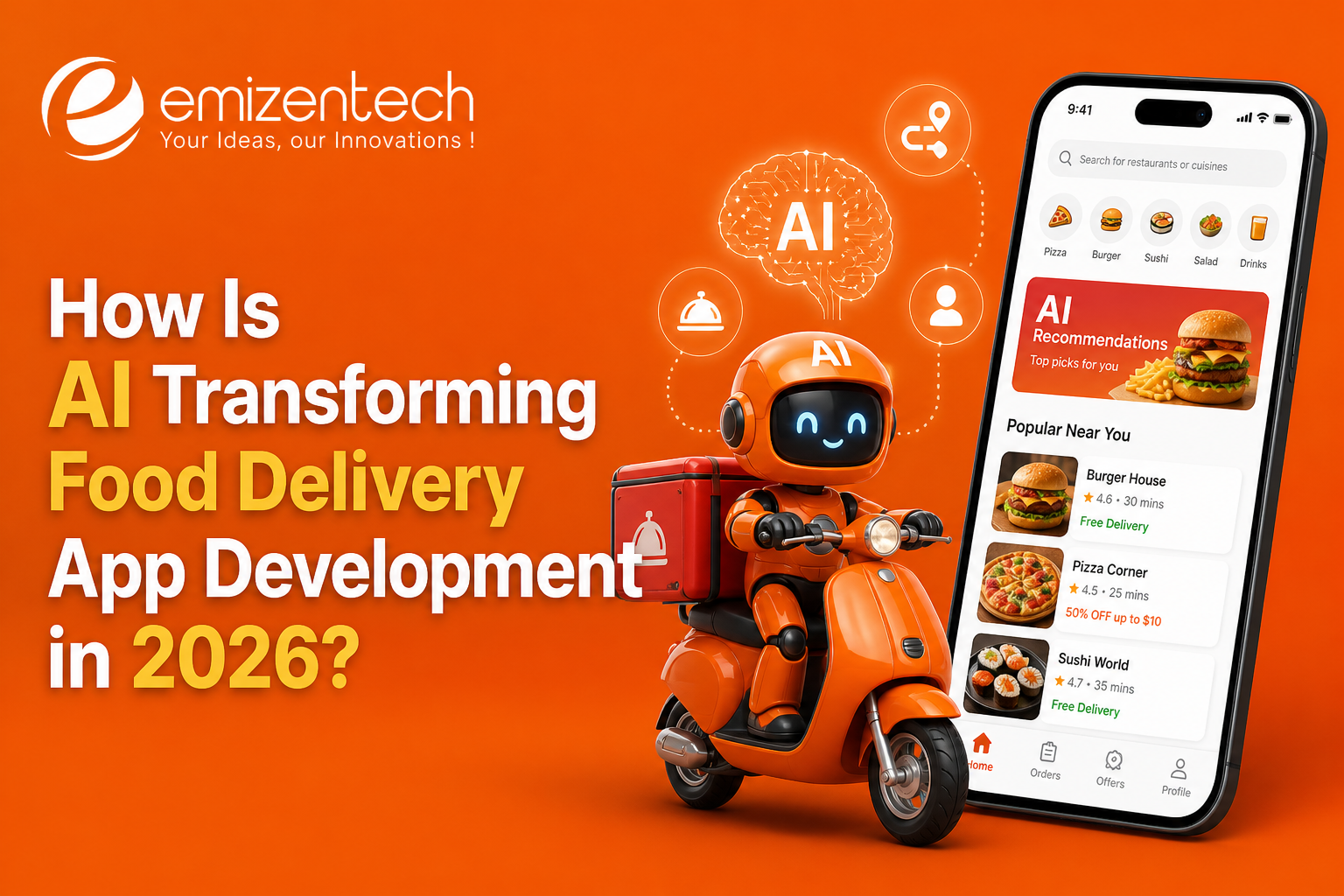
The food delivery industry has witnessed rapid growth over the past few years, driven by changing consumer behavior, urban lifestyles, and digital convenience. In 2026, this evolution is being accelerated further by Artificial Intelligence (AI), which is reshaping how food delivery platforms operate, interact with customers, and optimize logistics.
From personalized recommendations to intelligent route optimization, AI is no longer a futuristic concept; it is a core component of modern applications. Businesses are now actively partnering with a food delivery app development company to integrate AI-driven features that enhance user experience and streamline operations.
This blog explores how AI is transforming food delivery app development in 2026, the benefits it brings, the technologies involved, and what businesses should consider when building AI-powered solutions.
The Rise of AI in Food Delivery Apps
AI adoption in food delivery apps has grown significantly due to the increasing demand for faster, smarter, and more personalized services. Companies are leveraging AI to analyze customer behavior, predict demand, and automate decision-making processes.
Modern food delivery platforms are now equipped with machine learning algorithms that can study user preferences, order history, and browsing patterns. This allows apps to offer tailored recommendations, improving customer engagement and retention.
AI is also transforming backend operations. Delivery route optimization, real-time tracking, and demand forecasting help businesses reduce operational costs while improving efficiency. As competition intensifies, adopting AI has become a strategic necessity rather than an optional upgrade.
Why Are Businesses Adopting AI in Food Delivery App Development?
Businesses are increasingly investing in AI to stay competitive in a crowded market. One of the main reasons is the growing expectation of users for faster delivery and personalized experiences, which is why many brands are turning to a reliable food delivery app development company for advanced solutions.
AI enables automation, which reduces manual effort and minimizes human errors. For example, intelligent chatbots can handle customer queries instantly, while predictive analytics can forecast peak hours and optimize staffing.
Another key reason is scalability. AI-powered systems can handle large volumes of data and transactions without compromising performance. This is especially important for businesses planning to expand across multiple cities or regions.
Collaborating with an experienced development partner ensures that AI is implemented effectively, aligning with business goals and customer expectations.
Key Benefits of AI in Food Delivery Apps
AI brings a wide range of benefits that significantly enhance both user experience and business performance.
1. Personalized User Experience
AI analyzes user behavior to offer personalized food recommendations, discounts, and promotions. This increases customer satisfaction and encourages repeat orders.
2. Smart Order Predictions
Machine learning algorithms can predict what users are likely to order based on past behavior. This helps in improving order accuracy and reducing decision time.
3. Efficient Delivery Management
AI-powered route optimization ensures faster deliveries by analyzing traffic conditions and selecting the best routes in real time.
4. Chatbots & Virtual Assistants
AI-driven chatbots provide instant customer support, handling queries, complaints, and order tracking without human intervention.
5. Demand Forecasting
AI helps businesses predict demand during peak hours, festivals, or special events. This enables better resource planning and inventory management.
6. Fraud Detection & Security
AI systems can detect unusual activities and prevent fraudulent transactions, ensuring secure payments and data protection.
By leveraging these benefits, businesses can improve operational efficiency while delivering a superior customer experience.
Technology Stack for AI-Based Food Delivery Apps
Developing an AI-powered food delivery app requires a robust and scalable technology stack. The choice of technologies plays a crucial role in performance, security, and future scalability.
1. Frontend Technologies
Frameworks like React Native, Flutter, or Angular are commonly used to build responsive and user-friendly interfaces.
2. Backend Development
Node.js, Django, and Laravel are widely used for backend development, ensuring smooth data processing and API integration.
3. AI & Machine Learning Tools
Technologies such as TensorFlow, PyTorch, and OpenAI APIs are used to build intelligent features like recommendation engines and predictive analytics.
4. Cloud Infrastructure
Cloud platforms like AWS, Google Cloud, or Microsoft Azure provide scalability, storage, and high availability.
5. Database Management
Databases like MongoDB, PostgreSQL, and MySQL are used to store user data, orders, and transaction details.
6. Payment & Security Integration
Secure payment gateways and encryption technologies ensure safe transactions and data protection.
A reliable food delivery app development company will help businesses choose the right combination of technologies based on their requirements and budget.
Cost of Developing an AI-Powered Food Delivery App
The cost of developing an AI-based food delivery app varies depending on several factors such as features, complexity, and technology stack.
Here is a general cost estimate:
Basic AI-enabled app: $15,000 – $30,000
Mid-level app with advanced features: $30,000 – $70,000
High-end AI-powered platform: $70,000 – $150,000+
Basic apps may include features like user registration, order placement, and simple recommendations. Mid-level apps add functionalities such as chatbots, real-time tracking, and analytics dashboards. High-end platforms include advanced AI capabilities like predictive modeling, voice assistants, and automation systems.
The final cost also depends on the expertise of the food delivery app development company you choose, as experienced teams may charge more but deliver higher quality and scalability.
How to Choose the Right Food Delivery App Development Company?
Selecting the right development partner is critical for the success of your AI-powered app. Here are some important factors to consider:
1. Experience in AI Development
Ensure the company has experience in building AI-driven applications and understands machine learning models.
2. Strong Portfolio
Review previous projects to evaluate their design quality, technical capabilities, and industry expertise.
3. Technology Expertise
The company should be proficient in modern frameworks, AI tools, and cloud platforms.
4. Customization Capabilities
Choose a company that offers tailored solutions instead of one-size-fits-all products.
5. Transparent Pricing
Clear pricing structures help avoid hidden costs and ensure better budget management.
6. Post-Launch Support
Ongoing maintenance and updates are essential for keeping the app secure and up to date.
Partnering with a trusted food delivery app development company ensures that your app is built with the right strategy, technology, and scalability in mind.
Conclusion
AI is revolutionizing the food delivery industry by making applications smarter, faster, and more efficient. From personalized recommendations to intelligent delivery systems, AI-driven features are helping businesses enhance customer experience and optimize operations.
As competition continues to grow in 2026, integrating AI into your food delivery app is no longer optional; it is a necessity for staying ahead in the market. Businesses that invest in AI-powered solutions are better positioned to scale, innovate, and meet evolving customer expectations.
Choosing the right development partner plays a crucial role in this journey. Companies like EmizenTech are helping businesses leverage advanced technologies to build scalable and high-performance food delivery platforms that drive growth and success.
FAQs
1. How is AI used in food delivery apps?
AI is used for personalized recommendations, route optimization, chatbots, demand forecasting, and fraud detection.
2. How much does it cost to develop an AI-powered food delivery app?
Costs typically range from $15,000 to $150,000+, depending on features and complexity.
3. Can AI improve delivery speed?
Yes, AI optimizes delivery routes and reduces delays by analyzing real-time traffic and location data.
4. Are AI-based food delivery apps secure?
Yes, AI helps detect fraud and enhances data security through advanced monitoring systems.
5. How long does it take to build an AI-powered food delivery app?
Development time can range from 2 to 6 months, depending on the complexity of features.
Comments
I am Steve Jonas, a technical blogger at EmizenTech, a reputable software development company specializing in Magento 2 solutions and Salesforce development.