Carbon Nanotubes Production Cost Analysis Report by Procurement Resource

Jul 30, 2025
5 min read
0 views
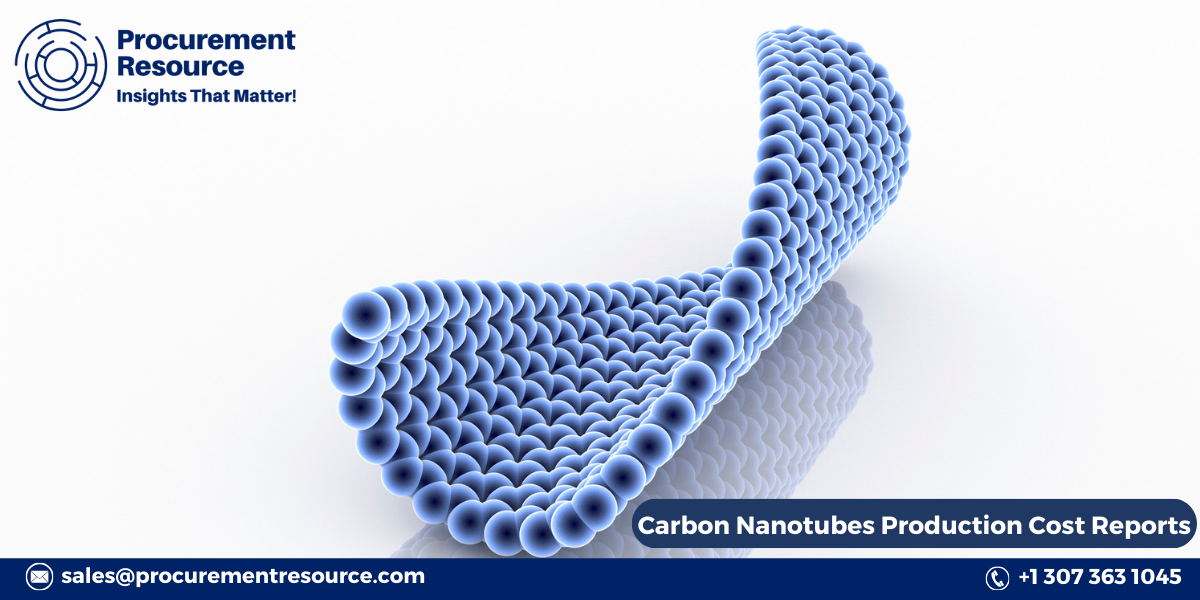
Procurement Resource, a global leader in market intelligence and procurement strategy, proudly presents its latest Carbon Nanotubes (CNTs) Production Cost Report. This comprehensive resource is designed to guide stakeholders—from innovative startups to established manufacturers and investors—through the intricacies of producing one of the most technologically advanced materials in the world today. The report offers a detailed breakdown of production costs, technological requirements, raw material dependencies, and economic feasibility, empowering decision-makers to make strategic and forward-looking investments in carbon nanomaterials.
Carbon Nanotubes: The Future of Advanced Materials
Carbon Nanotubes (CNTs) are cylindrical nanostructures made from rolled-up sheets of single-layer carbon atoms (graphene). With exceptional mechanical strength, electrical conductivity, thermal stability, and chemical resilience, CNTs have become a focal point for next-generation applications in:
Electronics and semiconductors
Aerospace and automotive materials
Medical devices and drug delivery
Energy storage (batteries and supercapacitors)
Conductive inks and coatings
Their diverse use across emerging and high-performance industries positions CNTs as a crucial material in advanced manufacturing and nanotechnology ecosystems. As global demand accelerates, understanding the cost dynamics of CNT production is vital for sustainable scaling and innovation.
Complete Cost and Market Evaluation for Strategic Decisions
Procurement Resource’s Carbon Nanotubes Production Cost Report delivers a full-spectrum view of production economics, from raw material sourcing and plant design to utility consumption and labor requirements. Businesses aiming to capitalize on nanotechnology innovations can use this report to plan efficient, scalable, and cost-effective CNT production setups.
Market Dynamics: Growth Trends and Regional Insights
The global CNT market is witnessing explosive growth, driven by breakthroughs in flexible electronics, lithium-ion batteries, and lightweight composite materials. The report identifies major demand hubs, including:
North America and Europe: Advanced research, clean energy applications, and electric vehicle markets.
Asia-Pacific: Large-scale electronics and nanomaterials production, with significant activity in China, Japan, and South Korea.
Middle East and Latin America: Emerging interest in high-performance materials and clean tech innovations.
The report provides demand projections, consumption trends, and regional supply chain dynamics that influence production planning.
Raw Material and Price Fluctuation Analysis
CNTs are typically synthesized from carbon-rich feedstocks such as:
Methane (CH₄)
Ethylene (C₂H₄)
Acetylene (C₂H₂)
Carbon monoxide (CO)
These gases undergo catalytic decomposition in a controlled environment to produce single-walled (SWCNTs) or multi-walled (MWCNTs) nanotubes. The report includes:
Historical and forecasted feedstock pricing (natural gas, petroleum derivatives)
Cost sensitivity analysis under raw material market volatility
Impact of purity requirements on overall feedstock efficiency
Production Process Overview and Technical Considerations
Step-by-Step Manufacturing Process
The report provides a detailed analysis of major commercial CNT production methods, including:
Chemical Vapor Deposition (CVD) – The most widely used method, where hydrocarbon gases are decomposed on metal catalysts (e.g., Fe, Ni, Co) at high temperatures.
Arc Discharge – An electric arc is struck between carbon electrodes in an inert atmosphere.
Laser Ablation – A high-power laser vaporizes graphite targets in a furnace.
The report outlines the pros and cons of each method in terms of cost, yield, scalability, and purity.
Technology and Equipment Requirements
To establish a CNT production facility, businesses must invest in specialized equipment, such as:
CVD reactors and furnaces
Gas supply and handling systems
Catalyst preparation and injection units
Purification and filtration systems (centrifuges, acid baths)
Quality testing equipment (Raman spectroscopy, TEM, SEM)
The report offers cost models for manual, semi-automated, and fully automated plants, accounting for batch and continuous operations.
Utility and Infrastructure Needs
CNT synthesis is energy-intensive and requires precise environmental control. The report includes specifications and cost estimates for:
Electricity and gas consumption
Cooling and ventilation systems
Gas purification and recovery units
Exhaust treatment and emissions control
Cleanroom and lab-grade working environments
Manpower and Regulatory Compliance
Running a CNT facility requires a specialized workforce, including:
Nanomaterials scientists and process engineers
Chemical handling and safety officers
Quality assurance and laboratory personnel
Plant operators and maintenance staff
Given the potential health and environmental risks of nanomaterials, the report covers international safety regulations such as:
OSHA guidelines
REACH compliance (EU)
NIOSH nanomaterial handling protocols
Environmental impact and waste management standards
Financial Evaluation and Cost Modeling
Capital Investment Breakdown
The report provides CapEx estimates tailored to plant size and technology type, covering:
Land and civil construction
Equipment procurement and installation
Licensing and certifications
Cleanroom setup and hazard mitigation
Investment models range from pilot plants to full-scale industrial manufacturing units.
Operating Cost Structure
Recurring operational costs are dissected in categories such as:
Raw material procurement and handling
Catalyst consumption and recovery
Energy, fuel, and gas usage
Waste treatment and byproduct management
Labor and safety training
Maintenance and quality control systems
Cost optimization strategies—such as catalyst reuse, feedstock substitution, and process automation—are also discussed.
Profitability Analysis and ROI Forecasts
The report models various profitability scenarios based on:
CNT type (SWCNTs vs. MWCNTs)
Application-specific market pricing (from $100 to over $1000 per gram)
Regional cost advantages
Investment amortization period
Break-even analysis, ROI forecasts, and sensitivity to global price trends are included to help businesses assess financial viability.
Sustainability and Technological Innovation
The CNT industry is evolving rapidly with a focus on green synthesis and scalable purification. The report explores:
Bio-based carbon feedstocks (e.g., agricultural waste)
Renewable energy integration in high-temperature processes
Innovations in low-emission catalyst systems
CNT recycling and lifecycle impact reduction
With pressure mounting for environmentally responsible nanomaterial manufacturing, companies investing early in sustainable CNT technologies stand to benefit from market differentiation and regulatory support.
Get a Free Sample of the Report
Whether you're developing nanotech products, scaling energy storage innovations, or launching a high-tech materials business, our Carbon Nanotubes Production Cost Report is an indispensable tool for operational planning and investment readiness.
Request Your Free Sample Report Today: https://www.procurementresource.com/production-cost-report-store/carbon-nanotubes/request-sample
Why Choose Procurement Resource?
With deep expertise in chemicals, nanotechnology, and production modeling, Procurement Resource is trusted by global enterprises for:
Accurate production cost benchmarking
Tailored market research reports
Supply chain and sourcing strategy insights
Real-time procurement data tools
Our analysts provide actionable intelligence that helps manufacturers reduce risks, optimize processes, and gain a competitive edge in complex sectors like carbon nanomaterials.
Contact Information
Company Name: Procurement Resource
Contact Person: Ashish Sharma (Sales Representative)
Email: [email protected]
Location: 30 North Gould Street, Sheridan, WY 82801, USA
Phone: UK: +44 7537171117 USA: +1 307 363 1045 APAC: +91 1203185500
Comments
Amit Sharma is a Senior SEO Executive at Procurement Resource, passionate about digital marketing, content writing, and SEO strategy. With a B.Sc. in IT.