Hydrochlorothiazide (Microzide) Production Cost Analysis Report by Procurement Resource

Jul 21, 2025
5 min read
0 views
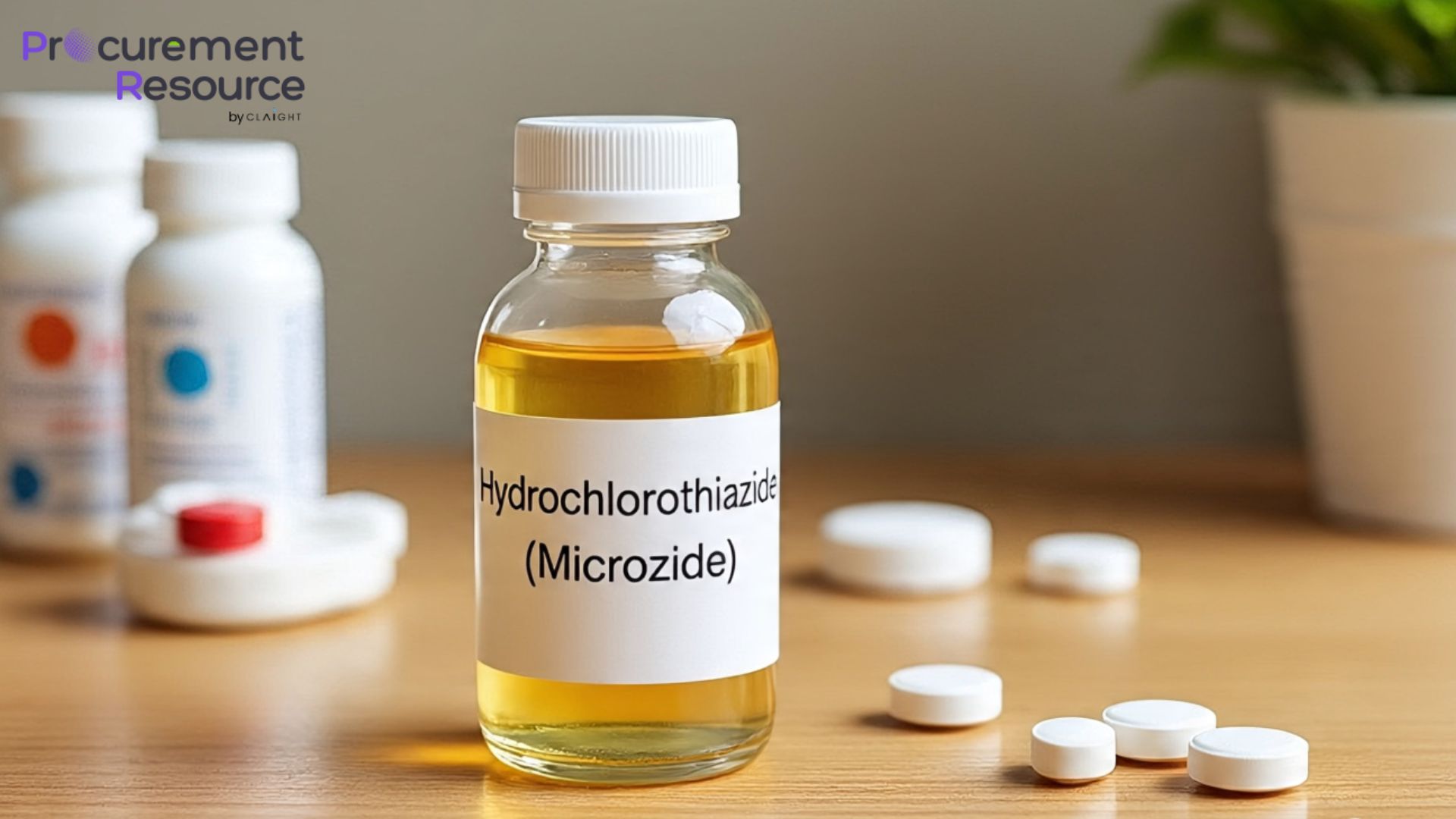
Procurement Resource, a global leader in procurement intelligence and market research solutions, is proud to present its latest Hydrochlorothiazide (Microzide) Production Cost Report. This exhaustive analysis is tailored to meet the strategic needs of pharmaceutical investors, manufacturers, and business stakeholders looking to enter or expand within the antihypertensive drug segment. The report provides a clear breakdown of the production costs, manufacturing processes, market dynamics, raw material requirements, and economic factors influencing Hydrochlorothiazide (HCTZ) production, enabling data-backed investment decisions.
Hydrochlorothiazide: An Essential Antihypertensive Drug
Hydrochlorothiazide, commonly sold under the brand name Microzide, is a widely prescribed thiazide diuretic used primarily for treating high blood pressure (hypertension) and fluid retention (edema) in patients with congestive heart failure, kidney disorders, or liver cirrhosis. Its mechanism of action involves reducing sodium reabsorption in the distal convoluted tubules of the kidneys, leading to increased urination and decreased blood volume.
As chronic conditions such as hypertension and cardiovascular diseases surge globally, the demand for effective and affordable antihypertensive agents like Hydrochlorothiazide continues to grow. Its inclusion in the WHO Model List of Essential Medicines further highlights its importance in public health, particularly in low- and middle-income countries.
Detailed Production Cost Breakdown for Strategic Planning
The Hydrochlorothiazide Production Cost Report by Procurement Resource offers a transparent and in-depth view into the economic feasibility of manufacturing this essential API (Active Pharmaceutical Ingredient). It includes granular insights into production costs, technical requirements, raw material sourcing, and scalability.
Market Analysis:
Global Market Trends and Demand Drivers
The report outlines the global Hydrochlorothiazide market trajectory, with growing demand in regions such as North America, Europe, Asia-Pacific, and Latin America, driven by rising hypertension prevalence, healthcare access, and cost-effective drug production in generic pharmaceutical markets.
Key market trends include:
Increasing generic drug adoption in emerging markets
Regulatory encouragement for affordable antihypertensive treatments
Consolidation in pharmaceutical supply chains impacting API pricing
Raw Material and Pricing Volatility
Hydrochlorothiazide production relies heavily on pharmaceutical-grade raw materials, intermediates, and reagents such as:
4-Amino-6-chlorobenzene-1,3-disulfonamide
Sulfonylurea derivatives
Cyclization agents and solvents
The report provides real-time insights into pricing trends and volatility of these inputs, examining the impact of supply disruptions, trade regulations, and pricing pressures from bulk manufacturing hubs like China and India.
Process and Technical Insights
Step-by-Step Production Method
The primary manufacturing pathway of Hydrochlorothiazide involves:
Synthesis of intermediates: Starting with a substituted benzene disulfonamide base compound, followed by chemical modification using sulfonylation or chlorination.
Cyclization: Introducing cyclization agents under controlled conditions to form the thiazide ring structure.
Purification and Crystallization: The final compound undergoes purification via recrystallization and filtration to meet pharmaceutical purity standards.
The report elaborates each stage of synthesis with reaction conditions, yields, and equipment needs, ensuring a full understanding of the process from lab scale to industrial scale.
Machinery and Technology Requirements
Depending on the plant capacity and level of automation, essential machinery includes:
Batch reactors
Condensers and vacuum pumps
Filtration units
Dryers (tray or rotary)
Crystallizers
GMP-grade containment and ventilation systems
Each equipment requirement is detailed with its function, capacity range, and operational cost estimation.
Infrastructure and Utility Needs
The setup of a Hydrochlorothiazide manufacturing facility entails:
GMP-certified cleanroom environments
Water purification systems (WFI – Water for Injection)
HVAC and dehumidification controls
Storage tanks for chemicals and solvents
Environmental compliance systems for effluent treatment
Utility consumption—especially electricity, purified water, and steam—is thoroughly analyzed to assist with infrastructure budgeting.
Human Resources and Quality Control
Manpower and Skill Requirements
Hydrochlorothiazide production demands skilled chemists, chemical engineers, and QA/QC specialists. The report offers a manpower matrix outlining roles and responsibilities, average salary bands, and training requirements for:
Production supervisors
Organic synthesis chemists
Lab analysts and microbiologists
Regulatory affairs and documentation personnel
Quality Assurance and Regulatory Compliance
Strict adherence to pharmaceutical quality standards is mandatory for API manufacturing. The report explores:
cGMP (current Good Manufacturing Practices) compliance
US FDA, EMA, and CDSCO regulatory pathways
Batch release testing: Assays, Impurity profile, Dissolution testing
Stability studies and shelf-life validation
Comprehensive documentation practices and validation protocols are discussed to ensure product approval in regulated markets.
Financial and Economic Evaluation
Capital Investment Estimations
The report breaks down fixed capital investment into:
Land acquisition and facility construction
Equipment and installation
Licenses and regulatory certifications
Cleanroom and HVAC infrastructure
Investment models are categorized for small-scale (less than 10 TPA), mid-scale (10–50 TPA), and large-scale (above 50 TPA) production plants.
Operating Cost Analysis
Day-to-day operational expenses are outlined, including:
Raw materials and reagent procurement
Energy and utilities
Labor costs
Solvent recovery and waste disposal
Quality control and packaging
The report provides cost-per-kilogram analysis of Hydrochlorothiazide based on plant capacity and geographical location.
Profitability, ROI, and Break-Even Analysis
Key financial metrics are included to support investment evaluation:
Gross profit margin and net ROI
Break-even volumes and selling price thresholds
Sensitivity analysis on raw material pricing
Payback period scenarios across scale models
Sustainability and Future Outlook
Hydrochlorothiazide manufacturing, while efficient, involves organic solvents and energy-intensive synthesis steps. The report discusses industry efforts to:
Reduce solvent waste and emissions through green chemistry
Implement closed-loop systems for solvent recovery
Adopt continuous manufacturing technologies to improve efficiency
Further, the increasing emphasis on eco-labeling, green API manufacturing, and compliance with European REACH and US EPA standards is expected to shape future investments.
Why Choose Procurement Resource?
Procurement Resource is known for delivering precise, actionable, and forward-looking intelligence for manufacturers, suppliers, and investors. Backed by a global team of analysts, the Hydrochlorothiazide Production Cost Report is one of the most comprehensive resources in the pharmaceutical production space.
Key Deliverables:
Step-by-step production economics
Customizable cost models
Market sizing and regulatory trends
Real-time procurement benchmarks
Procurement Resource’s advanced modeling and domain expertise ensure businesses can minimize risk, maximize returns, and align with global compliance standards.
Get Your Free Sample Today
For pharmaceutical entrepreneurs, generic manufacturers, or healthcare investors, this report offers an essential roadmap to building a profitable and compliant Hydrochlorothiazide production unit.
Request Your Free Sample Here: https://www.procurementresource.com/production-cost-report-store/hydrochlorothiazide/request-sample
Contact Information
Company: Procurement Resource
Contact: Ashish Sharma (Sales Representative)
Email: [email protected]
Location: 30 North Gould Street, Sheridan, WY 82801, USA
Phone: UK: +44 7537171117 USA: +1 307 363 1045 APAC: +91 1203185500
Connect With Us Online:
https://www.linkedin.com/company/procurement-resource-official/
Comments
Amit Sharma is a Senior SEO Executive at Procurement Resource, passionate about digital marketing, content writing, and SEO strategy. With a B.Sc. in IT.