Guavas Production Cost Analysis Report: Overview, Cost Breakdown, and Key Insights

Aug 04, 2025
5 min read
0 views
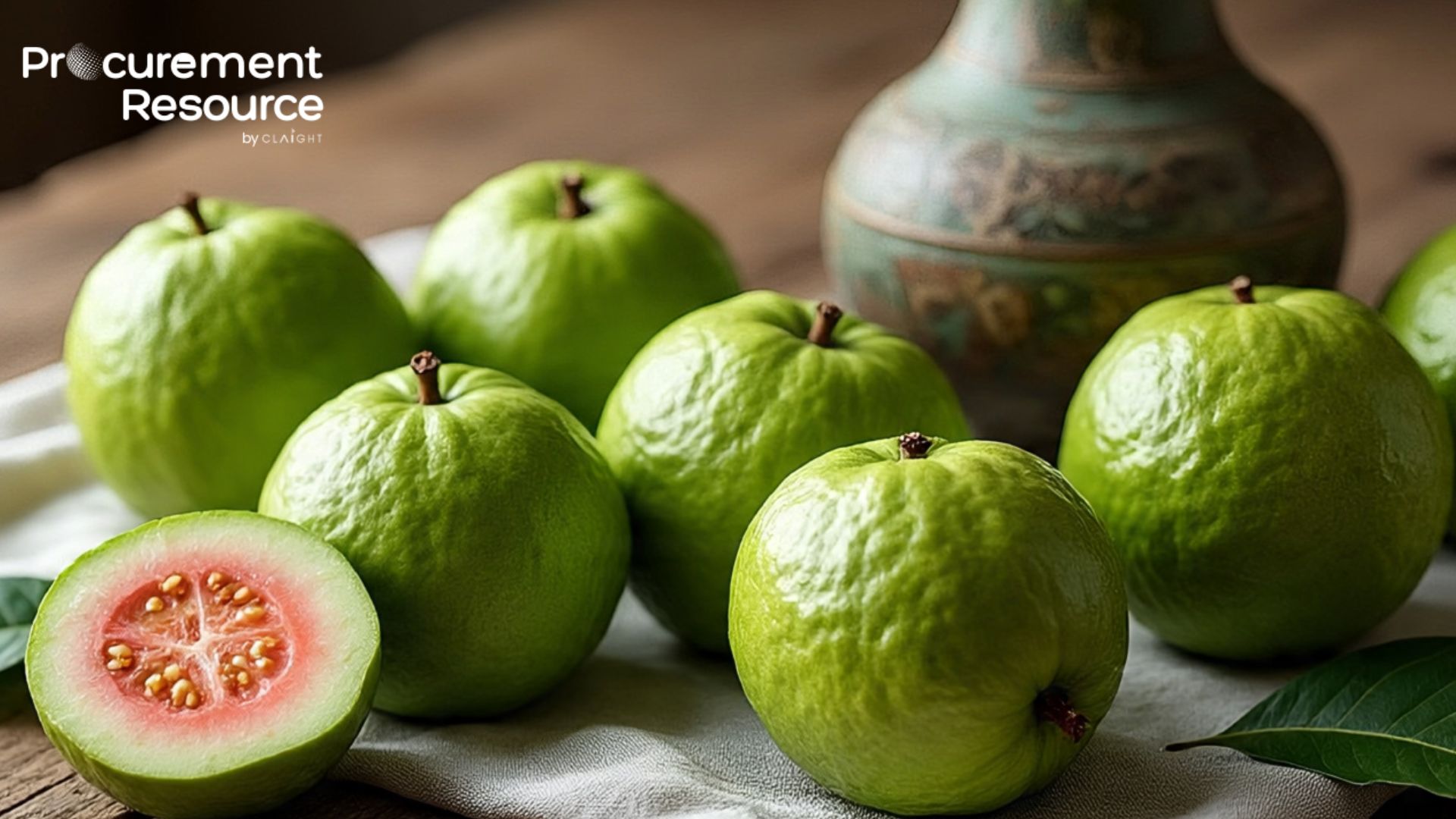
Guavas, known for their rich nutritional profile and unique flavor, are gaining increasing popularity in both fresh fruit markets and the food processing industry. From juices and jams to flavoring agents and cosmetic applications, guavas have become a versatile commodity with growing commercial significance. With increasing demand globally, understanding the Guavas Production Cost is critical for investors, manufacturers, farmers, and procurement managers aiming to optimize operations and evaluate profitability.
This detailed analysis dives deep into the comprehensive cost model for guava production, highlighting various aspects such as raw material sourcing, labor charges, utilities, logistics, supply chain dynamics, and pre-feasibility studies. Developed by Procurement Resource, the report serves as a strategic guide for stakeholders in the agricultural and food processing sectors.
Guavas Production Cost Analysis: An In-Depth Overview
The Guavas Production Cost Analysis Report provides a structured framework for understanding the economic aspects of guava cultivation and processing. The report details both upstream and downstream industry aspects, covering:
Cost Model and Process Flow
Pre-feasibility and Feasibility Assessments
Industrial and Market Trends
Raw Material Pricing
Utilities and Labor Costs
Transportation and Distribution Logistics
Supply Chain Management
Product Specifications and Use Cases
With data-backed insights and segment-wise analysis, this report allows industry players to benchmark their cost structures and assess areas for operational optimization.
Cost Model: Component-wise Breakdown
Understanding the cost model is pivotal to estimating and managing the production costs associated with guavas. The cost model is broken into the following primary components:
1. Raw Materials
Guava production starts with high-quality planting materials. Essential raw materials include:
Guava saplings or seeds (based on the propagation method)
Organic/inorganic fertilizers
Pesticides and growth regulators
Water for irrigation
Soil conditioners
The choice of guava variety, such as Allahabad Safeda, L-49, or Pink Guava, can also significantly influence the raw material cost and subsequent yield per hectare.
2. Labor Charges
Labor plays a vital role in guava production—from land preparation and planting to pruning, harvesting, and post-harvest handling. Labor costs include:
Land preparation and planting
Manual irrigation and fertilization
Pest and disease management
Fruit picking and sorting
Packaging
Labor charges vary by geography, availability, and seasonality. In developing regions, manual labor is relatively cost-effective, whereas mechanized operations in industrial farms can increase capital costs but reduce recurring labor expenses.
3. Utilities
Utilities represent the operational overheads and may include:
Water and power for irrigation systems
Fuel or electricity for processing units (if guavas are processed into pulp or puree)
Cooling and storage facilities
Power for packaging and sealing machines
Efficient energy use and water management can significantly impact production costs.
4. Logistics and Supply Chain
Transportation and supply chain logistics encompass:
Farm-to-market transportation
Cold chain infrastructure (if required)
Packaging materials
Distribution and warehousing
Perishable products like guavas require quick and well-coordinated supply chain systems to maintain freshness and market value.
5. Manufacturing Process (For Processed Guava Products)
If guavas are processed into derivatives like puree, nectar, jam, or dried slices, the manufacturing process involves:
Washing and sorting
De-seeding and pulping
Pasteurization
Packaging and labeling
This additional layer of production introduces machinery and operational costs, thus altering the overall cost structure.
Pre-feasibility and Industrial Trends
Before investing in guava production, stakeholders must conduct a pre-feasibility study, analyzing land suitability, climate compatibility, water availability, and market proximity.
Industrial trends show a rising demand for organic guavas and value-added guava products, especially in regions like North America, Europe, and Southeast Asia. The global inclination towards health-conscious eating habits is encouraging investments in guava-based superfoods, juices, and wellness products.
Production Cost Processes with Cost Analysis
The Guavas Production Cost structure typically follows this step-by-step process:
Land Preparation – Involves clearing, tilling, and preparing soil.
Propagation and Planting – Using seeds or grafted saplings.
Cultivation and Care – Regular irrigation, pruning, and fertilization.
Pest and Disease Management – Application of biopesticides or chemical treatments.
Harvesting – Manual or semi-mechanical fruit picking.
Post-harvest Handling – Grading, washing, and packaging.
Each of these processes incurs specific costs that vary based on scale, location, and technological adoption.
Product Details and Use Cases
Guavas are consumed both as a table fruit and as an ingredient in a range of processed goods, including:
Guava Juice and Nectar
Guava Pulp and Puree
Dried Guava Slices
Guava Jelly, Jam, and Confectioneries
Functional Foods and Nutraceuticals
Cosmetics and Personal Care Products (due to antioxidant properties)
These diverse applications influence demand and therefore impact production planning and cost structuring.
Key Insights from the Guavas Production Cost Analysis Report
The cost of cultivation is heavily impacted by location-based factors such as soil quality, climate, and labor availability.
Integrated pest and nutrient management practices can reduce chemical input costs and improve yield.
Mechanization and drip irrigation systems can raise initial investment but offer better cost-efficiency in the long term.
Access to cold chain logistics and packaging increases the marketability of fresh and processed guavas.
The report also highlights real-time pricing trends, future cost forecasts, and regional comparisons, enabling strategic decision-making for procurement and production teams.
Request a Free Sample
Want to explore the Guavas Production Cost structure in more detail?
Request a free sample of the Guavas Production Cost Analysis Report here and gain insights into raw material pricing, industrial benchmarks, and feasibility metrics tailored to your operational region and scale.
Request a Free Sample: https://www.procurementresource.com/production-cost-report-store/guavas/request-sample
Why Choose Procurement Resource?
Procurement Resource offers expert market intelligence, cost modeling, and feasibility analysis across a wide range of industries including agriculture, food processing, and chemicals. The company provides transparent, data-driven reports that empower businesses to:
Optimize production strategies
Reduce procurement and operational costs
Improve supply chain efficiency
Evaluate investment risks
Whether you're planning a new guava orchard, upgrading an existing facility, or evaluating the guava processing potential, Procurement Resource provides accurate, actionable insights tailored to your needs.
Contact Information
Company Name: Procurement Resource
Contact Person: Ashish Sharma (Sales Representative)
Email: [email protected]
Location: 30 North Gould Street, Sheridan, WY 82801, USA
Phone Numbers:
UK: +44 7537171117
USA: +1 307 363 1045
Asia-Pacific (APAC): +91 1203185500
Comments
Amit Sharma is a Senior SEO Executive at Procurement Resource, passionate about digital marketing, content writing, and SEO strategy. With a B.Sc. in IT.