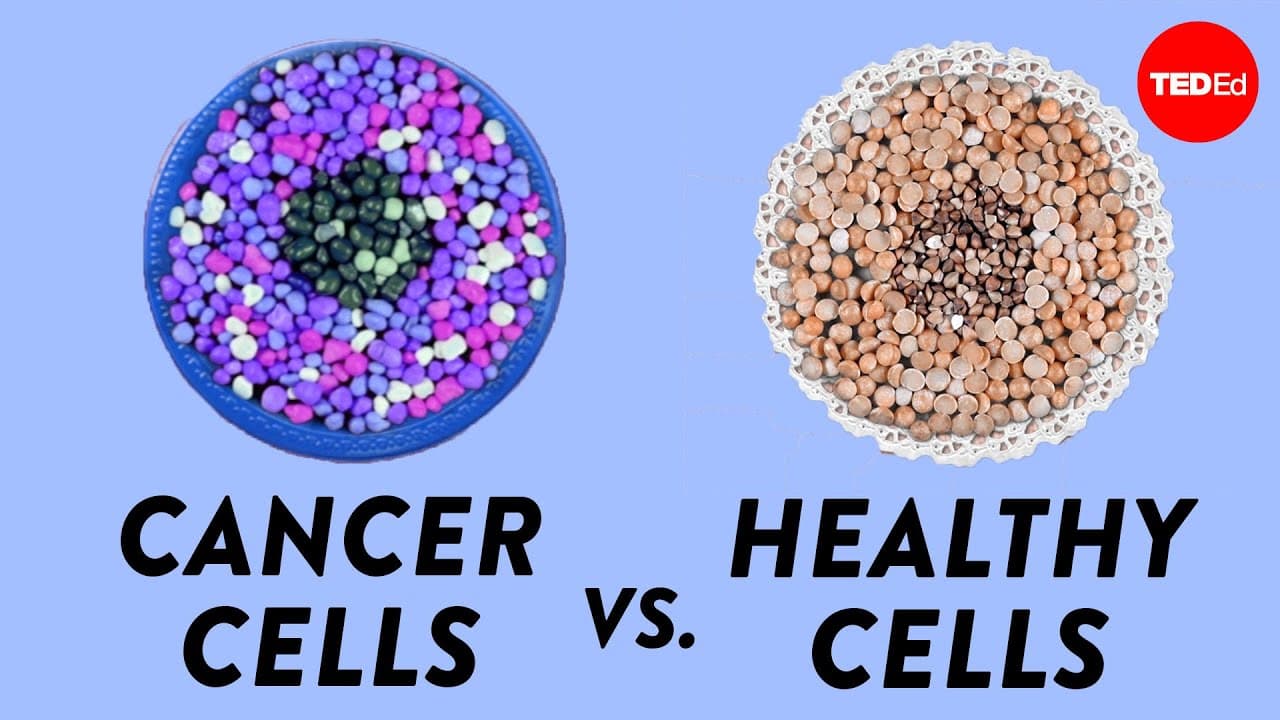
How do cancer cells behave differently from healthy ones? - George Zaidan
TL;DR
Cell division is a complex process that can go wrong, leading to cancer growth. Chemotherapy targets rapidly dividing cells, causing side effects.
Transcript
Translator: Andrea McDonough Reviewer: Bedirhan Cinar We all start life as one single cell. Then that cell divides and we are two cells, then four, then eight. Cells form tissues, tissues form organs, organs form us. These cell divisions, by which we go from a single cell to 100 trillion cells, are called growth. And growth seems like a simple thin... Read More
Key Insights
- 🥺 Growth is a complex process involving intricate cell division, which can lead to cancer when mutations occur.
- 🗂️ Cancer cells divide more frequently and recklessly than healthy cells.
- 🎯 Chemotherapy targets rapidly dividing cells, but it also affects healthy cells, resulting in side effects.
- ♋ Treatment options for cancer depend on the type and stage of the tumor.
- ♋ Cancer treatment aims to exploit cancer cells' aggressive division while minimizing damage to healthy cells.
- 🗂️ Side effects of cancer treatment are closely related to the tissue types that divide frequently.
- 🌸 Hair loss, skin rashes, nausea, vomiting, fatigue, weight loss, and pain are common side effects.
Install to Summarize YouTube Videos and Get Transcripts
Explore YouTube Video Summarizer or Get YouTube Transcript Extractor
Questions & Answers
Q: What happens when mutations occur in cells during cell division?
Mutations in cells can lead to the development of cancerous cells. Most of the time, the body's fail-safes detect and eliminate these mutated cells, but in some cases, they divide recklessly and become the foundation for cancer growth.
Q: How does chemotherapy target cancer cells?
Chemotherapy works by disrupting cell division, which is more frequent in cancer cells. However, it also affects healthy cells that divide frequently like hair cells, skin cells, and blood cells, leading to side effects such as hair loss, skin rashes, and fatigue.
Q: What are the treatment options for cancer?
Treatment options for cancer depend on the type and stage of the tumor. They can include surgery, radiation therapy, chemotherapy, or a combination of these approaches. The choice of treatment aims to remove or destroy cancer cells while minimizing damage to healthy cells.
Q: Why does cancer growth lead to unpleasant side effects in certain tissues?
The side effects of cancer treatment, such as hair loss, nausea, and weight loss, are caused by the damage to healthy cells that divide frequently, similar to cancer cells. These tissue types include hair cells, skin cells, gut cells, and blood cells.
Summary & Key Takeaways
-
Cell division is the process by which we grow, but it can also lead to cancer when mutations occur in cells.
-
Cancerous cells divide rapidly and recklessly, passing on incorrect instructions to their offspring.
-
Treatment options for cancer include surgery, radiation, chemotherapy, or a combination depending on the type and stage of the tumor.
Read in Other Languages (beta)
Share This Summary 📚
Summarize YouTube Videos and Get Video Transcripts with 1-Click
Try YouTube Summary with ChatGPT & Claude or YouTube Transcript Generator
Explore More Summaries from TED-Ed 📚
Summarize YouTube Videos and Get Video Transcripts with 1-Click
Try YouTube Summary with ChatGPT & Claude or YouTube Transcript Generator