Panel 1: France || Siting Julia || Radcliffe Institute
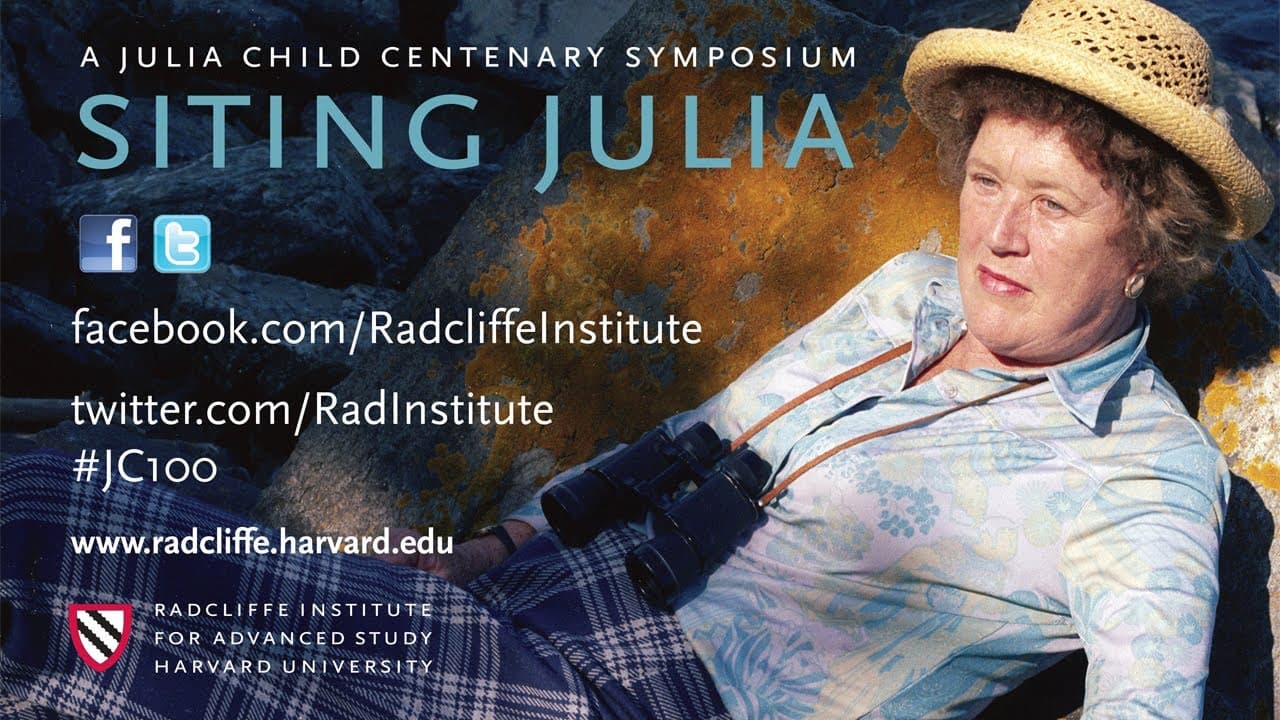
Transcript
[MUSIC PLAYING] PHILADELPHIA COUSINS: Hi. Welcome. Good morning and welcome to Siting Julia. And here, Siting Julia in France. I am Philadelphia Cousins, one of Julia's nieces, daughter of Dorothy, Julia's younger sister, and Ivan Cousins. I will be moderating this panel, but before Siting Julia in France and introducing this panel of experts, and ... Read More
Install to Summarize YouTube Videos and Get Transcripts
Explore YouTube Video Summarizer or Get YouTube Transcript Extractor
Summary
In this video, the speaker begins by introducing various family members and friends of Julia Child in the audience. They then share personal memories of Julia in France, including an anecdote about her first meal in France and her experiences living in Paris. Following this, three panelists discuss Julia's time in France, including her post-World War II experiences and her later years in Provence.
Questions & Answers
Q: Why was Julia Child in France in 1984?
Julia Child was in France in 1984 to have lunch with the speaker and Julia's husband, Paul Child, at their home in Provence. They discussed the deep connection between France and the US and reminisced about past experiences.
Q: How did Julia feel about moving on in her life?
Julia Child was extremely practical about moving on in her life. While she could be tender-hearted, she believed in embracing new chapters and not dwelling on the past. She closed chapters without sentimentality and looked forward to the next.
Q: What was Julia's last visit to her house in Provence like?
In June 1992, Julia took a trip with her husband, Bob, their infant son, Nick, Suzie Davidson, and the speaker to close down their house in Provence. It was a bittersweet visit, filled with memories of Paul, Simca, and other dear friends. Julia packed up with enthusiasm and also made time for visits with friends and enjoyed great meals. She was closing a chapter of her life but felt no sadness, as she was ready to move forward.
Q: How did Julia get involved in cooking and French cuisine?
Julia's journey into cooking and French cuisine began when she and her husband, Paul, moved to France in 1948. She attended the Cordon Bleu culinary school and immersed herself in French culture, including learning to shop at local markets and discovering the joy of cooking and creating delicious meals. She then joined a cooking group called La Salade de Corps Met, where she met her collaborators, Simone Beck and Louise Bertholle.
Q: How did Julia contribute to the creation of "Mastering the Art of French Cooking"?
Julia took over the project of "Mastering the Art of French Cooking" when she realized the original manuscript needed a complete overhaul. She used her logical and practical mind to tailor the book for an American audience, drawing from the clear, informative, and accurate recipes they developed for their cooking classes. Julia became an investigative reporter, visiting restaurants, and gathering information to refine the recipes. She and her husband, Paul, also developed a new method of illustrating cookbooks, capturing the cook's perspective.
Q: How did Julia view her role as a teacher?
Julia saw herself as both a teacher and a student. She constantly sought to learn and improve her own skills, and she considered herself an eternal pupil. She was passionate about sharing her knowledge and teaching others, which was evident in her devotion to her cooking classes and her desire to pass on her love for French cuisine.
Q: What was Julia's approach to shopping for ingredients in France?
Julia embraced the French approach to shopping for ingredients, which involved going to local markets and talking to the vendors. She built personal connections with the vendors, learning about their lives and getting recommendations. This allowed her to not only educate herself about food and cooking but also build her "human mirepoix," her network of people.
Q: How did Julia view her collaborations with Simca Beck and Louise Bertholle?
Julia had a deep bond with Simca Beck and Louise Bertholle. They recognized each other as soul mates and pushed each other forward in their cooking endeavors. Julia's enthusiasm for the project and her constant desire to learn and improve made her an invaluable collaborator. Simca and Louise were the "mad cows" who worked alongside Julia, producing the recipes for "Mastering the Art of French Cooking."
Q: How did Julia's book become more than just a cookbook?
Julia's book, "Mastering the Art of French Cooking," became more than just a cookbook. It became a force of nature, a person of its own. The book grew in size and significance, transcending the three writers. It became an entity that Julia and her collaborators willingly devoted themselves to, refining the recipes and sharing their knowledge with the American audience.
Q: How did Julia and Paul innovate cookbook illustrations?
Paul and Julia developed a new method of illustrating cookbooks. Instead of illustrating from the audience's perspective, they illustrated from the cook's perspective. Paul would shoot photos from behind Julia's shoulder, capturing the step-by-step process of food preparation. This innovative approach was practical and helpful for readers in executing the recipes.
Takeaways
Julia Child's time in France was transformative for her, both personally and professionally. She embraced French cuisine and cooking, immersing herself in the culture and becoming an exceptional chef. She saw herself as a teacher and a student, constantly honing her skills and sharing her knowledge with others. Her collaborations and the creation of "Mastering the Art of French Cooking" allowed her to leave a lasting impact on the culinary world. Julia's practicality, passion, and ability to move forward without sentimentality were key aspects of her character.
Read in Other Languages (beta)
Share This Summary 📚
Summarize YouTube Videos and Get Video Transcripts with 1-Click
Try YouTube Summary with ChatGPT & Claude or YouTube Transcript Generator
Explore More Summaries from Harvard University 📚
Summarize YouTube Videos and Get Video Transcripts with 1-Click
Try YouTube Summary with ChatGPT & Claude or YouTube Transcript Generator