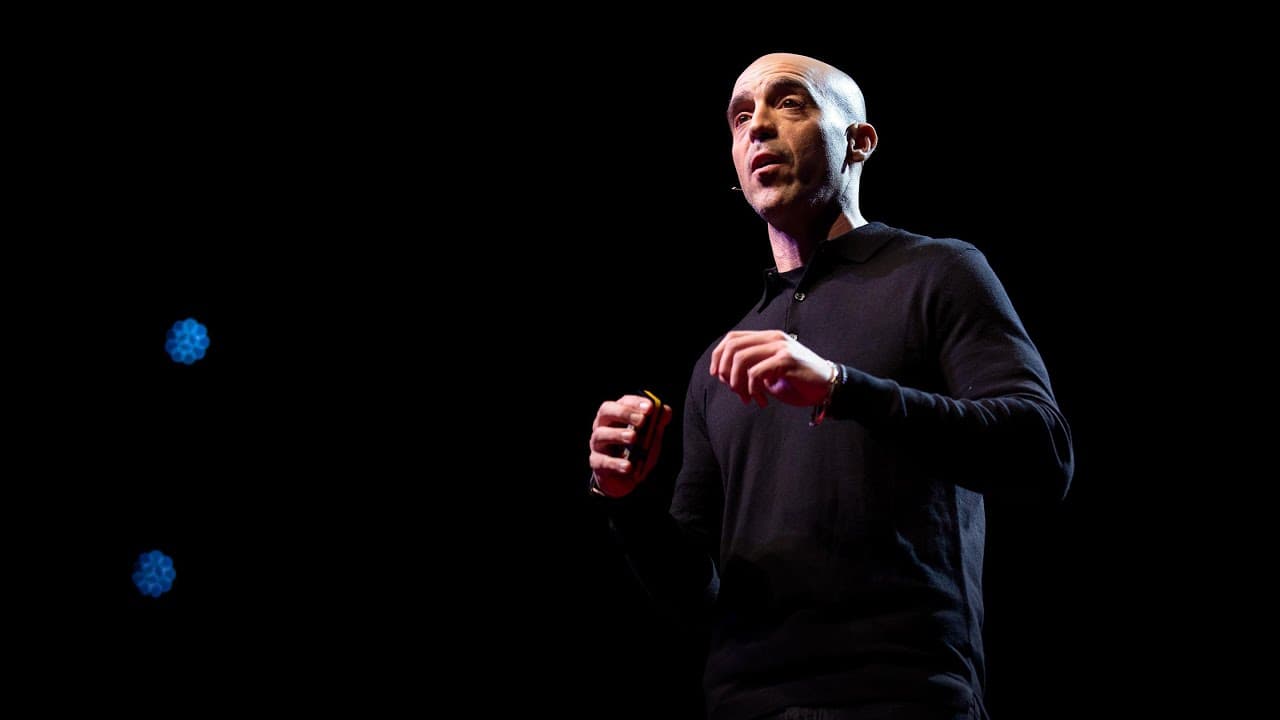
How we can protect truth in the age of misinformation | Sinan Aral
TL;DR
This content explores the spread of fake news, its impact on society, and the challenges we face in combating it.
Transcript
Transcriber: Ivana Korom Reviewer: Krystian Aparta So, on April 23 of 2013, the Associated Press put out the following tweet on Twitter. It said, "Breaking news: Two explosions at the White House and Barack Obama has been injured." This tweet was retweeted 4,000 times in less than five minutes, and it went viral thereafter. Now, this tweet wasn't r... Read More
Key Insights
- 🌍 False news spread on social media can have massive real-world consequences, such as crashing the stock market and influencing elections.
- 📢 Misinformation campaigns on social media can reach millions of people and have significant impacts on public opinion and social issues.
- 📰 False news spreads faster and wider than true news in every category of information, including political news.
- 🔍 People are more likely to share false news due to its novelty factor and the surprise and disgust it elicits in reactions.
- 🤖 Bots play a role in spreading both true and false news, but humans are ultimately responsible for the differential diffusion of truth and falsity online.
- 📽️ The rise of synthetic media like fake videos and audio will make it even more challenging to discern what is real and what is fake.
- 🏷️ Labeling, incentives, regulation, transparency, and technology are possible approaches to address the spread of fake news, but each has its own challenges and considerations.
- 🌐 Defending the truth against misinformation requires a collective effort, including individual responsibility, decision-making, and awareness of the impact of our actions.
Install to Summarize YouTube Videos and Get Transcripts
Explore YouTube Video Summarizer or Get YouTube Transcript Extractor
Questions & Answers
Q: What were the consequences of the false tweet about explosions at the White House and Barack Obama being injured?
The false tweet about explosions at the White House and Barack Obama being injured caused automated trading algorithms to trade based on this information, leading to a crash in the stock market and wiping out $140 billion in equity value in a single day.
Q: Who was responsible for spreading fake news during the 2016 presidential election in the United States?
Syrian hackers infiltrated the Associated Press Twitter handle and propagated the false news about explosions at the White House and Barack Obama being injured. This incident was separate from the actions of the Internet Research Agency, the shadowy arm of the Kremlin, who also spread fake news to sow discord in the US presidential election.
Q: How did false news spread on social media compared to true news?
According to a study, false news spread further, faster, deeper, and more broadly than true news on social media. The study compared the diffusion of verified true and false news stories on Twitter from 2006 to 2017 and found that false political news was the most viral.
Q: Why does false news spread more than true news on social media?
One hypothesis for the spread of false news is that people are drawn to novelty. Human attention is naturally attracted to new and surprising information, and sharing such information gives the perception of having insider knowledge and increases one's status. This novelty factor can contribute to the virality of false news.
Q: Are bots responsible for the differential diffusion of truth and falsity online?
Bots do play a role in accelerating the spread of both true and false news online, but they are not solely responsible for the differential diffusion. Humans are the ones responsible for the spread of truth and falsity, and understanding our own behaviors and actions in sharing information is crucial in addressing the problem of fake news.
Q: What new challenges will make the spread of misinformation worse?
The rise of synthetic media, including fake videos and audio, created by generative adversarial networks, along with the democratization of artificial intelligence, will contribute to the worsening spread of misinformation. These technologies make it easier than ever before for anyone to create convincing fake media, posing a significant challenge to society.
Q: What are some possible solutions to combat the spread of fake news?
Different approaches can be pursued to address the issue of fake news, including labeling information, creating incentives to reduce the economic motivation for producing false news, considering regulation while being mindful of the potential dangers, promoting transparency in algorithmic processes of social media platforms, and developing algorithms and machine learning to detect and mitigate the spread of fake news.
Summary & Key Takeaways
-
False news, or fake news, can have significant real-world consequences, such as crashing the stock market and spreading genocidal propaganda.
-
False news spreads further, faster, deeper, and more broadly than true news on social media, often due to its novelty and the strong emotional reactions it elicits.
-
Synthetic media, such as fake video and audio, created using generative adversarial networks, poses a new and significant threat to the distinction between real and fake.
Read in Other Languages (beta)
Share This Summary 📚
Summarize YouTube Videos and Get Video Transcripts with 1-Click
Try YouTube Summary with ChatGPT & Claude or YouTube Transcript Generator
Explore More Summaries from TED 📚





Summarize YouTube Videos and Get Video Transcripts with 1-Click
Try YouTube Summary with ChatGPT & Claude or YouTube Transcript Generator