How to Transform Food Waste into Valuable Products
TL;DR
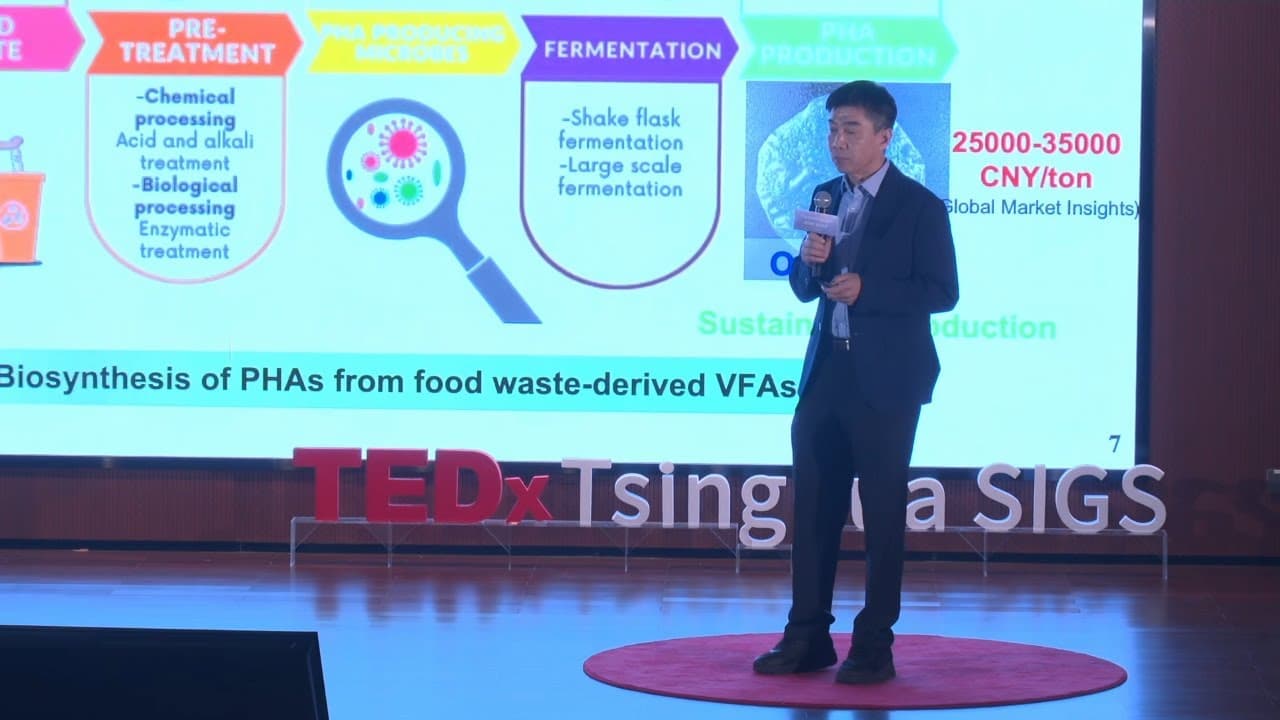
Food waste, a significant urban sustainability issue, can be transformed into valuable products through innovative technologies. Techniques like anaerobic digestion and pyrolysis convert waste into bioenergy, organic acids, and biodegradable plastics. These processes not only reduce waste but also create high-value products that can replace traditional materials and contribute to environmental sustainability.
Transcript
My talk has no match to the to the dance. The dancing that's a difficult part. I'm in the field of engineering and the technology. So you know basically as engineers we are boring people boring people really boring people. We're working on serious problems. Hopefully arrive to serious solutions. And the topic this hour of the topic this hour is foo... Read More
Key Insights
- Food waste is a significant contributor to urban waste, with China being the largest producer.
- Traditional methods like landfilling and composting are ineffective for current food waste challenges.
- Anaerobic digestion converts food waste into bioenergy, but its value is limited compared to other products.
- Fermentation processes can transform food waste into high-value organic acids used in wastewater treatment.
- Biodegradable plastics can be synthesized from food waste, offering an alternative to fossil fuel-based plastics.
- Yeast fermentation of food waste produces single-cell protein, valuable for animal feed.
- Fungal fermentation can create microfibers for paper and cardboard production.
- Pyrolysis rapidly converts food waste into biochar, bio-oil, and gases, offering a quick waste reduction method.
Install to Summarize YouTube Videos and Get Transcripts
Explore YouTube Video Summarizer or Get YouTube Transcript Extractor
Questions & Answers
Q: How can food waste be transformed into valuable products?
Food waste can be transformed into valuable products through processes like anaerobic digestion, fermentation, and pyrolysis. Anaerobic digestion produces bioenergy, while fermentation can create organic acids and biodegradable plastics. Pyrolysis rapidly converts waste into biochar, bio-oil, and gases. These methods offer sustainable alternatives to traditional waste management, providing economic and environmental benefits.
Q: What are the limitations of traditional food waste disposal methods?
Traditional food waste disposal methods like landfilling and composting are limited by their slow processes and low economic returns. They fail to address the growing volume of food waste and do not capitalize on the potential value of organic materials. Innovative technologies offer more effective solutions by converting waste into high-value products, thus enhancing sustainability.
Q: What role does anaerobic digestion play in food waste management?
Anaerobic digestion plays a crucial role in food waste management by breaking down organic materials into bioenergy, such as methane, which can be used for electricity generation. While it provides a sustainable energy source, its economic value is limited compared to other high-value products. As a result, research focuses on optimizing this process for greater returns.
Q: How can biodegradable plastics be produced from food waste?
Biodegradable plastics can be produced from food waste through fermentation processes that convert organic materials into precursors like lactic acid. These precursors are then used to synthesize plastics such as polylactic acid (PLA), which can replace conventional plastics. This approach not only reduces waste but also addresses environmental concerns associated with plastic pollution.
Q: What is the significance of pyrolysis in food waste valorization?
Pyrolysis is significant in food waste valorization as it offers a rapid conversion process that breaks down organic waste into biochar, bio-oil, and gases. This method is efficient, completing treatment in hours and significantly reducing waste volume. It provides a versatile approach to creating valuable products from food waste, enhancing sustainability efforts.
Q: How does yeast fermentation contribute to food waste management?
Yeast fermentation contributes to food waste management by converting waste into single-cell proteins, which are valuable for animal feed. This process not only provides a sustainable protein source but also reduces the environmental impact of food waste. It exemplifies how biological processes can be harnessed to create high-value products from organic materials.
Q: What are the environmental benefits of converting food waste into high-value products?
Converting food waste into high-value products offers several environmental benefits, including waste reduction, decreased reliance on fossil fuels, and reduced pollution. By creating biodegradable plastics and bioenergy, these processes minimize landfill use and lower greenhouse gas emissions. This approach supports a circular economy, promoting sustainability and resource efficiency.
Q: How do fungal fermentation processes utilize food waste?
Fungal fermentation processes utilize food waste by converting it into microfibers, which can be used to produce paper, cardboard, and packing materials. This transformation not only provides a sustainable alternative to traditional materials but also adds economic value to waste, demonstrating the potential of biological processes in waste management and resource recovery.
Summary & Key Takeaways
-
Food waste is a major urban sustainability problem, with traditional disposal methods proving inadequate. Innovative approaches like anaerobic digestion and fermentation offer solutions by converting waste into valuable products such as bioenergy and biodegradable plastics. These processes not only mitigate waste but also yield high-value materials that can replace conventional products, contributing to a more sustainable future.
-
Anaerobic digestion breaks down food waste into bioenergy, providing electricity for a small percentage of the population. However, the focus is shifting towards producing high-value products like organic acids and biodegradable plastics. These products offer greater economic returns and environmental benefits, highlighting the potential of food waste valorization.
-
Fungal and yeast fermentation processes transform food waste into valuable materials such as microfibers and single-cell proteins. These innovations provide alternative uses for waste, reducing environmental impact and promoting sustainability. Additionally, pyrolysis offers a rapid conversion method, further expanding the possibilities for food waste valorization.
Read in Other Languages (beta)
Share This Summary 📚
Summarize YouTube Videos and Get Video Transcripts with 1-Click
Try YouTube Summary with ChatGPT & Claude or YouTube Transcript Generator
Explore More Summaries from TEDx Talks 📚
Summarize YouTube Videos and Get Video Transcripts with 1-Click
Try YouTube Summary with ChatGPT & Claude or YouTube Transcript Generator