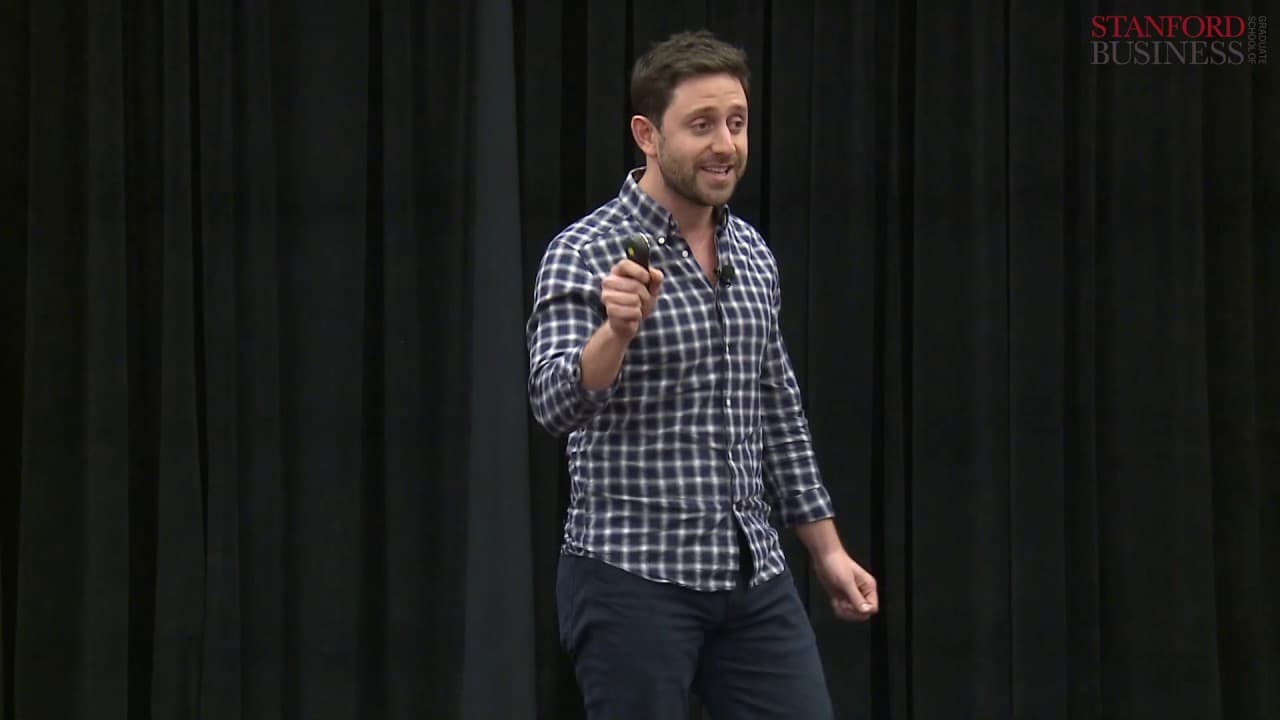
David Bell: Coding For Empathy
TL;DR
AI has the potential to revolutionize healthcare, but human doctors have unique skills that cannot be replicated by algorithms.
Transcript
[MUSIC] AI is on the verge of revolutionizing healthcare. Without even looking at you let alone laying a hand on you I can diagnose and treat any number of medical conditions with far greater speed and accuracy than even House on his best day. One infamous GSB alum even went so far to say, that you want the next generation of doctors, go look in th... Read More
Key Insights
- 👨⚕️ The potential of AI to revolutionize healthcare is promising, but it cannot replace the skills and compassion of human doctors.
- 😷 AI algorithms can improve diagnostic accuracy and reduce medical errors.
- 🖤 Human doctors provide emotional support, judgment, and delicate interpersonal skills that AI lacks.
- ♿ AI can improve healthcare access, particularly in remote or underserved areas.
- 😷 The development of AI algorithms and machine learning can enhance medical decision-making.
- ⁉️ Patient input and questions cannot be fully addressed by AI alone.
- 👋 The best doctors of the future will be those who can combine technological advancements with their unique human skills.
Install to Summarize YouTube Videos and Get Transcripts
Explore YouTube Video Summarizer or Get YouTube Transcript Extractor
Questions & Answers
Q: How can AI revolutionize healthcare?
AI can diagnose and treat medical conditions with greater speed and accuracy than human doctors, potentially saving lives and reducing medical errors.
Q: What are the potential drawbacks of relying solely on AI in healthcare?
AI lacks the delicate touch, judgment, and emotional support that human doctors can provide. Patients may need more than just a diagnosis and treatment plan.
Q: What is an example of a situation where AI could have made a difference?
The speaker shares a personal story of misdiagnosing a patient with aortic dissection, highlighting how an AI algorithm could have automatically diagnosed the emergency and recommended prompt treatment.
Q: How can AI improve access to healthcare?
AI can help bridge the gap in healthcare access by providing remote diagnosis and treatment recommendations, particularly in rural or underserved areas.
Summary & Key Takeaways
-
The speaker recounts a personal story of misdiagnosis and the potential implications of relying solely on AI in healthcare.
-
The speaker discusses the development of a deep learning algorithm to diagnose emergencies, emphasizing the importance of human judgment and touch in medicine.
-
The speaker argues that while AI can improve healthcare, human doctors possess skills that cannot be replicated by machines.
Read in Other Languages (beta)
Share This Summary 📚
Summarize YouTube Videos and Get Video Transcripts with 1-Click
Try YouTube Summary with ChatGPT & Claude or YouTube Transcript Generator
Explore More Summaries from Stanford Graduate School of Business 📚
Summarize YouTube Videos and Get Video Transcripts with 1-Click
Try YouTube Summary with ChatGPT & Claude or YouTube Transcript Generator