How to Handle Challenges in Distressed Startups
TL;DR
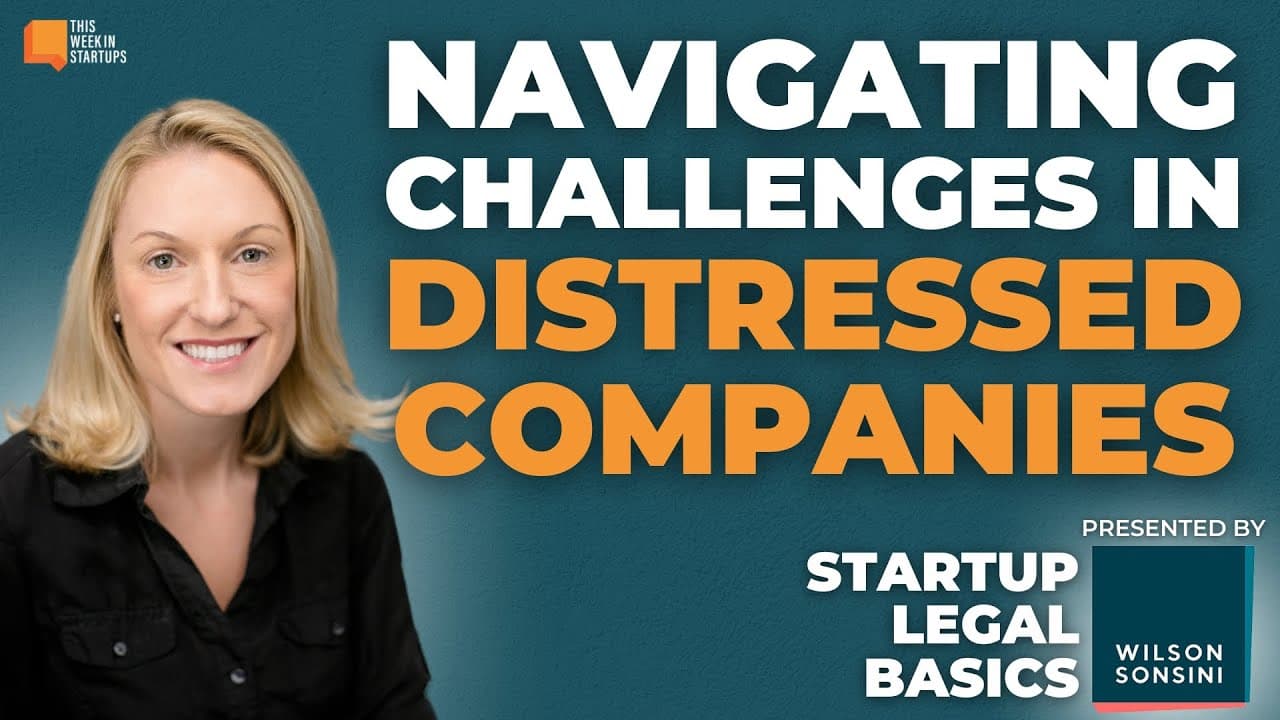
In distressed startups, directors and officers face increased scrutiny and legal complexities. Investors may pull out if they perceive high risk and potential loss. Pay-to-play financing can force participation in funding rounds, but it rarely results in success. Proper documentation and a transparent process are crucial for legal protection and managing investor relations.
Transcript
all right everybody welcome back to this weekend startups it's time for startup Basics with my friend Becky degra she is Council from Wilson cini goodr and Rosati wsgr as we call it people say Wilson here in the valley Becky one of the things we're seeing is distress companies I'm on the board of some of these and this crazy moment happens when it'... Read More
Key Insights
- Distressed startups face heightened legal scrutiny and increased complexity in decision-making.
- Investors often exit when they perceive their involvement as a liability with no potential return.
- Pay-to-play financing forces insiders to participate in funding rounds, often under punitive terms.
- Proper documentation of board meetings and investor outreach is crucial for legal protection.
- Market checks help validate financing as a last resort, demonstrating lack of external interest.
- Voting against or abstaining from board decisions can protect investors from future liability.
- Reckless or unethical behavior in business dealings often leads to failure.
- Transparent processes and adherence to legal standards are essential in managing distressed companies.
Install to Summarize YouTube Videos and Get Transcripts
Explore YouTube Video Summarizer or Get YouTube Transcript Extractor
Questions & Answers
Q: What challenges do directors face in distressed startups?
Directors in distressed startups face increased scrutiny and complex legal challenges. Their decisions are closely examined, and they must navigate difficult financial situations, often leading to insider-led financing rounds. Proper documentation and transparency in board meetings are crucial to protect against potential legal liabilities and to demonstrate due diligence.
Q: Why do investors leave distressed companies?
Investors often leave distressed companies when they perceive that their involvement poses a greater liability than potential return. As companies struggle, the risk of financial loss increases, and investors may decide that exiting is more prudent than continuing to invest time and resources in a potentially failing venture.
Q: What is pay-to-play financing in distressed startups?
Pay-to-play financing in distressed startups involves insiders being compelled to participate in funding rounds. If they do not participate, they risk having their preferred shares converted to common stock, often under unfavorable terms. This financing method is a last resort, typically used when no external investors are willing to provide capital.
Q: How important is documentation in distressed companies?
Documentation in distressed companies is critical for legal protection and demonstrating due diligence. It includes recording board meetings, investor outreach, and decision-making processes. Proper documentation can defend against legal challenges if the company recovers, as it provides evidence of fair and transparent decision-making during difficult times.
Q: What is a market check in startup financing?
A market check in startup financing involves reaching out to multiple investors to assess interest in funding the company. It serves as evidence that the company has explored all external financing options before resorting to insider-led rounds. Documenting this process is important to show that the financing was a last resort due to lack of external interest.
Q: Why might a board member vote against a decision?
A board member might vote against a decision if they believe it is not in the best interest of all stakeholders or if it involves unethical practices. Voting against or abstaining can protect them from future liability, as it demonstrates that they did not support potentially harmful or unfair business actions.
Q: What are the risks of unethical behavior in startups?
Unethical behavior in startups can lead to legal challenges, loss of investor trust, and ultimately, business failure. Reckless or shady practices often signal deeper issues within the company, and those who engage in such behavior may find it difficult to achieve long-term success, as stakeholders will be wary of future dealings.
Q: How can transparency help in distressed startups?
Transparency in distressed startups helps build trust with investors and stakeholders, providing a clear view of the company's challenges and decision-making processes. Transparent practices, such as thorough documentation and open communication, can protect against legal liabilities and improve the chances of securing necessary funding or support during difficult times.
Summary & Key Takeaways
-
Directors and officers in distressed startups face increased scrutiny and legal complexities, as investors may exit to avoid liability. Pay-to-play financing is a common last resort, forcing insiders to participate in funding rounds under punitive terms. Proper documentation and transparency in board decisions are essential for legal protection and maintaining investor relations.
-
Investors often withdraw from struggling companies when they perceive high risk and potential loss. Pay-to-play scenarios compel participation in funding rounds, but rarely lead to successful outcomes. Effective legal strategies include thorough documentation of investor outreach and board decisions, providing a defense against potential legal challenges.
-
Transparent processes and adherence to legal standards are crucial in managing distressed startups. Market checks validate financing as a last resort, illustrating the lack of external interest. Voting against or abstaining from board decisions can protect investors from future liability, while reckless or unethical behavior often leads to business failure.
Read in Other Languages (beta)
Share This Summary 📚
Summarize YouTube Videos and Get Video Transcripts with 1-Click
Try YouTube Summary with ChatGPT & Claude or YouTube Transcript Generator
Explore More Summaries from Startup Legal Basics 📚



Summarize YouTube Videos and Get Video Transcripts with 1-Click
Try YouTube Summary with ChatGPT & Claude or YouTube Transcript Generator