How to Create Autonomous AI Agents That Self-Improve
TL;DR
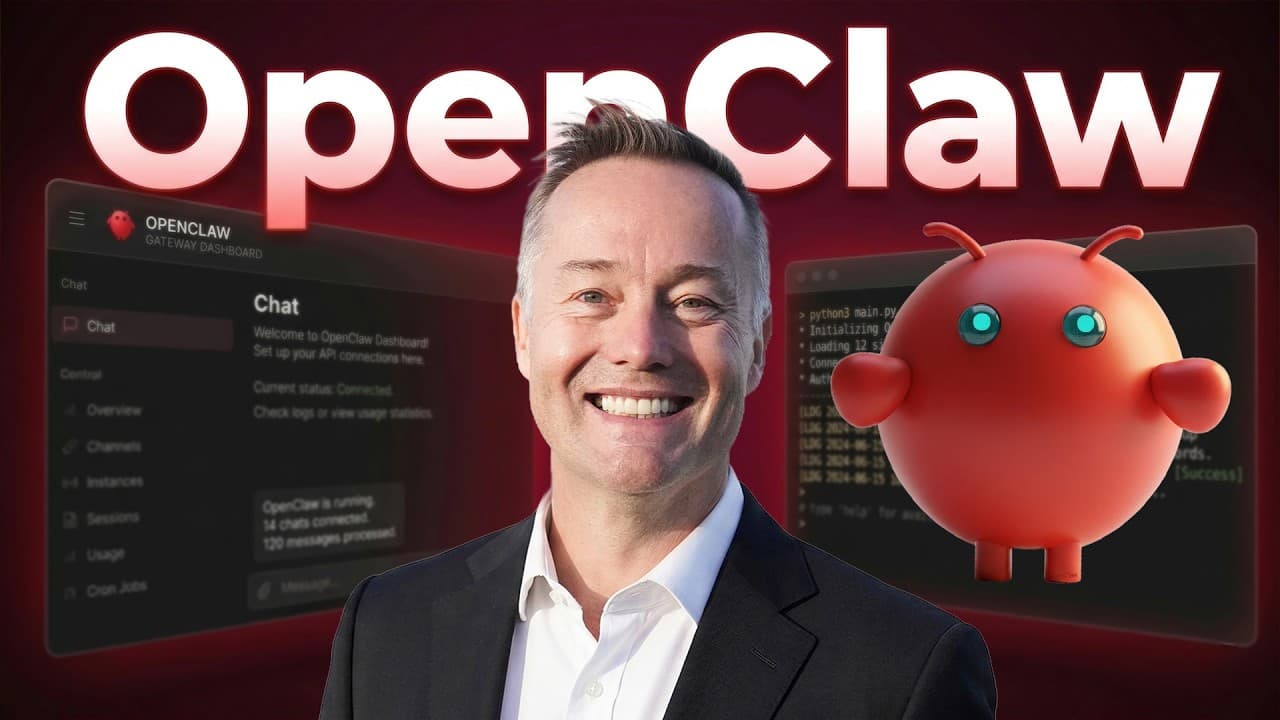
To create autonomous AI agents that self-improve, use frameworks like OpenClaw to enable them to perform tasks independently, manage workflows, and conduct self-reviews. Implement cross-agent memory for efficient information sharing and schedule tasks using cron jobs to enhance automation. This setup can lead to streamlined operations and increased productivity.
Transcript
All right, everybody. Welcome back to This Week in Startups. It's Twist for March 30th. Happy birthday to my twins and uh it is they're 10 years old. We had their party this weekend and I'm in Brooklyn. I'm in Brooklyn. I came to see dad. >> Yeah, as you can see from the Brooklyn Bridge. My dad's been a little bit sick. So, >> came in to spend some... Read More
Key Insights
- AI agents can be autonomous, performing tasks without human prompts, using frameworks like OpenClaw.
- Cross-agent memory allows multiple agents to share information, improving efficiency and collaboration.
- Cron schedules enable agents to perform regular tasks, such as research and report generation, automatically.
- Self-review processes allow agents to analyze their performance and make improvements independently.
- Agent mail provides a dedicated email service for AI agents, ensuring reliable and efficient communication.
- Real-time translation on platforms like X can facilitate cross-cultural communication and understanding.
- The integration of AI agents in business processes can streamline operations and reduce manual workload.
- AI-driven virtual environments like Molt World offer a space for agents to interact and solve complex tasks collaboratively.
Install to Summarize YouTube Videos and Get Transcripts
Explore YouTube Video Summarizer or Get YouTube Transcript Extractor
Questions & Answers
Q: How to set up autonomous AI agents?
To set up autonomous AI agents, you can use frameworks like OpenClaw, which allows agents to operate independently. Start by onboarding the agent with specific tasks and context, similar to a new employee. Use cron schedules for regular tasks and enable cross-agent memory for efficient information sharing.
Q: What is the role of cross-agent memory?
Cross-agent memory allows multiple AI agents to share information effectively, enhancing collaboration and efficiency. It enables agents to access shared files and logs, ensuring continuity and reducing redundancy in tasks. This setup is crucial for complex workflows involving multiple agents.
Q: How does agent mail improve AI communication?
Agent mail provides a dedicated email service for AI agents, designed for API-first integration. It allows agents to send, receive, and manage emails efficiently, bypassing limitations of traditional email services like Gmail. This enhances reliability and speed in agent communication.
Q: What are cron schedules in AI automation?
Cron schedules in AI automation allow agents to perform tasks at regular intervals without human prompts. This feature is essential for tasks like daily research, report generation, and data analysis. It ensures that agents operate efficiently and consistently over time.
Q: How do AI agents conduct self-reviews?
AI agents conduct self-reviews by analyzing their performance over a set period, identifying areas for improvement. This process involves reviewing completed tasks, assessing outcomes, and updating instructions based on feedback. It helps agents improve autonomously, reducing the need for constant human oversight.
Q: What is the significance of real-time translation on platforms like X?
Real-time translation on platforms like X enables cross-cultural communication by translating posts from different languages instantly. This feature fosters global connectivity, allowing users to engage with diverse content and perspectives, potentially leading to greater understanding and collaboration across cultures.
Q: How can AI-driven virtual environments like Molt World be utilized?
AI-driven virtual environments like Molt World provide a space for agents to interact, collaborate, and solve complex tasks. They simulate real-world scenarios, allowing agents to develop strategies and improve their problem-solving skills. These environments can be used for testing and enhancing AI capabilities in a controlled setting.
Q: What potential does AI have in transforming business processes?
AI has the potential to transform business processes by automating repetitive tasks, enhancing decision-making, and improving efficiency. Through tools like autonomous agents and dedicated communication services, businesses can streamline operations, reduce manual workloads, and innovate in ways previously not possible.
Summary & Key Takeaways
-
AI agents can be set up to operate autonomously, performing tasks like research and communication without human intervention. Using tools like OpenClaw, these agents can manage workflows efficiently, even conducting self-reviews to enhance their performance over time.
-
Cross-agent memory and cron schedules allow multiple AI agents to share information and perform regular tasks automatically. This setup can streamline operations and reduce manual workload by enabling agents to work collaboratively and independently.
-
Agent mail offers a dedicated email service for AI agents, ensuring reliable communication. Real-time translation on platforms like X enhances cross-cultural understanding, showcasing the potential of AI to facilitate global connectivity and innovation.
Read in Other Languages (beta)
Share This Summary 📚
Summarize YouTube Videos and Get Video Transcripts with 1-Click
Try YouTube Summary with ChatGPT & Claude or YouTube Transcript Generator
Explore More Summaries from This Week in Startups 📚






Summarize YouTube Videos and Get Video Transcripts with 1-Click
Try YouTube Summary with ChatGPT & Claude or YouTube Transcript Generator