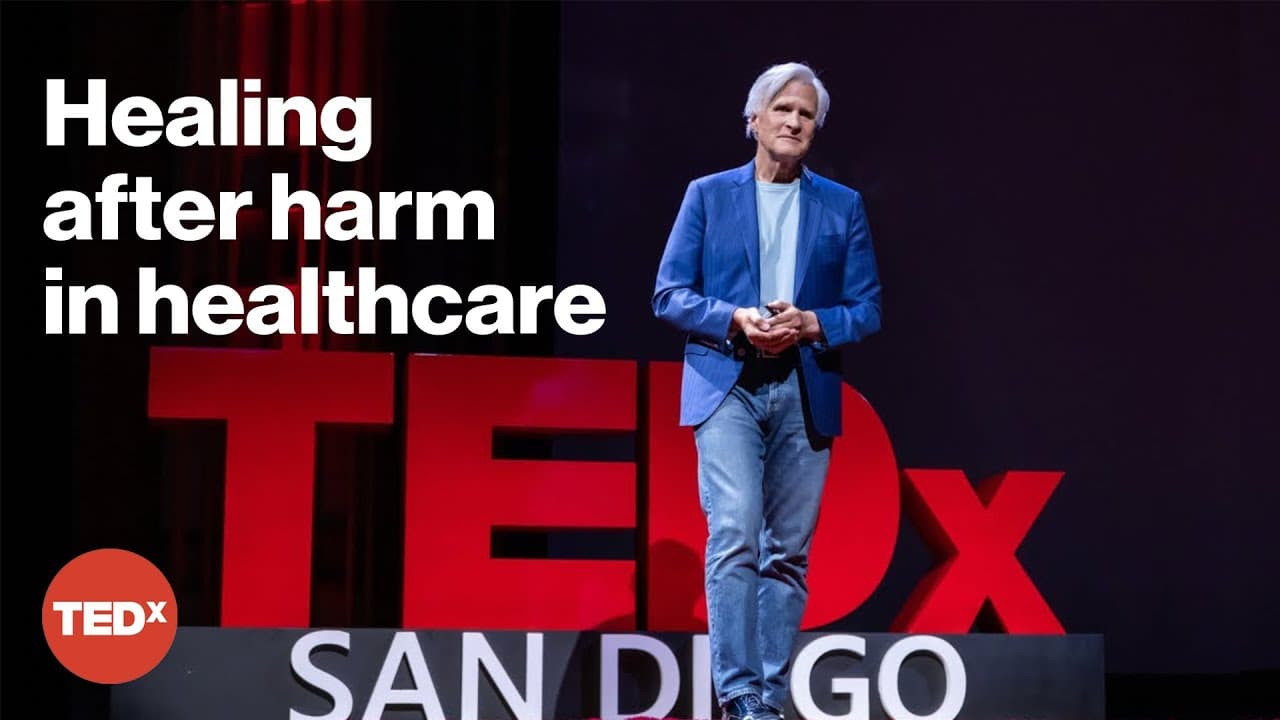
Why admitting to mistakes can help doctors (and patients) | Timothy McDonald | TEDxSanDiego
TL;DR
Patients who suffer from medical errors not only experience physical harm but also suffer emotionally behind a wall of silence, and it is essential for healthcare providers to embrace open and honest communication to promote healing and learning.
Transcript
Transcriber: Maria Nguyen Reviewer: Trần Thái Hưng (English tutor: 0938147500) So, imagine you are in a hospital waiting room while your loved one is undergoing an invasive medical procedure, and something goes terribly wrong. And she does not survive. But no doctor and no nurse comes to apologise or fully explain to you what happened. You’re in th... Read More
Key Insights
- 😷 Medical errors continue to be a significant problem in healthcare, leading to avoidable harm and economic burdens.
- 😷 Patients and families often suffer emotionally and feel betrayed when medical errors occur, and they do not receive the information and apology they deserve.
- 😨 Transparent and empathic communication can improve patient care, reduce moral injury among clinicians, and decrease the cost of litigation.
- 💓 Innovative approaches, such as the Seven Pillars and the "Beat a Heart" program, can help organizations prioritize open communication, empathy, accountability, resolution, and trust.
Install to Summarize YouTube Videos and Get Transcripts
Explore YouTube Video Summarizer or Get YouTube Transcript Extractor
Questions & Answers
Q: How common are medical errors leading to deaths and serious injuries?
According to the New England Journal of Medicine, it is predicted that 600,000 hospitalized patients will die or suffer serious injuries due to medical errors every year in the US.
Q: How do patients and families suffer as a result of medical errors?
Many patients and families feel like victims of a health care hit and run, as they are not given the information they need, and in some cases, they are outright lied to and withheld from critical information.
Q: How did the speaker's organization change its approach to harm after a tragic event?
The speaker's organization developed the Seven Pillars approach, which focuses on open and honest communication, reconciliation without litigation, and support for the care team to learn from events and prevent future harm.
Q: How did the speaker's organization handle a case of harm differently, resulting in a positive outcome?
In the case of Michelle's death, the organization was honest with the family, apologized, reconciled in various ways, fixed the issues that caused the harm, and provided support to the care team members who witnessed the incident.
Summary
In this video, the speaker discusses the prevalence of medical errors and the lack of communication and accountability from healthcare providers. He shares personal experiences and the impact it had on him, as well as the initiatives he has been involved in to promote transparency and empathy in healthcare. The speaker highlights the need for a paradigm shift in how medical errors are handled and encourages collaboration to break down the wall of Silence in healthcare.
Questions & Answers
Q: What is the current prediction for patient deaths or injuries due to medical errors?
According to the New England Journal of Medicine, it is predicted that within the next hour, 70 hospitalized patients will die or suffer serious injuries due to medical errors. Over the course of the next year, 600,000 hospitalized patients will experience the same.
Q: What is the economic burden associated with medical errors?
The economic burden of medical errors exceeds billions of dollars every year in the United States alone. This highlights not only the tragic personal impact but also the financial implications of such errors.
Q: Why do many patients who suffer from medical errors not receive the information they need or an apology?
One of the additional harms faced by patients who suffer from medical errors is the lack of information and apology from healthcare providers. Many patients are outright lied to, and information about their treatment is withheld. This leaves them to suffer behind the proverbial wall of Silence.
Q: Can you provide an example of a medical error that occurred due to communication errors?
The speaker recalls a tragic case where a prominent healthcare executive came to their organization for an elective surgical procedure. However, due to communication errors, the information about cancer in her blood was not relayed to the right people. Consequently, she underwent the surgery without knowing the diagnosis and later died from a treatable leukemia.
Q: How did the speaker initially react to this tragic event?
Initially, the speaker wanted to reach out to the family, explain what had happened, and apologize. However, he was advised by lawyers and the insurance company to stay silent behind the wall. Regrettably, he did not have the courage to ignore their advice and reach out to the family.
Q: What were the consequences of staying silent and defending the indefensible in this case?
The consequences of staying silent and defending the indefensible were four years of scorched Earth delay, deny, and defend. The organization spent hundreds of thousands of dollars defending itself before ultimately settling for millions on the courtroom steps. This experience left the speaker recognizing the violation of the sacred oath to "First Do no harm" and feeling shame for their actions.
Q: Did the speaker have a chance at redemption in another case?
Yes, the speaker and his organization got a second chance to approach a case of harm differently. When a woman named Michelle suffered a cardiac arrest during a procedure, they were prepared to be extremely honest instead of staying silent. They provided open and honest communication, apology, reconciliation, and support to the family and care team.
Q: What program did the speaker and his team develop to address harm caused by medical errors?
The speaker and his team developed a comprehensive and principled approach called "The Seven Pillars," which focused on providing open and honest communication to all patients and families affected by serious harm events. The program also aimed to reconcile cases without litigation, learn from events, and support the care team.
Q: How did the speaker's program demonstrate the benefits of transparency in healthcare?
The speaker's program published manuscripts that highlighted the benefits of transparency in healthcare. They found that transparency improves care, reduces moral injury among clinicians, and decreases the cost and frequency of litigation related to medical errors.
Q: What organizations did the speaker collaborate with to promote a paradigm shift in healthcare?
The speaker collaborated with organizations such as Patience for Patient Safety U.S., an affiliate of the World Health Organization, to advocate for transparency and healing after harm events. Additionally, he worked with a professional liability company called "Be the Heart" and the University of California San Diego Health to incubate a holistic and empathic approach to harm.
Takeaways
The video emphasizes the urgent need for change in healthcare to address the prevalence of medical errors and the lack of communication and accountability. By promoting transparency, empathy, and learning from harm events, healthcare providers can shatter the wall of Silence and improve patient care. Collaborative efforts between organizations and advocacy groups are crucial in spreading this paradigm shift throughout the industry.
Summary & Key Takeaways
-
Despite advances in medicine, medical errors continue to cause deaths and serious injuries, leading to a significant economic burden in the US alone.
-
Many patients and families do not receive the information and apology they deserve after experiencing medical errors, resulting in their suffering being prolonged.
-
A small group of innovators created a comprehensive approach to harm in healthcare, called the Seven Pillars, which aims to provide open and honest communication, reconciliation without litigation, and support for the care team.
Read in Other Languages (beta)
Share This Summary 📚
Summarize YouTube Videos and Get Video Transcripts with 1-Click
Try YouTube Summary with ChatGPT & Claude or YouTube Transcript Generator
Explore More Summaries from TEDx Talks 📚






Summarize YouTube Videos and Get Video Transcripts with 1-Click
Try YouTube Summary with ChatGPT & Claude or YouTube Transcript Generator