Michio Kaku: The Mind of Einstein's God | AI Podcast Clips
TL;DR
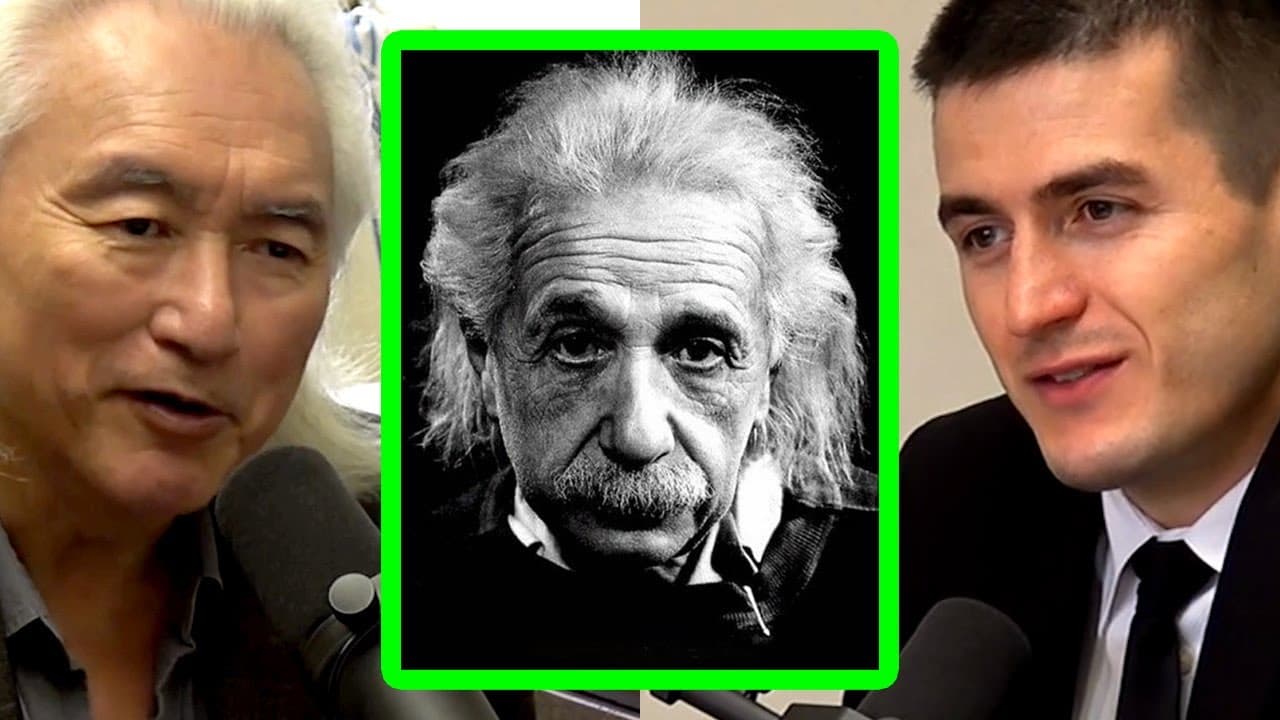
Steven Weinberg once said that the more we learn about the universe, the more we realize it is pointless, but Einstein believed in a God of order and beauty, not the personal God of the Bible.
Transcript
what do you think is the mind of Einstein's God do you think there's a way that we could untangle from this from this universe of strings why are we here what is the meaning of it all well Steven Weinberg winner of the Nobel Prize once said that the more we learn about the universe the more we learned that is pointless well I don't know I don't pro... Read More
Key Insights
- 🌌 Einstein believed in two types of God: the personal God of the Bible, and the God of order, simplicity, and beauty.
- ⚖️ Science and religion have separate purposes: science determines how the heavens work, while religion guides ethics and how to be a good person.
- 📚 The universe is like a vast library, full of mysterious and magical things yet to be discovered. We have only explored the first page of the first volume.
- 🌍 Our understanding of morality and ethics is beyond the reach of physics and string theory. It is unique to human civilization and not governed by natural laws.
- 🪐 If extraterrestrial aliens visit us, they may find us uninteresting and eventually get bored, as our sense of right and wrong may differ greatly from theirs.
- 🤝 Ethics and morality play a crucial role in keeping civilizations in line and enriching our lives, but they are not dictated by the laws of physics.
- 📜 On a single sheet of paper, the known laws of the universe can be written down. The elegance and simplicity of these laws are awe-inspiring.
- 🧩 The complexity and beauty of the universe could have been random and messy, but it shows remarkable order and harmony, reflecting the God of Spinoza's concept.
Install to Summarize YouTube Videos and Get Transcripts
Explore YouTube Video Summarizer or Get YouTube Transcript Extractor
Questions & Answers
Q: What were Einstein's beliefs about God?
Einstein believed in two types of God - one was the personal God of the Bible, while the other was the God of order, simplicity, and beauty like that of Spinoza. He did not believe in the personal God who performs miracles.
Q: What is the significance of the elegance and beauty of the universe?
Einstein saw the elegance and beauty of the universe as evidence of a God of order. He marveled at how all the known laws of the universe could fit on just one sheet of paper, emphasizing the simplicity and harmony of the cosmos.
Q: How did Galileo explain the purpose of science and religion?
Galileo believed that the purpose of science is to understand how the heavens work, while the purpose of religion is to guide individuals on how to reach heaven. Science focuses on natural laws, while religion focuses on ethics and morality.
Q: Does physics or string theory provide answers to questions about morality?
No, physics, including string theory, is not capable of answering questions about morality. Our sense of right and wrong is not mandated by the laws of physics. Morality is a human construct and is best explored through ethical and philosophical discussions.
Summary & Key Takeaways
-
Einstein believed in two types of God: one, the personal God of the Bible, and the other, the God of order, simplicity, and beauty like that of Spinoza.
-
The universe is elegant, with all the known laws of the universe fitting on just one sheet of paper.
-
Science and religion both serve different purposes: science seeks to understand natural laws, while religion focuses on ethics and how to lead a good life.
Read in Other Languages (beta)
Share This Summary 📚
Summarize YouTube Videos and Get Video Transcripts with 1-Click
Try YouTube Summary with ChatGPT & Claude or YouTube Transcript Generator
Explore More Summaries from Lex Fridman 📚





Summarize YouTube Videos and Get Video Transcripts with 1-Click
Try YouTube Summary with ChatGPT & Claude or YouTube Transcript Generator