What Led to the Creation of Keras and TensorFlow?
TL;DR
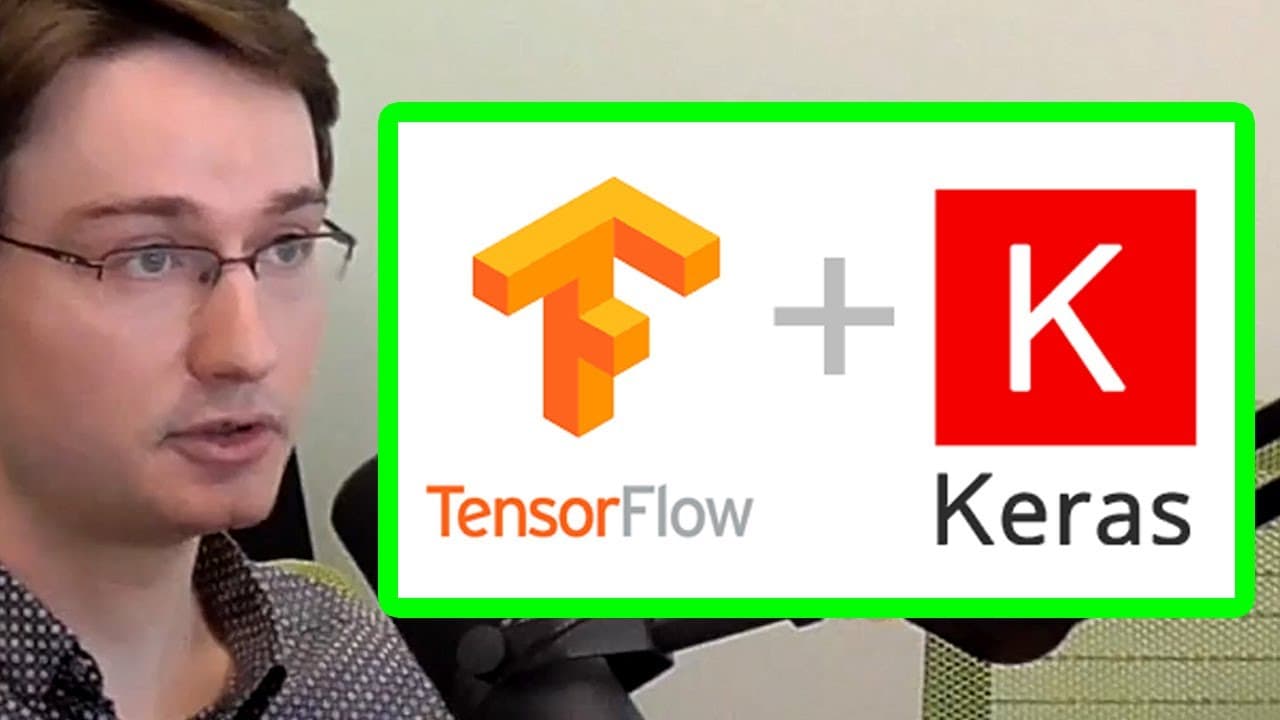
Keras was born in 2015 to simplify deep learning, particularly for LSTM networks, diverging from traditional model definitions by using Python code. Its integration into TensorFlow propelled its growth, enabling a versatile framework that balances ease of use and flexibility, appealing to both researchers and data scientists.
Transcript
let's go from the philosophical to the practical I can give me a history of Karis and all the major deep learning frameworks that you kind of remember in relation to chaos and in general tensorflow siano the old days you give a brief overview Wikipedia style history and your role in it before return to AGI discussions yeah that's a broad topic so I... Read More
Key Insights
- 🧠 Keras was developed in 2015 as a reusable open-source implementation of LSTM for deep learning, filling a gap in the availability of good tools for LSTM implementation.
- 🤖 Keras initially defined models using Python code, diverging from the popular approach of using static configuration files in YAML.
- 🔀 Keras allowed the combination of both computer vision and natural language processing tasks using the same library, which was not possible before.
- 📈 Keras grew in popularity during the rise of deep learning and was released at the right time when interest in deep learning and NLP was increasing.
- 🔁 Keras was ported from TensorFlow as a result of the improved version of Theano, ultimately leading to the development and integration of TensorFlow and Keras.
- ⚙️ TensorFlow overtook Keras as the default option in deep learning due to its improved speed and architectural decisions.
- 💡 Keras was initially a side project for the developer, but eventually grew into a widely used deep learning library by 2016.
- 🚀 TensorFlow 2.0, which integrates Keras, offers a high level of usability with its high-level interface, while also providing flexibility for more advanced users and researchers.
Install to Summarize YouTube Videos and Get Transcripts
Explore YouTube Video Summarizer or Get YouTube Transcript Extractor
Questions & Answers
Q: How did Keras contribute to the growth of deep learning in the early days?
Keras played a significant role in the early days of deep learning by providing an easy-to-use interface and reusable open-source implementation, which contributed to the adoption and development of deep learning frameworks.
Q: What were the main features and benefits of Keras compared to other deep learning libraries at the time?
One of the main features of Keras was its focus on user-friendliness and simplicity, allowing users to define models in Python code. Additionally, Keras offered the ability to combine different deep learning architectures like LSTM and convolutional neural networks in a single library.
Q: How did Keras integrate with TensorFlow?
Keras integrated with TensorFlow by abstracting away backend functionality into a module, allowing the same Keras codebase to run on multiple deep learning backends, including TensorFlow and Theano.
Q: What are the improvements and features introduced in Keras 2.0?
Keras 2.0 introduced Eager Execution, which made it easier to work with and debug models, and offered a spectrum of workflows, combining the usability of a high-level interface with the flexibility of a lower-level interface, catering to the needs of researchers and data scientists.
Q: What role did the integration of Keras into TensorFlow play in the development of TensorFlow 2.0?
The integration of Keras into TensorFlow influenced the development of TensorFlow 2.0, as Keras provided a user-friendly and flexible framework that was well-received by the deep learning community, leading to the adoption of Keras design principles in TensorFlow 2.0.
Summary & Key Takeaways
-
Keras was developed in February 2015 when there were only a few people working on deep learning and the software libraries were not fully developed.
-
Keras was initially focused on implementing LSTM neural networks and was built to be user-friendly and easy to use.
-
Keras eventually integrated with TensorFlow and grew to become a popular and flexible deep learning library, providing a spectrum of workflows for researchers and data scientists.
Read in Other Languages (beta)
Share This Summary 📚
Summarize YouTube Videos and Get Video Transcripts with 1-Click
Try YouTube Summary with ChatGPT & Claude or YouTube Transcript Generator
Explore More Summaries from Lex Fridman 📚

Summarize YouTube Videos and Get Video Transcripts with 1-Click
Try YouTube Summary with ChatGPT & Claude or YouTube Transcript Generator