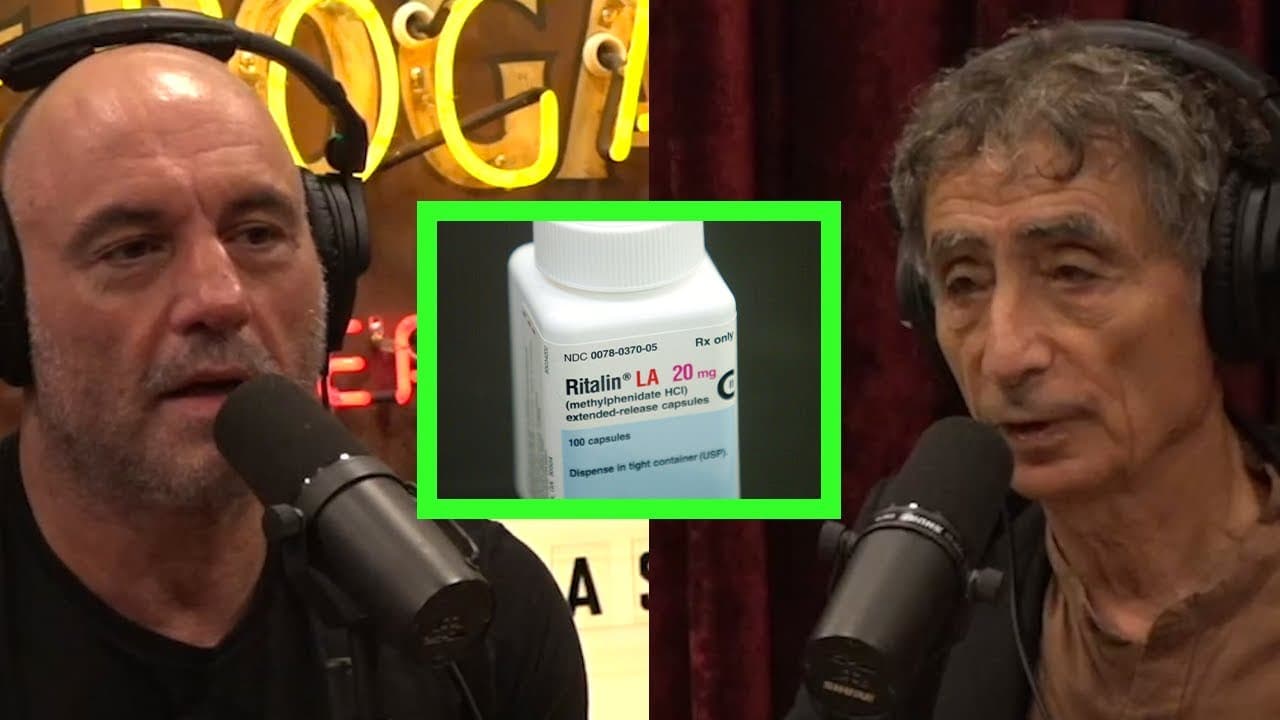
Physician Gabor Mate Gives His Analysis on ADHD and Anxiety
TL;DR
ADHD is not a disease but a coping mechanism developed in response to stress and a lack of emotional support. It manifests through symptoms like difficulty focusing and impulse control. To effectively manage ADHD, it's crucial to address family dynamics and environmental stressors rather than relying solely on medication.
Transcript
the jurgen experience i was just watching this very disturbing commercial yeah um yesterday with children and it was talking about adhd and it showed a kid that was not paying attention in class and it showed these kids like playing around and doing things they weren't supposed to be doing yes and then they introduced this medication and then you h... Read More
Key Insights
- 🧑🏭 ADHD is a coping mechanism rather than a disease, resulting from stress and environmental factors.
- 🧠 The brain's development is shaped by the environment, particularly the relationship with parents.
- ❓ Medication can provide temporary relief from symptoms but should be used in conjunction with therapy and addressing underlying stressors.
Install to Summarize YouTube Videos and Get Transcripts
Explore YouTube Video Summarizer or Get YouTube Transcript Extractor
Questions & Answers
Q: Is ADHD a disease?
No, ADHD is not a disease. It is a coping mechanism that arises from stress and environmental factors. Viewing it as a disease oversimplifies the condition and neglects addressing the root cause.
Q: How does ADHD affect individuals?
ADHD affects individuals by making it difficult for them to pay attention, control their impulses, and sometimes causing hyperactivity. It can significantly impact their daily lives and relationships.
Q: Can medication help with ADHD symptoms?
Medication can provide temporary relief from ADHD symptoms, but it does not address the underlying reasons behind the condition. Medication should be combined with therapy and addressing environmental factors for long-term improvement.
Q: How can parents support a child with ADHD?
Parents can support a child with ADHD by creating a supportive and emotionally attuned environment. Understanding their child's needs, managing stress levels, and seeking therapy for the entire family can be helpful.
Summary
In this video, Dr. Gabor Maté discusses the topic of ADHD and challenges the notion that it is a disease. He explains that ADHD is a coping mechanism that developed in response to early life stress and a lack of emotional attunement from parents. Dr. Maté emphasizes the importance of understanding the underlying causes of ADHD and the need to address the entire family dynamics rather than solely medicating the child.
Questions & Answers
Q: What is ADHD and is it a real disease?
ADHD, or Attention Deficit Hyperactivity Disorder, is a condition characterized by difficulty paying attention, poor impulse control, and hyperactivity. While the medical profession and many experts consider it a heritable disease, Dr. Maté argues that it is not a disease. Rather, it is a coping mechanism that has developed under stressful circumstances.
Q: How does early life stress contribute to ADHD?
Infants absorb the stress of their parents, and when they are unable to escape or fight back, they resort to tuning out as a coping mechanism. This tuning out happens during brain development and can become programmed into the brain. The stressful environment shapes the circuits of the brain, and if the parents are emotionally attuned and available, the child's brain will develop properly. However, if the parents are stressed, the child absorbs the stress and tunes out, leading to ADHD-like symptoms.
Q: How can ADHD be effectively treated?
Rather than relying solely on medication, Dr. Maté suggests a holistic approach that involves addressing the entire family dynamic. By examining the parental relationship, the stressors in the family's life, and understanding the child's emotions, parents can create an environment that supports the child's needs. This approach has shown positive results in changing the child's behavior and improving their overall well-being.
Q: Have you personally taken medications for ADHD?
Yes, Dr. Maté has taken medications such as Ritalin and Dexadrine to manage his ADHD symptoms. While they provided temporary relief, he recognized that relying solely on medication limits the brain's ability to adapt and change. He believes that treating the brain holistically and addressing the underlying causes is a better long-term solution.
Q: How do doctors typically approach treating ADHD?
Doctors often approach ADHD as a disease and rely heavily on medication to manage the symptoms. However, many physicians lack knowledge of brain development and trauma, which are essential factors in understanding conditions like ADHD. Dr. Maté believes that the over-reliance on medication is a result of a lack of imagination, education, and a failure to consider the impact of trauma on mental health.
Q: Can anxiety be considered a disease?
Dr. Maté argues that anxiety is not a disease but a natural response to the world. Depicting anxiety as a disease oversimplifies the complex emotions and thought processes that contribute to anxiety. He suggests that anxiety is a response to how an individual looks at the world and how they perceive and process information.
Q: How does a child's upbringing influence their anxiety levels?
A child's anxiety levels can be influenced by their upbringing, particularly the availability and emotional attunement of their parents. When parents respond to a child's distress and provide a safe and secure environment, the child learns that the world is not a threatening place. However, when parents neglect the child's needs and fail to provide emotional support, the child's panic circuits become activated, leading to heightened anxiety.
Q: Why do some parents choose to leave their child alone when they're crying?
The thought process behind leaving a crying child alone is often based on the belief that providing comfort and care will lead to an indulgent child. However, this approach fails to recognize the importance of meeting a child's needs and teaching them that the world is safe. By responding to a child's distress in a calm and loving way, parents help the child develop self-regulation and confidence, leading to fewer feelings of anxiety.
Q: What impact does emotional attunement from parents have on a child's development?
Emotional attunement from parents plays a crucial role in a child's development. When parents are emotionally available and responsive to the child's needs, the child learns to regulate their emotions and develops a sense of self-confidence. The child's brain uses the mature circuits of the adult brain to regulate its own immature circuits, allowing for healthy emotional development.
Q: How should ADHD and anxiety be approached in a more holistic manner?
Instead of solely focusing on medication, a more holistic approach involves understanding the underlying causes of ADHD and anxiety. This includes examining family dynamics, addressing potential stressors, improving emotional attunement, and creating a supportive environment for the child. By considering the whole family system, parents can often see positive changes in their child's behavior and overall well-being.
Takeaways
Dr. Gabor Maté challenges the conventional understanding of ADHD as a disease and emphasizes the importance of addressing the underlying causes and family dynamics associated with it. He highlights the role of stress and lack of emotional attunement in the development of ADHD symptoms. Dr. Maté suggests that a holistic approach that considers the whole family system is essential in effectively treating ADHD and anxiety. Relying solely on medication can limit the brain's ability to adapt and heal, and it is crucial to recognize the impact of early life experiences on brain development. Overall, understanding the root causes of ADHD and anxiety can lead to more compassionate and effective approaches to treatment.
Summary & Key Takeaways
-
ADHD is often misunderstood as a disease when it is actually a coping mechanism. It is characterized by difficulty paying attention, poor impulse control, and sometimes hyperactivity.
-
The medical profession and experts often view ADHD as an inherited disease, but it is better understood as a response to stress and environmental factors.
-
The brain's development is affected by the environment, particularly the relationship with parents. Infants who absorb parental stress may develop coping mechanisms such as tuning out.
-
Treating ADHD should involve addressing the family dynamics, stress levels, and emotional support rather than solely relying on medication.
Read in Other Languages (beta)
Share This Summary 📚
Summarize YouTube Videos and Get Video Transcripts with 1-Click
Try YouTube Summary with ChatGPT & Claude or YouTube Transcript Generator
Explore More Summaries from PowerfulJRE 📚






Summarize YouTube Videos and Get Video Transcripts with 1-Click
Try YouTube Summary with ChatGPT & Claude or YouTube Transcript Generator