Why Will 80% of Apps Disappear by 2026?
TL;DR
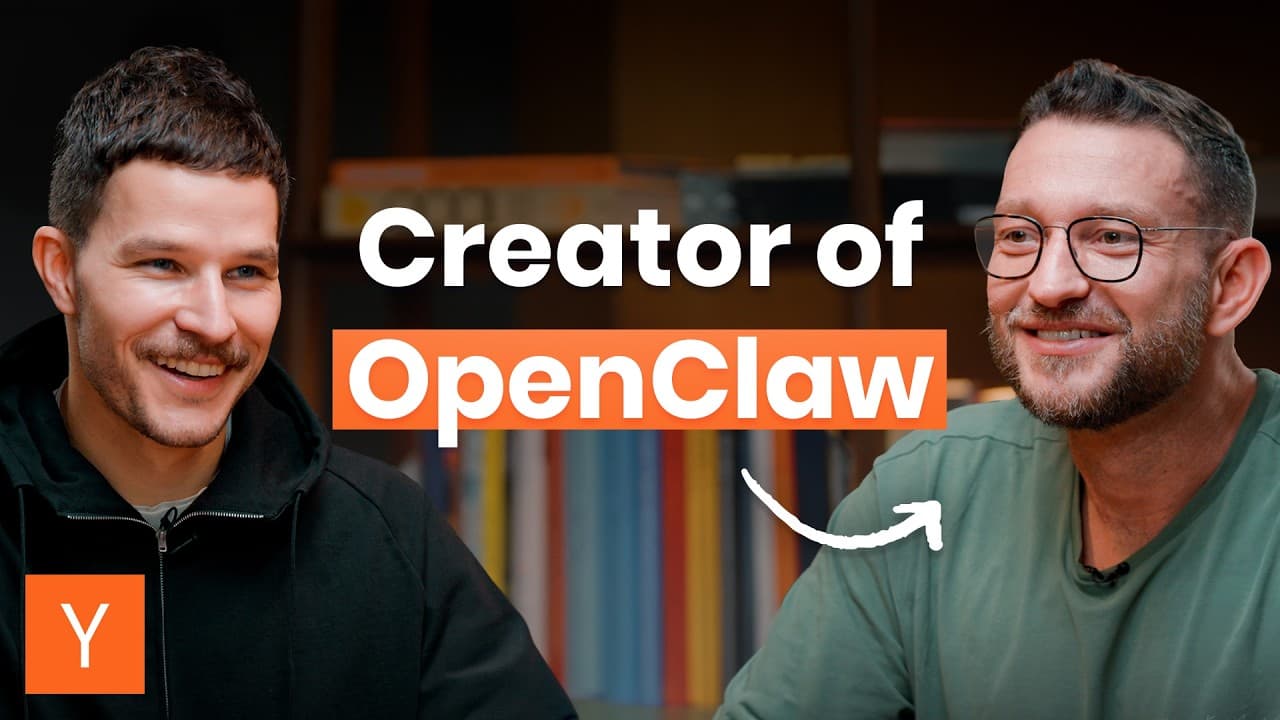
Peter Steinberger, creator of OpenClaw, discusses the transformative potential of personal AI agents. OpenClaw, an open-source AI, runs locally on devices, enabling more comprehensive control and integration than cloud-based solutions. This shift could render many traditional apps obsolete by offering more efficient, personalized task management and data handling.
Transcript
Today I'm sitting down with Peter Steinberger, the creator of OpenClaw, the open- source personal AI agent that has completely taken over the internet. The GitHub repo exploded to over 160,000 stars practically overnight. [music] The community has built countless projects like Maltbook where bots talk among themselves. And now the bots are even ren... Read More
Key Insights
- OpenClaw is a personal AI agent that operates locally on user devices, offering more power and flexibility than cloud-based AI solutions.
- The ability of OpenClaw to access and manage a device's entire data set allows it to perform tasks beyond the scope of typical apps.
- Peter Steinberger believes 80% of current apps may become obsolete as AI agents like OpenClaw take over their functions.
- AI agents can facilitate bot-to-bot and bot-to-human interactions, automating tasks such as booking reservations or managing schedules.
- The shift from centralized 'God AI' to swarm intelligence allows for distributed and specialized AI functions.
- OpenClaw maintains user privacy by storing data locally, giving users control over their information.
- The open-source nature of OpenClaw encourages community development and innovation, leading to rapid advancements.
- Peter Steinberger uses a contrarian approach to development, favoring local execution and multiple repository checkouts over cloud solutions.
Install to Summarize YouTube Videos and Get Transcripts
Explore YouTube Video Summarizer or Get YouTube Transcript Extractor
Questions & Answers
Q: How does OpenClaw differ from other AI solutions?
OpenClaw operates locally on user devices, unlike many AI solutions that rely on cloud computing. This local operation allows it to integrate more deeply with the device, accessing and managing the entire data set, which enables it to perform tasks beyond the scope of typical apps. This approach offers greater power and flexibility, making it a unique solution in the AI landscape.
Q: Why might 80% of apps become obsolete according to Peter Steinberger?
Peter Steinberger suggests that 80% of current apps may become obsolete as AI agents like OpenClaw can perform their functions more efficiently. These agents can manage data and tasks in a more natural and integrated manner, reducing the need for individual apps that handle specific tasks. This shift is driven by the comprehensive capabilities of AI agents to automate and personalize task management.
Q: What are the privacy implications of using OpenClaw?
OpenClaw enhances user privacy by storing data locally on the user's device, rather than in the cloud. This local storage gives users control over their information, ensuring that their data remains private and secure. The design of OpenClaw prioritizes user ownership of data, which contrasts with many cloud-based services that store user data on remote servers.
Q: How does OpenClaw facilitate bot-to-bot and bot-to-human interactions?
OpenClaw facilitates bot-to-bot and bot-to-human interactions by automating tasks such as booking reservations or managing schedules. It can communicate with other bots and even hire humans to perform tasks that require human intervention. This capability allows for more efficient task management and interaction, leveraging both AI and human resources as needed.
Q: What is the significance of swarm intelligence in AI development?
Swarm intelligence represents a shift from centralized 'God AI' to a more distributed and specialized approach. This model allows for multiple AI agents to perform specific tasks, working together to achieve complex goals. It mirrors the way human societies operate, with individuals specializing in certain areas, and is seen as a more scalable and adaptable model for AI development.
Q: How does OpenClaw encourage community development?
As an open-source project, OpenClaw encourages community development by allowing developers to contribute to its codebase. This openness fosters innovation and rapid advancements, as developers can build upon each other's work, share insights, and collaborate on new features. The community-driven approach helps accelerate the evolution of OpenClaw and its applications.
Q: What is Peter Steinberger's approach to software development?
Peter Steinberger adopts a contrarian approach to software development, favoring local execution and multiple repository checkouts over cloud-based solutions. He emphasizes simplicity and efficiency, using tools like codex for coding and avoiding unnecessary complexity in his workflow. This approach allows for more direct and effective development processes.
Q: What are the potential future applications of AI agents like OpenClaw?
AI agents like OpenClaw have the potential to revolutionize task management by automating and personalizing interactions and processes. They can replace many traditional apps, manage data more naturally, and facilitate complex interactions between bots and humans. The future applications of such agents include more efficient workflow management, enhanced personal assistance, and greater integration with everyday devices and services.
Summary & Key Takeaways
-
OpenClaw, created by Peter Steinberger, is an open-source AI agent that runs locally on devices, offering more comprehensive control and integration than cloud-based solutions. This local operation allows it to perform tasks beyond the scope of typical apps, potentially rendering many obsolete.
-
The unique capabilities of OpenClaw include facilitating bot-to-bot and bot-to-human interactions, automating tasks such as booking reservations or managing schedules. This shift from centralized AI to swarm intelligence allows for distributed and specialized AI functions.
-
Peter Steinberger believes that 80% of current apps may become obsolete as AI agents like OpenClaw take over their functions. OpenClaw maintains user privacy by storing data locally, giving users control over their information, and its open-source nature encourages community development and innovation.
Read in Other Languages (beta)
Share This Summary 📚
Summarize YouTube Videos and Get Video Transcripts with 1-Click
Try YouTube Summary with ChatGPT & Claude or YouTube Transcript Generator
Explore More Summaries from Y Combinator 📚

Summarize YouTube Videos and Get Video Transcripts with 1-Click
Try YouTube Summary with ChatGPT & Claude or YouTube Transcript Generator