Can we call it a "world map" if it's missing a billion people? | Rebecca Firth
TL;DR
In a world where one billion people are not visible on maps, the Humanitarian OpenStreetMap Team (HOT) is mobilizing volunteers to map vulnerable areas and provide critical information for disaster response and development programs.
Transcript
When Hurricane Maria hit Puerto Rico in 2017, we all watched as a disaster played out on our screens. At least 160,000 people were displaced, and nearly 3,000 people died. Electricity was cut off to the entire island, and some neighborhoods didn't get power back for 11 months. Many of those watching didn't know how to help. Some donated to internat... Read More
Key Insights
- 🌍 Mapping vulnerable places is crucial in humanitarian crises, as many affected areas are not on commercial maps, leaving aid organizations without critical information.
- 📝 OpenStreetMap is a free, open-source tool that allows anyone to map the world, and it has been used to map areas home to over 150 million people.
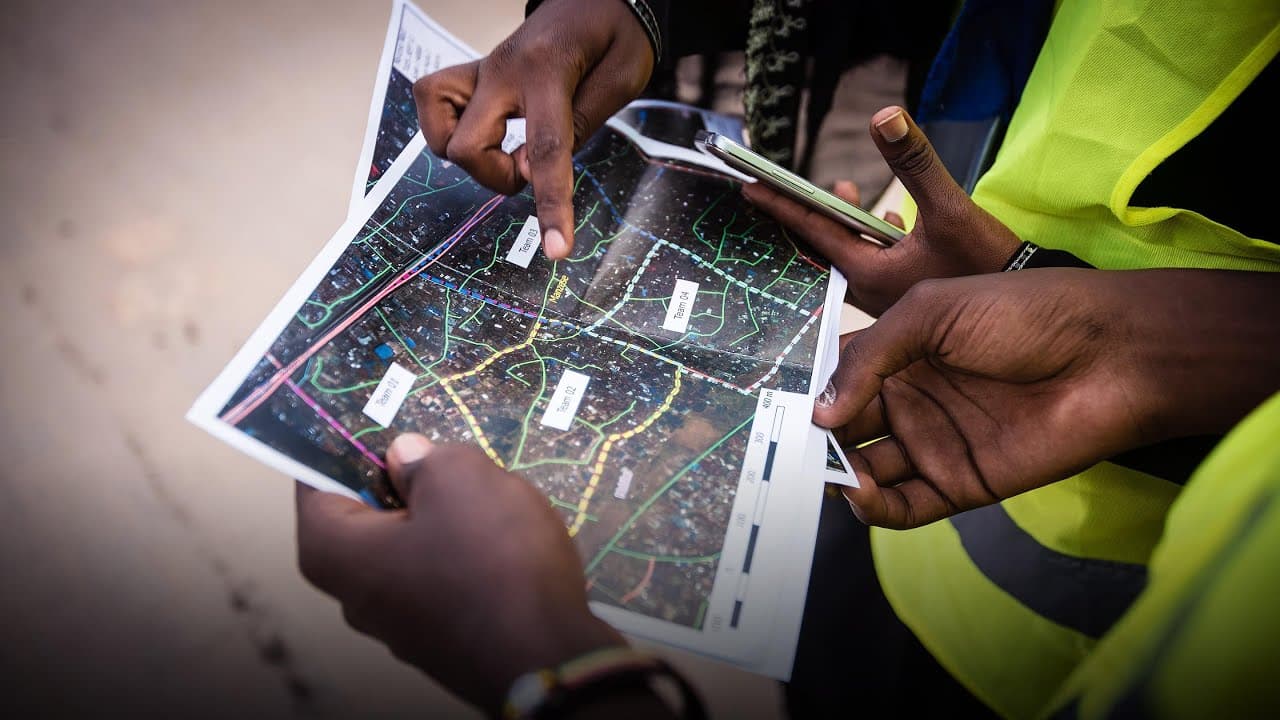
- 🌐 Mapping occurs in two phases: satellite imagery is turned into base maps by volunteers worldwide, and then local mapping adds additional information such as identifying buildings.
- 🌏 HOT aims to engage one million volunteers over the next five years to map the most vulnerable areas in 94 countries, representing the one billion most vulnerable people.
- 📱 The organization needs to invest in mobile technologies to make mapping easier and quicker, encouraging more people to contribute to mapping their communities.
- 💡 Maps created by HOT have been used by organizations like the Red Cross, Médecins Sans Frontières, and UNICEF for humanitarian efforts.
- ⚡ Having updated maps before crises occur can lead to more effective disaster response and development programs, ultimately improving lives and saving more people.
- 🙌 Addressing the problem of one billion invisible people is a collective effort that anyone can contribute to simply by mapping, making a meaningful difference in the lives of others.
Install to Summarize YouTube Videos and Get Transcripts
Explore YouTube Video Summarizer or Get YouTube Transcript Extractor
Questions & Answers
Q: How did the Humanitarian OpenStreetMap Team (HOT) help in the aftermath of Hurricane Maria in Puerto Rico?
The Humanitarian OpenStreetMap Team mobilized 6,000 volunteers from across the world to map every home and road in Puerto Rico. The maps created by the volunteers were then used by responders to assess the state of buildings and roads, as well as provide emergency funds, WiFi, and phone-charging points to people whose homes were damaged.
Summary & Key Takeaways
-
In times of crisis, many vulnerable communities are not included on digital maps, causing avoidable suffering. The Humanitarian OpenStreetMap Team (HOT) mobilized volunteers to map Puerto Rico after Hurricane Maria, providing vital information for responders.
-
Commercial maps often exclude vulnerable places due to profitability concerns, leaving aid organizations to create offline maps that quickly become outdated. HOT uses OpenStreetMap, a free and open-source tool that allows anyone to map the world, creating easily shareable and updatable data.
-
HOT has engaged over 200,000 volunteers since 2010, mapping areas for more than 150 million people. These maps have been used in search and rescue operations, polio vaccinations, and assisting refugees. The goal is to engage one million volunteers over the next five years to map the one billion most vulnerable people across 94 countries.
Read in Other Languages (beta)
Share This Summary 📚
Summarize YouTube Videos and Get Video Transcripts with 1-Click
Try YouTube Summary with ChatGPT & Claude or YouTube Transcript Generator
Explore More Summaries from TED 📚


Summarize YouTube Videos and Get Video Transcripts with 1-Click
Try YouTube Summary with ChatGPT & Claude or YouTube Transcript Generator