The African Swamp Protecting Earth's Environment | Vera Songwe | TED
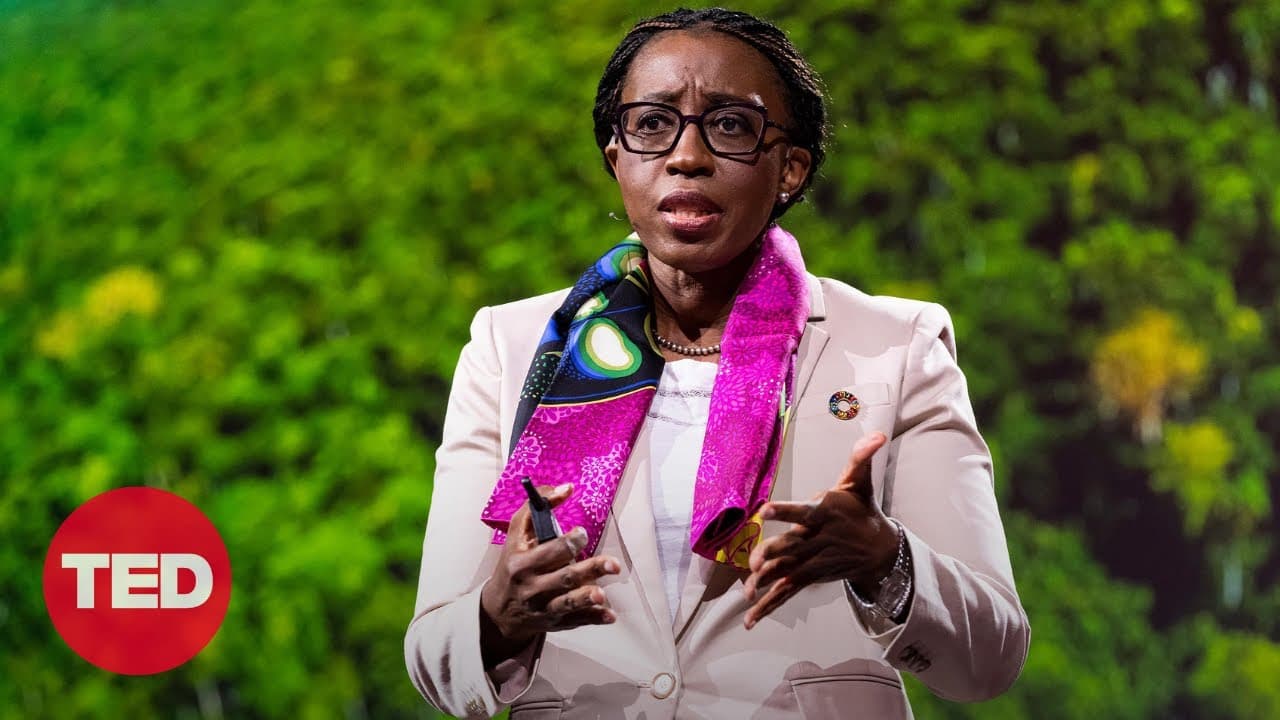
TL;DR
This content discusses the importance of protecting the peatlands of the Congo Basin as a valuable carbon sink and economic asset in the fight against climate change.
Transcript
There is a play by one of my favorite writers, Nobel laureate Wole Soyinka, I would like to tell you about, "The Swamp Dwellers." "The Swamp Dwellers" are about a blind beggar who attempts to buy a piece of swampland because he believes that the swamps will provide him with a better livelihood. However, the villagers in that swamp believe that deep... Read More
Key Insights
- 📕: "The Swamp Dwellers" by Wole Soyinka is a play about a blind beggar who believes buying swampland will provide a better livelihood, while the villagers rely on a protecting deity in the swamp.
- 🌍: The peatlands of the Congo Basin, spanning 145,000 kilometers, act as a crucial carbon sink, storing 30 billion tons of carbon and helping prevent exceeding the 1.5-degree warming threshold.
- 🌲: Threats to the peatlands include oil exploration, logging, and lack of basic services for the surrounding communities.
- 🔥: Similar to the Amazon and Indonesia, where economic interests led to the burning and destruction of forests, it would be devastating if the same fate were to occur in the peatlands of the Congo Basin.
- 💰: The peatlands have economic potential, and valuing them appropriately with a carbon price of $50 could establish a peatland development fund to address developmental challenges in Africa.
- 🌍: Africa has not significantly contributed to the climate crisis but has played a crucial role in maintaining the planet's health, deserving recognition and support.
- 🌍: It is important to address climate change with a focus on equitable development, justice, and transparency.
- 📢: Join in recognizing Africa's contribution to climate change and advocate for the recognition and fair reward of Africa's efforts by establishing a price on carbon in markets.
Install to Summarize YouTube Videos and Get Transcripts
Explore YouTube Video Summarizer or Get YouTube Transcript Extractor
Questions & Answers
Q: What is the play "The Swamp Dwellers" about?
"The Swamp Dwellers" is a play by Wole Soyinka that revolves around a blind beggar who tries to purchase a piece of swampland in the hopes of improving his livelihood. However, the villagers in the swamp believe in a deity residing in the forest who protects them from misfortune.
Q: What are the peatlands of the Congo Basin?
The peatlands of the Congo Basin are expansive areas of weeds, shrubs, and trees that act as a carbon sink, absorbing carbon from the atmosphere. Spanning 145,000 kilometers, these peat formations began 10,000 years ago when humans transitioned from hunter-gatherers to farmers.
Q: How significant are the peatlands of the Congo Basin in terms of carbon storage?
Scientists have discovered that the tropical peatlands in the Congo Basin are possibly the largest carbon sink globally. These peatlands hold a staggering 30 billion tons of carbon, which is crucial in mitigating climate change. Without them, the world would likely have already exceeded the 1.5-degree warming threshold.
Q: How are the peatlands of the Congo Basin under threat?
The peatlands of the Congo Basin face numerous threats. Plans for oil exploration are being considered, logging licenses have already been granted, and the communities that rely on these peatlands for survival are in jeopardy. Similar to the Amazon and Indonesian forests, economic interests could transform these peatlands from carbon sinks to carbon sources.
Q: What potential economic benefits and challenges are associated with the peatlands of the Congo Basin?
The peatlands of the Congo Basin hold economic potential for the surrounding communities, providing an opportunity for improved livelihoods. Valuing the carbon sequestered in these peatlands at $50 per ton could result in a peatland development fund worth $1.5 trillion. However, significant developmental challenges persist, such as lack of access to basic services, hindering these communities' progress.
Summary & Key Takeaways
-
"The Swamp Dwellers" is a play by Wole Soyinka about a blind beggar who believes that buying swampland will improve his life, while the villagers believe in a deity protecting them from misfortune.
-
The peatlands of the Congo Basin are a large carbon sink and store 30 billion tons of carbon, helping to prevent further warming.
-
The peatlands are under threat from oil exploration and logging, and protecting them could improve the livelihoods of communities and address developmental challenges in Africa.
Read in Other Languages (beta)
Share This Summary 📚
Summarize YouTube Videos and Get Video Transcripts with 1-Click
Try YouTube Summary with ChatGPT & Claude or YouTube Transcript Generator
Explore More Summaries from TED 📚




Summarize YouTube Videos and Get Video Transcripts with 1-Click
Try YouTube Summary with ChatGPT & Claude or YouTube Transcript Generator