Products
Features
YouTube Video Summarizer
Summarize YouTube videos
Web & PDF Highlighter
Highlight web pages & PDFs
Chat with PDF
Ask any PDF questions with AI
Ask AI Clone
Chat with your highlights & memories
Audio Transcriber
Transcribe audio files to text
Glasp Reader
Read and highlight articles
Kindle Highlight Export
Export your Kindle highlights
Idea Hatch
Hatch ideas from your highlights
Integrations
Obsidian Plugin
Notion Integration
Pocket Integration
Instapaper Integration
Medium Integration
Readwise Integration
Snipd Integration
Hypothesis Integration
Apps & Extensions
Chrome Extension
Safari Extension
Edge Add-ons
Firefox Add-ons
iOS App
Android App
Discover
Discover
Ideas
Discover new ideas and insights
Articles
Curated articles and insights
Books
Book recommendations by great minds
Posts
Essays and notes from readers
Quotes
Inspiring quotes collection
Videos
Curated videos and summaries
Explore Glasp
Glasp Story
How we grew from 0 to 3 million users
Glasp Newsletter
Weekly insights and updates
Glasp Talk
Interview series with great minds
Glasp Blog
Latest news and articles
Glasp Use Cases
Learn how others use Glasp
Build & Support
Glasp API
Access Glasp's API for developers
MCP Connector
Connect Glasp to Claude & ChatGPT
Community
Glasp Reddit Community
Students
Student discount and benefits
FAQs
Frequently Asked Questions
AboutPricing
DashboardLog inSign up

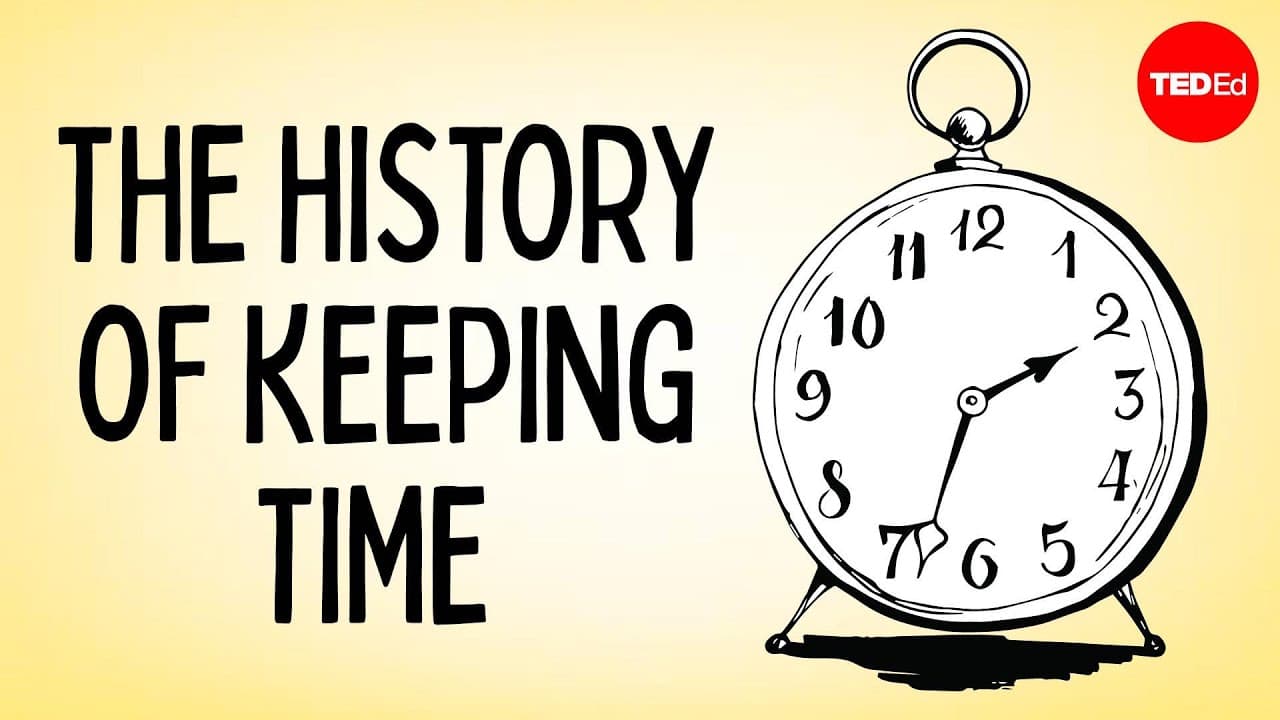
The history of keeping time - Karen Mensing
231.2K views
•
August 16, 2012
by
TED-Ed
YouTube video player
The history of keeping time - Karen Mensing

TL;DR

The history of timekeeping, from sundials to atomic clocks, and how it impacts our daily lives and global communication.

Transcript

We check the time every day, all day long. But did you ever wonder - where did telling time come from? Why does it matter what time it is? Who determined the clock and why in the world are there so many different time zones? The first form of telling time was the sundial and the earliest sundials known from the archaeological record are obelisks fr... Read More

Key Insights

  • 🦾 The sundial, hourglass, and mechanical clocks were significant milestones in the development of timekeeping devices.
  • 🛟 Timekeeping systems are crucial in various aspects of life, such as farming, communication, and transportation, like the American railroad system.
  • ⌛ The use of time zones helps standardize time and enables smoother global communication.

Install to Summarize YouTube Videos and Get Transcripts

Explore YouTube Video Summarizer or Get YouTube Transcript Extractor

Questions & Answers

Q: What was the first device used for timekeeping?

The first device used for timekeeping was the sundial, which had a gnomon that cast a shadow onto a surface to indicate the time.

Q: How did hourglasses work?

Hourglasses used fine sand pouring through a hole at a constant rate to measure a predetermined period of time.

Q: What was the significance of mechanical clocks?

Mechanical clocks, invented in the 13th century, relied on pendulum swings or quartz crystal vibrations for higher accuracy than earlier time-measuring devices like sand or candles.

Q: What is the basis for scientific time today?

The basis for scientific time today is the international atomic time, which relies on the continuous count of seconds based on atomic clocks worldwide.

Summary & Key Takeaways

  • The first form of telling time was the sundial, which cast a shadow onto a surface with the help of a stick called a gnomon.

  • Other devices, such as hourglasses, candles, and incense sticks, were also used to estimate the passage of time.

  • The invention of mechanical clocks and the modern reliance on atomic clocks have revolutionized timekeeping with greater accuracy and standardization.


Read in Other Languages (beta)

English

Share This Summary 📚

Summarize YouTube Videos and Get Video Transcripts with 1-Click

Download browser extensions on:

Try YouTube Summary with ChatGPT & Claude or YouTube Transcript Generator

Explore More Summaries from TED-Ed 📚
How a wound heals itself - Sarthak Sinha thumbnail
How a wound heals itself - Sarthak Sinha
TED-Ed
Can you solve the prisoner hat riddle? - Alex Gendler thumbnail
Can you solve the prisoner hat riddle? - Alex Gendler
TED-Ed
Why do women have periods? thumbnail
Why do women have periods?
TED-Ed
How does money laundering work? - Delena D. Spann thumbnail
How does money laundering work? - Delena D. Spann
TED-Ed
Just How Small is an Atom? thumbnail
Just How Small is an Atom?
TED-Ed
Can you solve the virus riddle? - Lisa Winer thumbnail
Can you solve the virus riddle? - Lisa Winer
TED-Ed

Summarize YouTube Videos and Get Video Transcripts with 1-Click

Download browser extensions on:

Try YouTube Summary with ChatGPT & Claude or YouTube Transcript Generator

Apps & Extensions

  • Chrome Extension
  • Safari Extension
  • Edge Add-ons
  • Firefox Add-ons
  • iOS App
  • Android App

Key Features

  • YouTube Video Summarizer
  • Web & PDF Summarizer
  • Web & PDF Highlighter
  • Chat with PDF
  • Ask AI Clone
  • Audio Transcriber
  • Glasp Reader
  • Kindle Highlight Export
  • Idea Hatch

Integrations

  • Obsidian Plugin
  • Notion Integration
  • Pocket Integration
  • Instapaper Integration
  • Medium Integration
  • Readwise Integration
  • Snipd Integration
  • Hypothesis Integration

More Features

  • APIs
  • MCP Connector
  • Blog & Post
  • Embed Links
  • Image Highlight
  • Personality Test
  • Quote Shots
  • Open Graph Checker

Company

  • About us
  • Our Story
  • Blog
  • Community
  • FAQs
  • Job Board
  • Newsletter
  • Pricing
Terms

•

Privacy

•

Guidelines

© 2026 Glasp Inc. All rights reserved.