Why we need to go back to Mars - Joel Levine
TL;DR
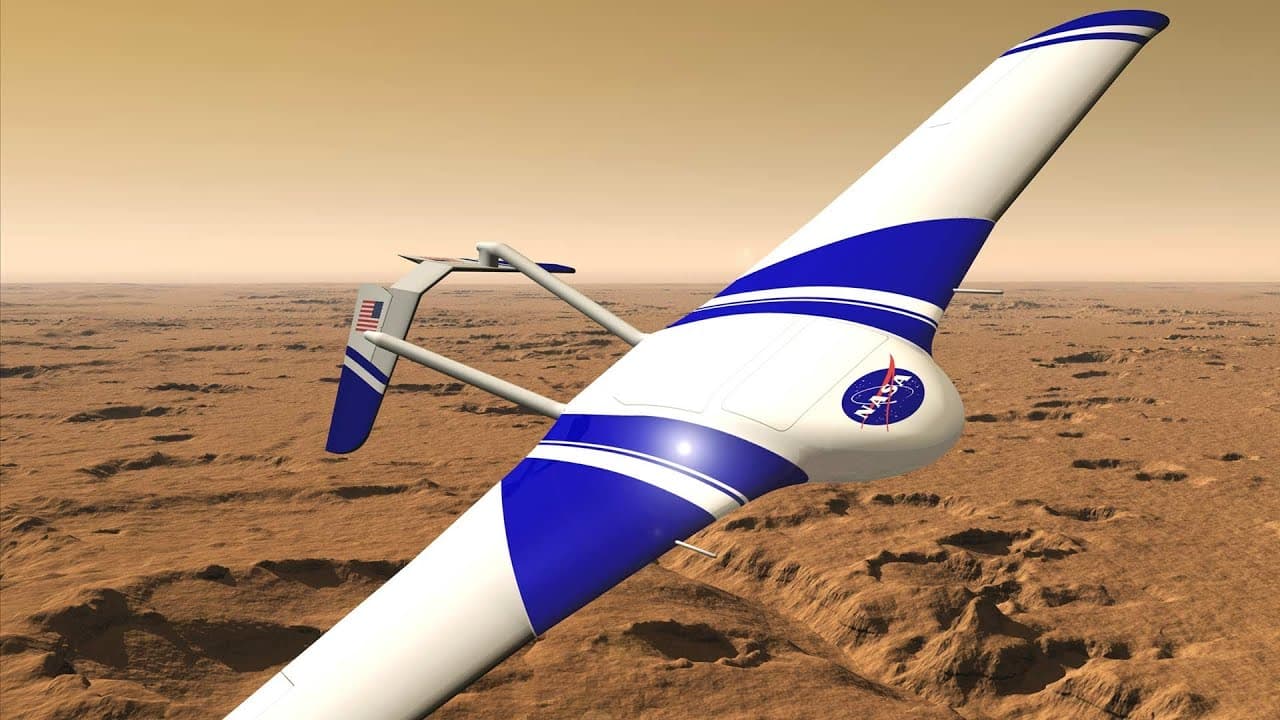
NASA is planning to send a robotic rocket-powered airplane called Ares to Mars to study its atmosphere, search for signs of life, and inspire the next generation of scientists and engineers.
Transcript
I want to talk about 4.6 billion years of history in 18 minutes that's 300 million years per minute let's start with the first photograph NASA obtained of planet Mars this is flyby Mariner 4 it was taken in 1965 when this picture appeared that well-known scientific journal the New York Times wrote in its editorial Mars is uninteresting it's a dead ... Read More
Key Insights
- 🌥️ Mars has unique geological features, such as Olympus Mons (the largest volcano), Valles Marineris (the largest canyon), and Hellas Basin (the largest impact crater).
- 💦 The presence of subsurface water on Mars suggests a history of abundant liquid water, potentially supporting the conditions necessary for life.
- 🤨 The discovery of methane in the Martian atmosphere raises the possibility of biological activity on the planet.
- ✈️ Ares, a robotic rocket-powered airplane, is designed to explore Mars from the air, providing a new perspective and valuable data for future missions.
- 💨 Successful testing of Ares in wind tunnels and at high altitudes on Earth solidifies confidence in its ability to fly on Mars.
- 😨 Ares represents a significant step towards advancing our understanding of Mars and inspiring scientific and technological advancements.
- 🧑🔬 The study of Mars is crucial for national security and economic vitality, as it nurtures the next generation of scientists, engineers, mathematicians, and technologists.
Install to Summarize YouTube Videos and Get Transcripts
Explore YouTube Video Summarizer or Get YouTube Transcript Extractor
Questions & Answers
Q: Why was the first photograph of Mars considered uninteresting?
The first photograph of Mars in 1965 was deemed uninteresting because it showed a seemingly dead and barren planet, lacking any signs of potential scientific interest or the possibility of life.
Q: What evidence suggests that Mars once had rivers and oceans?
Recent images from missions like Spirit and Opportunity have shown rock formations and features indicative of fast-flowing water, similar to what is observed on Earth. Additionally, measurements from orbiting satellites have detected subsurface water frozen in the form of ice.
Q: Why is the presence of methane in the Martian atmosphere significant?
Methane on Earth is primarily produced by living systems, so finding methane on Mars raises the intriguing possibility that microbial life or other biological processes might be present on the Red Planet.
Q: How will Ares, the robotic airplane, contribute to the exploration of Mars?
Ares will fly above the Martian surface, collecting high-resolution atmospheric measurements, searching for biogenic gases, studying the surface, magnetism, and other areas of interest. It will also transmit images back to Earth and inspire the next generation of scientists and engineers.
Summary & Key Takeaways
-
NASA has extensively studied Mars since obtaining its first photograph in 1965, revealing fascinating features such as Olympus Mons, the largest volcano in the solar system, and Valles Marineris, the largest canyon.
-
Although there is no liquid water on Mars today, evidence suggests that it had rivers and oceans in its early history, and there is subsurface water in the form of ice.
-
The presence of methane in the Martian atmosphere, a gas typically associated with living systems on Earth, has raised questions about the possibility of life on Mars.
Read in Other Languages (beta)
Share This Summary 📚
Summarize YouTube Videos and Get Video Transcripts with 1-Click
Try YouTube Summary with ChatGPT & Claude or YouTube Transcript Generator
Explore More Summaries from TED-Ed 📚






Summarize YouTube Videos and Get Video Transcripts with 1-Click
Try YouTube Summary with ChatGPT & Claude or YouTube Transcript Generator