How to Build an AI-Driven Organization
TL;DR
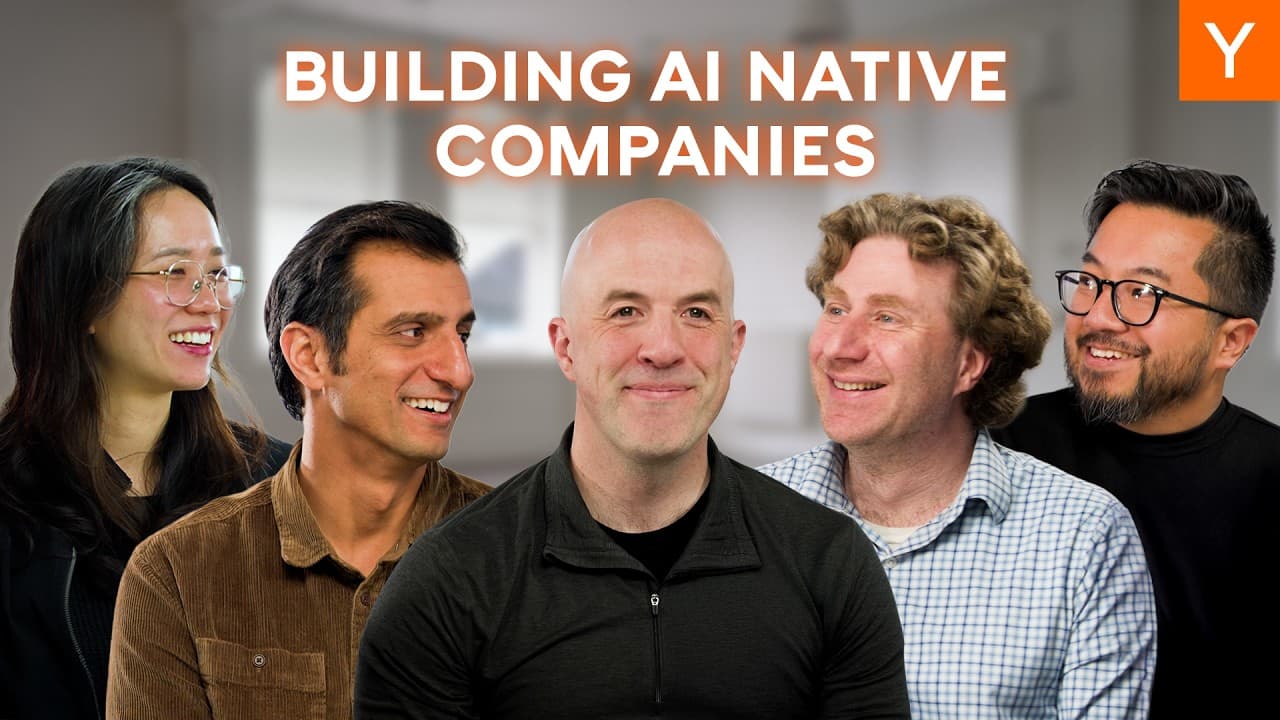
Building an AI-driven organization involves integrating AI as a foundational layer, not just a tool. This requires creating a shared knowledge base and empowering all employees with AI tools, fostering a high-trust, egalitarian environment. Such integration can transform workflows, enhance productivity, and create a super-intelligent organization.
Transcript
How do you build super intelligence inside a company? >> Part of the key thing is not to just use AI as a copilot. This is the the thing where you use it as the building layer for everything. And you need to start recording all the artifacts. >> It's like a shared organizational brain. It's like the closest thing to us being able to like connect ou... Read More
Key Insights
- AI should be integrated at the foundational level, not just as a supplementary tool.
- A shared organizational brain enhances collaboration and knowledge sharing.
- AI empowers users by shifting control from developers to end-users.
- Transparency and trust are crucial for effective AI deployment in organizations.
- AI can dramatically increase the complexity and scale of questions asked within an organization.
- Building an AI-native organization requires openness and willingness to invest in AI infrastructure.
- AI can eliminate drudgery and enhance individual empowerment.
- Organizations must choose between centralized control and decentralized empowerment with AI.
Install to Summarize YouTube Videos and Get Transcripts
Explore YouTube Video Summarizer or Get YouTube Transcript Extractor
Questions & Answers
Q: How can AI transform an organization?
AI can transform an organization by serving as a foundational layer that enhances collaboration, knowledge sharing, and productivity. By integrating AI tools and creating a shared organizational brain, companies can empower employees, streamline workflows, and foster innovation. This transformation requires a high-trust, egalitarian environment and a commitment to transparency and openness.
Q: What is the role of trust in AI integration?
Trust plays a crucial role in AI integration by enabling transparency and collaboration within an organization. A high-trust environment allows for open sharing of AI-generated insights and fosters a culture where employees feel empowered to leverage AI tools. This trust is essential for maximizing the benefits of AI and creating a super-intelligent organization.
Q: How does AI empower individual users?
AI empowers individual users by shifting control from developers to end-users, allowing them to customize and extend AI tools to meet their specific needs. This empowerment enhances productivity, eliminates drudgery, and enables users to tackle complex tasks more efficiently. By democratizing access to AI capabilities, organizations can foster innovation and creativity at all levels.
Q: What are the challenges of building an AI-native organization?
Building an AI-native organization involves challenges such as fostering a high-trust, egalitarian environment and ensuring transparency in AI deployment. Organizations must also invest in AI infrastructure and tools, create a shared knowledge base, and empower employees to leverage AI effectively. Balancing centralized control with decentralized empowerment is crucial for maximizing AI's potential.
Q: Why is a shared organizational brain important?
A shared organizational brain is important because it enhances collaboration and knowledge sharing within an organization. By integrating AI tools and creating a centralized knowledge base, companies can empower employees to access and contribute to collective insights. This fosters innovation, streamlines workflows, and enables organizations to operate more efficiently and intelligently.
Q: How can AI increase the complexity of questions asked?
AI can increase the complexity of questions asked by providing users with powerful tools to analyze and interpret data. By integrating AI into workflows, organizations can empower employees to ask more complex and nuanced questions, leading to deeper insights and more informed decision-making. This capability fosters innovation and drives organizational growth.
Q: What is the significance of decentralization in AI?
Decentralization in AI is significant because it empowers individual users to customize and extend AI tools to meet their specific needs. This decentralization fosters innovation, enhances productivity, and democratizes access to AI capabilities. By enabling users to take control of AI tools, organizations can create a more dynamic and responsive environment that adapts to changing needs.
Q: How can organizations balance control and empowerment with AI?
Organizations can balance control and empowerment with AI by fostering a high-trust environment that encourages transparency and collaboration. By decentralizing access to AI tools and empowering employees to customize and extend them, companies can harness AI's full potential while maintaining oversight and security. This balance is crucial for maximizing AI's benefits and driving organizational success.
Summary & Key Takeaways
-
Integrating AI as a foundational layer in organizations can transform them into super-intelligent entities. This involves creating a shared knowledge base and empowering employees with AI tools. A high-trust, egalitarian environment is crucial for this transformation.
-
AI integration can dramatically increase the complexity and scale of questions asked, fostering innovation and efficiency. Organizations must choose between centralized control and decentralized empowerment to harness AI's full potential.
-
AI empowers individuals by shifting control from developers to end-users, enhancing productivity and eliminating drudgery. Building an AI-native organization requires openness, transparency, and a willingness to invest in AI infrastructure.
Read in Other Languages (beta)
Share This Summary 📚
Summarize YouTube Videos and Get Video Transcripts with 1-Click
Try YouTube Summary with ChatGPT & Claude or YouTube Transcript Generator
Explore More Summaries from Y Combinator 📚






Summarize YouTube Videos and Get Video Transcripts with 1-Click
Try YouTube Summary with ChatGPT & Claude or YouTube Transcript Generator