Why Space Will Be the Cheapest Place for AI in 3 Years
TL;DR
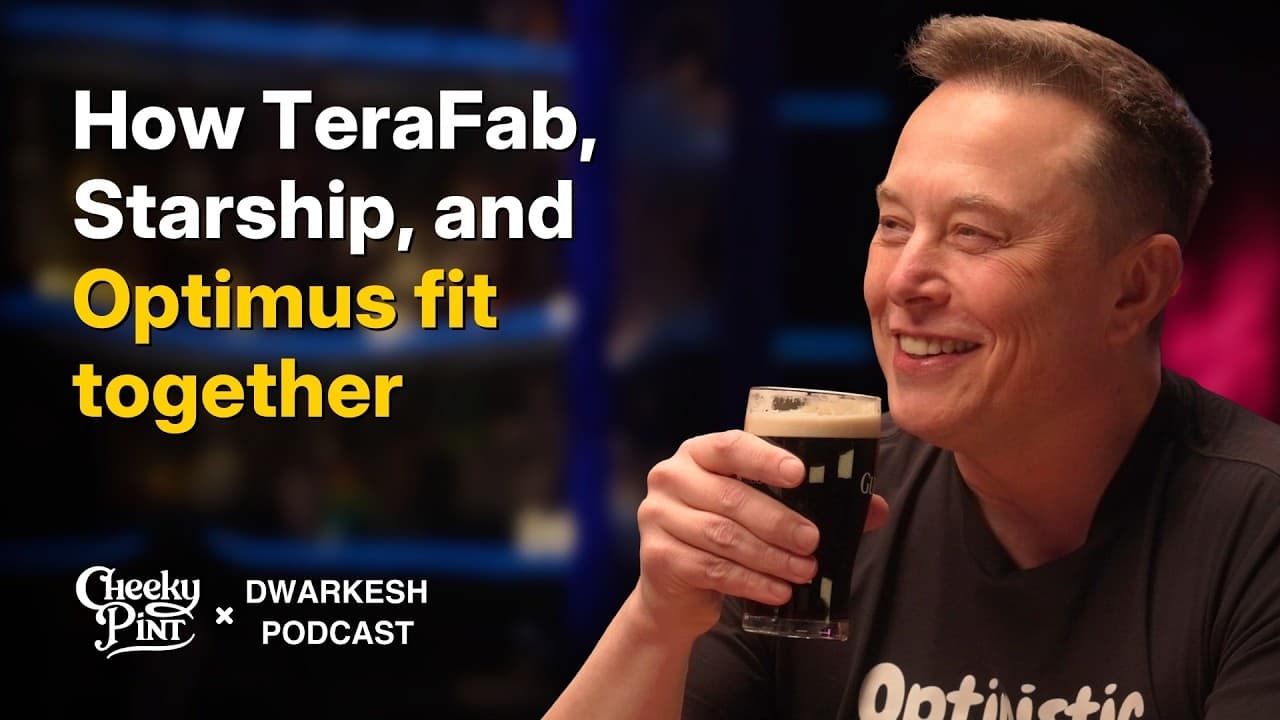
Elon Musk predicts that within 36 months, space will become the most cost-effective location for AI deployment due to the availability of solar energy and the challenges of scaling power on Earth. Space offers regulatory advantages and higher solar efficiency, making it feasible to scale AI infrastructure beyond Earth's limitations.
Transcript
Are there really three hours of questions? Are you fucking serious? You don't think there's a lot to talk about, Elon? Holy fuck man. It's the most interesting point. All the storylines are converging right now. We'll see how much we can get through. It's almost like I planned it. Exactly. We'll get to that. But I would never do such a thing... Read More
Key Insights
- Elon Musk predicts space will be the cheapest location for AI deployment within 36 months due to solar energy availability.
- The current challenge on Earth is the flat growth of electricity output compared to the exponential growth in chip production.
- Space offers regulatory advantages and higher efficiency for solar panels, eliminating the need for batteries.
- Musk argues that scaling AI infrastructure on Earth is limited by power generation and regulatory hurdles.
- SpaceX plans to use Starship for frequent launches, potentially achieving thousands of launches per year.
- Humanoid robots, like Tesla's Optimus, are essential for scaling manufacturing and operations in space.
- The U.S. faces challenges in competing with China's manufacturing prowess, but robotics could offer a competitive edge.
- Musk emphasizes the importance of aligning AI values with human interests to ensure a positive future.
Install to Summarize YouTube Videos and Get Transcripts
Explore YouTube Video Summarizer or Get YouTube Transcript Extractor
Questions & Answers
Q: Why is space considered the cheapest place for AI deployment?
Space is considered the cheapest place for AI deployment because of the abundant availability of solar energy, which can be harnessed more efficiently than on Earth. In space, solar panels can generate about five times more power due to the absence of atmospheric and seasonal losses. Additionally, space offers regulatory advantages, making it easier to scale AI infrastructure without the constraints faced on Earth.
Q: What challenges does Earth face in scaling AI infrastructure?
Earth faces significant challenges in scaling AI infrastructure due to the flat growth in electricity output, which cannot keep pace with the exponential increase in chip production. This mismatch creates a power constraint, limiting the ability to turn on and operate large clusters of AI chips. Additionally, regulatory hurdles and the slow pace of utility industry advancements further impede scaling efforts.
Q: How does SpaceX plan to support the deployment of AI in space?
SpaceX plans to support the deployment of AI in space by utilizing its Starship vehicle for frequent launches, potentially achieving thousands of launches per year. This capability will enable the transportation of necessary infrastructure and equipment to space, facilitating the establishment of orbital data centers. SpaceX's advancements in launch technology and cost reductions are crucial to making space-based AI deployment economically viable.
Q: What role do humanoid robots play in Musk's vision for space AI?
Humanoid robots, like Tesla's Optimus, play a critical role in Musk's vision for space AI by enabling scalable manufacturing and operations in space. These robots can perform tasks continuously without fatigue, making them ideal for building and maintaining infrastructure in the challenging environment of space. Their development is essential for achieving the high levels of productivity required for space-based AI operations.
Q: Why is China currently leading in manufacturing, and how can the U.S. compete?
China currently leads in manufacturing due to its vast skilled labor force, advanced manufacturing capabilities, and high productivity levels. The U.S. can compete by focusing on breakthrough innovations, particularly in robotics and AI, to enhance manufacturing efficiency and reduce reliance on human labor. Developing humanoid robots for manufacturing could provide the U.S. with a competitive edge over China's traditional labor advantages.
Q: What are the key benefits of deploying AI in space compared to Earth?
The key benefits of deploying AI in space compared to Earth include greater solar energy efficiency, regulatory freedoms, and the ability to scale infrastructure without the limitations of terrestrial power grids. Space-based solar panels can generate significantly more power, and the absence of atmospheric interference allows for continuous energy generation. These factors make space an attractive option for large-scale AI operations.
Q: How does Musk propose to align AI with human values?
Musk proposes to align AI with human values by ensuring that AI systems are programmed with principles that prioritize the propagation of intelligence and consciousness into the future. This involves making AI truth-seeking and curious, with a mission to understand the universe. By embedding these values, Musk aims to create AI that supports human interests and contributes positively to civilization.
Q: What are the potential obstacles to achieving Musk's vision for space AI?
Potential obstacles to achieving Musk's vision for space AI include technical challenges in launching and operating infrastructure in space, the need for significant advancements in humanoid robotics, and the development of cost-effective space launch capabilities. Additionally, geopolitical factors and competition from other nations, particularly China, may influence the pace and success of space-based AI deployment. Addressing these challenges will require continued innovation and investment.
Summary & Key Takeaways
-
Elon Musk outlines a vision where space becomes the most economical place to host AI, leveraging abundant solar energy and overcoming terrestrial power constraints. He highlights the regulatory and efficiency benefits of space, predicting a shift in AI infrastructure deployment within 36 months. SpaceX's advancements in launch frequency and humanoid robotics are key to this transition.
-
The discussion covers the limitations of Earth's power grid, with flat electricity output growth unable to match the rising demand from chip production. Space offers a unique solution with its regulatory freedoms and enhanced solar panel performance, making it a viable option for large-scale AI operations.
-
Musk also addresses the competitive landscape, noting that while China currently leads in manufacturing, the development of humanoid robots could enable the U.S. to regain an edge. He stresses the need for AI alignment with human values to ensure a beneficial coexistence.
Read in Other Languages (beta)
Share This Summary 📚
Summarize YouTube Videos and Get Video Transcripts with 1-Click
Try YouTube Summary with ChatGPT & Claude or YouTube Transcript Generator
Explore More Summaries from Dwarkesh Patel 📚





Summarize YouTube Videos and Get Video Transcripts with 1-Click
Try YouTube Summary with ChatGPT & Claude or YouTube Transcript Generator