Harvard restores its famed Glass Flowers
TL;DR
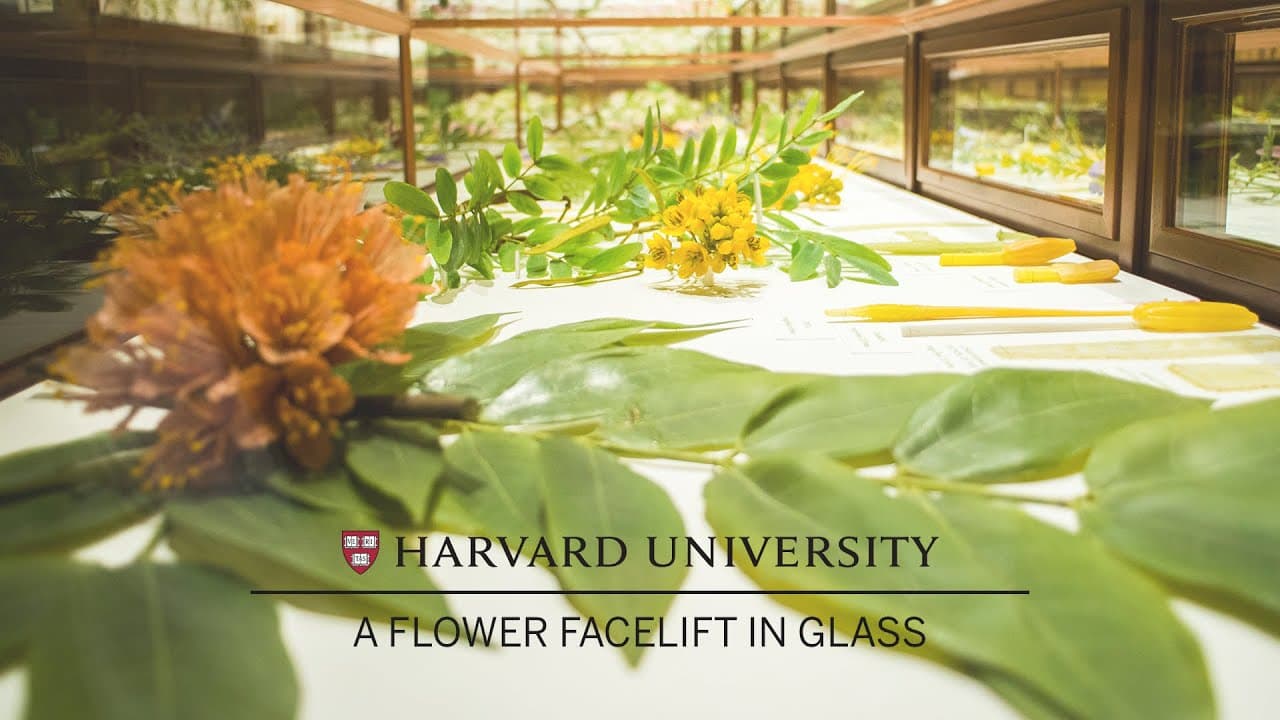
The glass flowers, created by the Blaschka family, are incredibly realistic and vivid, requiring immense skill and craftsmanship.
Transcript
I came here as a graduate student is about 1968 and everybody said you have to see the glass flowers and I have to admit that I thought what what do they mean that glass flowers and of course my reaction is what everybody's reaction is they can't be glass we think of glass as shiny smooth and if one looks at the models the leaves are wonderfully re... Read More
Key Insights
- 😎 The glass flowers are a testament to the exceptional artistic and craftsmanship skills of the Blaschka family.
- 😎 Techniques used by the Blaschkas, such as melting colored glass rods, are still employed by contemporary glass sculptors.
- 🛄 The renovation of the exhibit aims to maintain the aesthetic appeal while improving the visitor experience.
- 👷 Conservation efforts are focused on cleaning the models and addressing issues like edge peeling and disrupted details in their construction.
- 🥰 The glass flowers connect art with science, offering a unique way to understand and appreciate botany.
- 😎 The glass sculptures challenge preconceived notions about what can be achieved with glass as a medium.
- 🥰 The glass flower exhibit serves as both a work of art and an educational tool, showcasing the beauty and complexity of botanical organisms.
Install to Summarize YouTube Videos and Get Transcripts
Explore YouTube Video Summarizer or Get YouTube Transcript Extractor
Questions & Answers
Q: How did the Blaschka family achieve such realistic and vivid glass flowers?
The Blaschkas utilized rods of colored glass, melted them over a torch at high temperatures, and used simple tools like tweezers and mashers to manipulate the glass. Their skills were unparalleled, making their creations lifelike and accurate.
Q: How are the glass flowers being renovated?
The renovation process involves disassembling the cases, refinishing the wood to match the original colors, replacing the glass with non-leaded safety glass, and preserving the signatures of the original case makers. The exhibit will also feature old favorites and new models.
Q: What challenges do conservators face in maintaining the glass flowers?
The models suffer from accumulated dirt, dust, and oily residues from the building's history of using coal for heating. Additionally, the organic coating on the glass models often peels away, requiring consolidation and repair by conservators.
Q: What is the purpose of the glass flower exhibit?
The exhibit aims to educate visitors about plant classification and the structure of flowers, providing a unified view and expanding knowledge about these botanical organisms.
Summary
This video showcases the awe-inspiring glass flower models created by Leopold and Rudolph Blaschka. The narrator, Leslie Fleming, a glass sculptor herself, describes the initial disbelief she felt when she first heard about these glass flowers. However, upon seeing them, she was amazed by their realistic appearance and accurate colors. The video also highlights the intricate techniques used by the Blaschkas, as they manipulated glass rods over a flame to create their masterpieces. The renovations to the exhibit aim to maintain the character and integrity of the original display while improving the visitor experience. The process involved disassembling the cases, staining and sealing the wood, replacing the glass with non-leaded safety glass, and showcasing the signatures of the original case makers. The video also features the conservation efforts for the glass flower models, including cleaning and repairing the delicate details. Finally, the video emphasizes that the new exhibit layout aims to provide a unified view of the plants, allowing visitors to gain both aesthetic appreciation and understanding of the biological organisms.
Questions & Answers
Q: What was the initial reaction of the narrator upon hearing about the glass flowers?
The narrator initially thought it was impossible for flowers to be made of glass, given her understanding of glass as shiny and smooth. She was skeptical about what the term "glass flowers" meant.
Q: How did the glass flowers created by the Blaschkas appear?
Contrary to the narrator's initial disbelief, the glass flowers turned out to be incredibly realistic. The leaves were wonderfully crafted to resemble their natural counterparts, and the colors were vivid and accurate. For example, a maple model in the collection accurately displayed the colors of a maple tree during fall.
Q: What techniques did the Blaschkas use to create their glass sculptures?
The Blaschkas used rods of colored glass, similar in thickness to a pencil. They manipulated the glass by melting it over a torch fueled by oxygen and propane, resulting in a temperature of around 5,000 degrees Fahrenheit. The tools they used were simple, including a cheese knife, tweezers, a poker, and mashers, similar to those used at a barbecue grill.
Q: How does the current skill level of glass sculptors compare to that of the Blaschkas?
According to the narrator, no living glass sculptor today can match the skill level of the Blaschkas. Their craftsmanship and artistic abilities were unparalleled, a reflection of the era they lived in, where people had to create and repair objects themselves.
Q: What were the goals of the recent renovations to the glass flower exhibit?
While maintaining the character, integrity, and aesthetics of the original exhibit, the renovations aimed to create a better flow for visitors and improve the overall visitor experience. The new layout intended to showcase both old favorite models and newer ones that were previously not on display.
Q: What initial steps were taken to renovate the glass flower cases?
The first step in the renovation process was to disassemble the cases. The wooden parts were then stained with a water-based aniline dye, simulating the same process that would have been used by the Blaschkas themselves a century ago. After staining, the wood was sealed with a clear shellac sealer and toned with a pigment glaze. Finally, the surfaces were finished with a satin sheen lacquer.
Q: How was the glass of the flower cases replaced?
The old glass, which was 5/16 of an inch thick plate glass, was removed, and new non-leaded safety glass was used as a replacement. The new glass was carefully chosen to both prevent shattering and accurately display the colors of the glass flowers.
Q: Were there any interesting discoveries during the disassembly of the glass flower cases?
Signatures of four of the original case makers were found during the disassembly. These signatures were preserved, milled down, and reinstalled so that they can still be seen when the doors of the cases are open.
Q: How were the glass flower models transported during the renovation process?
Initially, when the glass flower models were being carried out, the team had to carry them individually. However, after a few times, they decided against this method and started to reassemble the models on-site.
Q: When did the conservation lab for the glass flowers start operating?
The conservation lab for the glass flower collection has been in operation since October 2015, making it relatively new.
Takeaways
The glass flower exhibit showcases the extraordinary artistry and craftsmanship of Leopold and Rudolph Blaschka. Their intricately crafted glass flower models astonish visitors with their realistic appearance and accurate colors. The recent renovations aim to maintain the integrity and character of the original exhibit while enhancing the visitor experience. The conservation efforts, including the cleaning and repair of the delicate glass flowers, ensure the long-term preservation of these exquisite works of art. Overall, the glass flowers not only serve as objects of beauty but also provide a deeper understanding of the structure and biology of the plant world.
Summary & Key Takeaways
-
The glass flowers are incredibly detailed and realistic, challenging the viewer's perception of what glass can achieve.
-
The Blaschka family used techniques that are still utilized by glass sculptors today, such as melting colored glass rods over a torch.
-
The renovation of the glass flower exhibit aims to enhance the visitor experience while preserving the integrity and aesthetics of the collection.
Read in Other Languages (beta)
Share This Summary 📚
Summarize YouTube Videos and Get Video Transcripts with 1-Click
Try YouTube Summary with ChatGPT & Claude or YouTube Transcript Generator
Explore More Summaries from Harvard University 📚




Summarize YouTube Videos and Get Video Transcripts with 1-Click
Try YouTube Summary with ChatGPT & Claude or YouTube Transcript Generator