How Will AI Transform Operations in Enterprises?
TL;DR
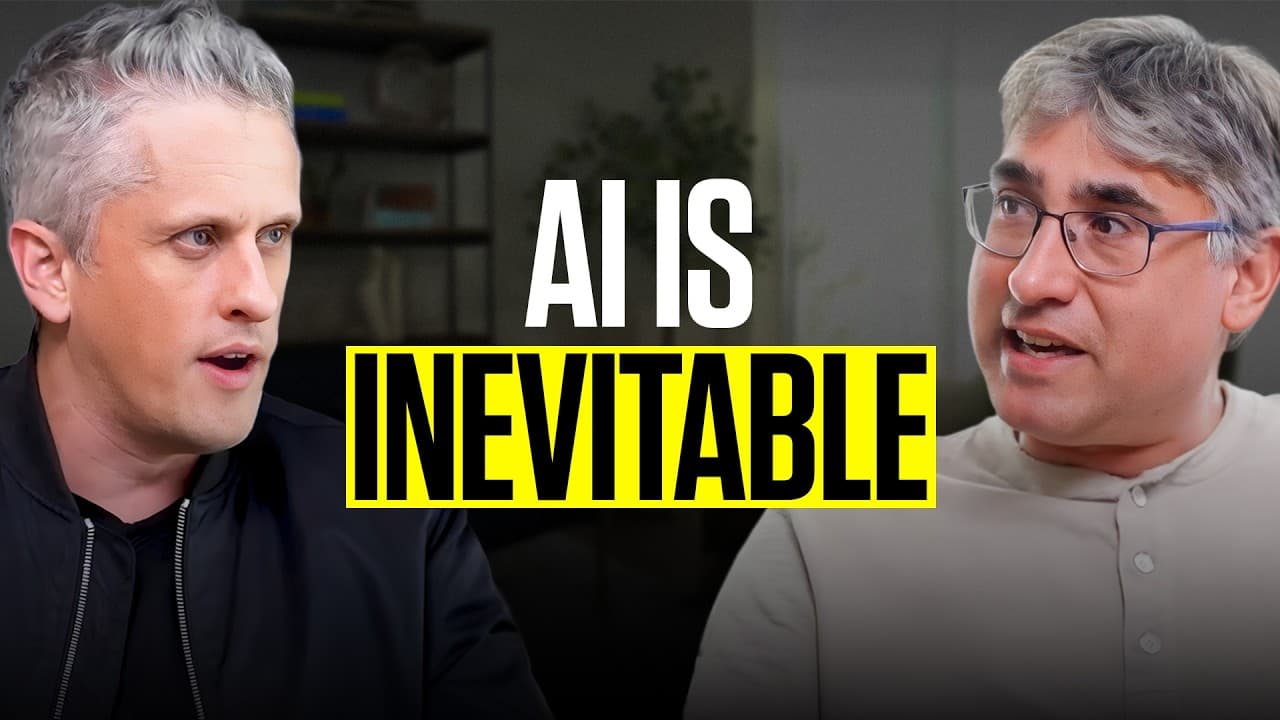
AI is poised to significantly change enterprise operations by accelerating workflow transformation and requiring faster adoption than cloud technologies. While generative AI initially thrives in consumer spaces, its integration into enterprises will enhance productivity, necessitating adjustments to legacy systems and workflows. This shift will create new job roles focused on managing AI agents, turning traditional task execution into orchestration and strategic management.
Transcript
AI is going to take over the enterprise. We know this is going to happen and it needs to happen to us faster than it happens to our competitors, which is a totally different dynamic than we saw with cloud. What is the journey over the next decade? It's about the speed at which humans can change their workflows. How fast can somebody use a computer ... Read More
Key Insights
- AI adoption in enterprises is accelerating, driven by the need to outpace competitors, unlike the slower cloud transition.
- Generative AI is beginning to penetrate the enterprise space, initially dominated by consumer use cases.
- AI enables significant workflow automation, transforming roles from task execution to orchestration and management.
- The integration of AI in enterprises requires overcoming legacy systems and ingrained workflows, which can be a slow process.
- SaaS incumbents are well-positioned to integrate AI due to their existing API-first platforms, expanding their market reach.
- AI is expected to create new software categories, particularly in sectors like legal, healthcare, and education, where incumbents are absent.
- AI's impact on enterprise budgets is not zero-sum; it can be absorbed through minor adjustments in headcount and operational costs.
- The future of work will involve managing AI agents, leading to new job roles focused on orchestration rather than traditional execution.
Install to Summarize YouTube Videos and Get Transcripts
Explore YouTube Video Summarizer or Get YouTube Transcript Extractor
Questions & Answers
Q: How is AI adoption in enterprises different from the consumer wave?
AI adoption in enterprises differs from the consumer wave primarily due to the complexity of existing workflows, legacy IT systems, and data accessibility issues. Enterprises face challenges in integrating AI into ingrained processes, whereas consumer adoption has been more straightforward, driven by easy-to-use interfaces like chatbots and personalization systems.
Q: What challenges do enterprises face in integrating AI?
Enterprises face several challenges in integrating AI, including overcoming legacy systems, managing data accessibility, and addressing compliance and governance issues. Additionally, there is a need for change management to adapt workflows and ensure that AI is deployed effectively to achieve productivity gains.
Q: Why are SaaS incumbents well-positioned to integrate AI?
SaaS incumbents are well-positioned to integrate AI because they have already built API-first platforms, which allow for seamless integration of AI agents. This setup enables them to expand their market reach by automating tasks and processes, making them more competitive against AI-native startups.
Q: How might AI create new software categories?
AI has the potential to create new software categories by addressing areas where there are no current incumbents, such as legal, healthcare, and education. These sectors can benefit from AI's ability to handle unstructured data and automate complex workflows, leading to new opportunities for startups and innovations in software solutions.
Q: What role will AI play in enterprise decision-making processes?
AI can enhance enterprise decision-making processes by providing data-driven insights and automating research tasks. For example, AI can analyze earnings scripts, predict analyst questions, and suggest improvements, allowing decision-makers to focus on strategic considerations and improve the quality of their decisions.
Q: How will AI impact job roles within enterprises?
AI will shift job roles within enterprises from task execution to orchestration and management. Employees will increasingly focus on managing AI agents, overseeing workflows, and ensuring quality control, rather than performing routine tasks. This shift will require new skills and a different approach to work.
Q: What is the expected impact of AI on enterprise budgets?
AI's impact on enterprise budgets is expected to be manageable, as the cost of AI tools can be absorbed through minor adjustments in headcount and operational expenses. Enterprises can reallocate resources from traditional roles to AI-driven tasks, resulting in increased efficiency and productivity without significant budget disruptions.
Q: What are the long-term predictions for AI in enterprises?
In the long term, AI is expected to transform enterprises by increasing productivity, creating new job roles, and enabling the development of innovative software solutions. AI will lead to better products, improved user experiences, and advancements in sectors like healthcare and legal services, ultimately benefiting society as a whole.
Summary & Key Takeaways
-
Aaron Levie discusses how AI is set to revolutionize enterprise operations, emphasizing that AI adoption needs to happen faster than with cloud technologies to stay competitive. The conversation explores how AI is changing workflows and the role of individual contributors.
-
The integration of AI in enterprises is contrasted with its consumer adoption, highlighting challenges such as legacy systems and data accessibility. Levie notes that while AI offers significant productivity gains, it requires careful change management.
-
AI's potential to create new software categories is discussed, particularly in sectors lacking incumbents. Levie suggests that AI will lead to increased efficiency and productivity, transforming how enterprises operate and compete.
Read in Other Languages (beta)
Share This Summary 📚
Summarize YouTube Videos and Get Video Transcripts with 1-Click
Try YouTube Summary with ChatGPT & Claude or YouTube Transcript Generator
Explore More Summaries from a16z 📚



Summarize YouTube Videos and Get Video Transcripts with 1-Click
Try YouTube Summary with ChatGPT & Claude or YouTube Transcript Generator