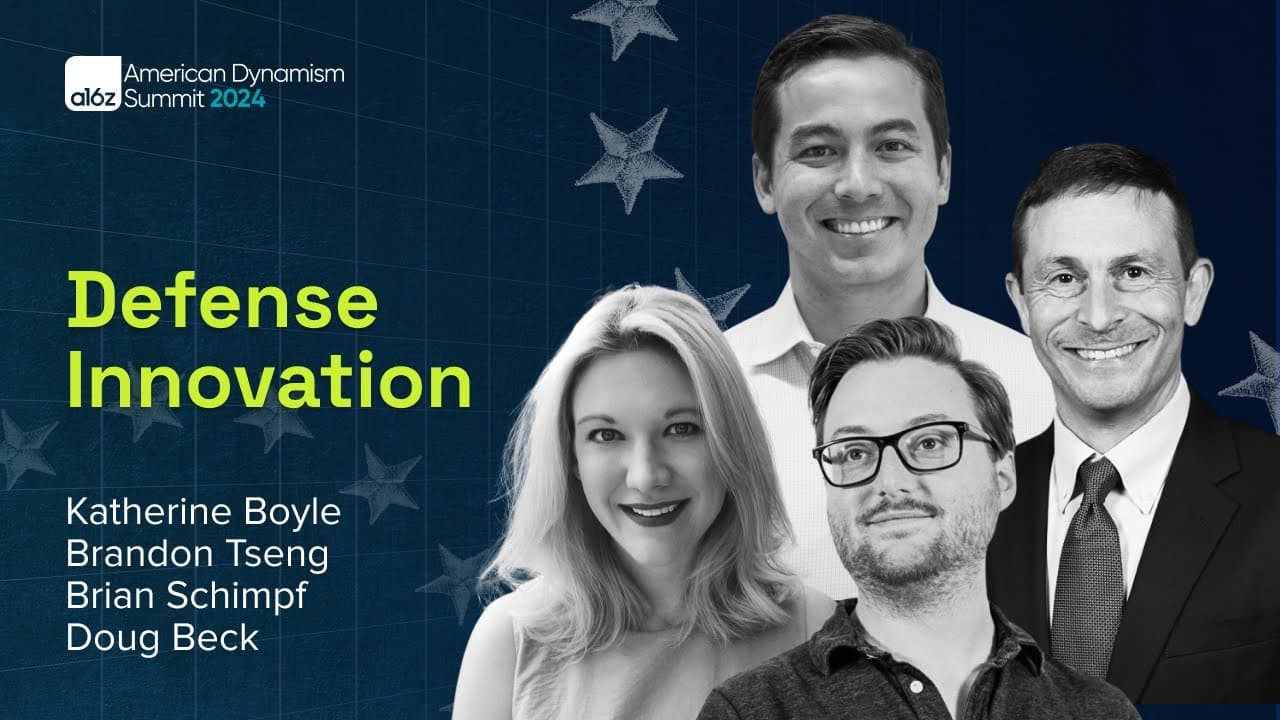
How Is Defense Innovation Adapting to Modern Challenges?
TL;DR
The Defense Innovation Unit (DIU) is adapting to modern challenges by bridging the gap between commercial technology and the Department of Defense, focusing on technologies like AI and autonomy to enhance defense capabilities. Initiatives like Replicator aim to deliver critical autonomous systems within 18 to 24 months, moving away from traditional, costly assets to a hybrid force architecture that ensures effective deterrence and operational readiness.
Transcript
if we were designing a defense procurement system from scratch today we would not design the one that we have talk about 2 3 four years to build an aircraft carrier in $2 billion and it being destroyed on week one of any hot conflict with an adversary you say is that really the force that we want to build the authorities and and policies all exist ... Read More
Key Insights
- 👾 The pace of change in AI, biotechnology, autonomy, and energy fields is faster in the commercial sector than in the defense sector, necessitating collaboration with innovative startups.
- 📼 The DoD is moving away from exquisite capital assets to a hybrid force architecture that combines mass autonomous systems with larger assets for a more cost-effective and effective defense strategy.
- 🍳 Replicator, under the DIU 3.0 framework, aims to deliver critical autonomous capabilities quickly and break down barriers to change within the defense acquisition system.
- 😌 Success in defense innovation lies in delivering real impact, changing the metric from prototypes to strategic deterrence, and creating a culture of risk-taking and agility.
Install to Summarize YouTube Videos and Get Transcripts
Explore YouTube Video Summarizer or Get YouTube Transcript Extractor
Questions & Answers
Q: Why was the DIU founded and how has it evolved?
The DIU was founded in 2015 to harness the power of the commercial tech sector in countering emerging threats. It has evolved to accelerate the adoption of technology and deliver real prototypes to the warfighters within weeks or months, proving the concept of commercially derived technologies in the defense sector.
Q: How has the perception of startups working with the DoD changed over the years?
Initially, there was hesitation in working with small companies, but as organizations like the DIU and SOCOM took the risk and found success, the perception shifted. Startups have shown their ability to deliver high-quality and cost-effective products, attracting more venture capital and interest from the defense community.
Q: What are the challenges in defense innovation and procurement?
The current defense procurement system is not designed for speed and innovation. Small tweaks, such as transitioning to a problem-based acquisition system and valuing mission impact over platform cost, could greatly benefit startups and speed up the acquisition process. Providing more training and guidance on different acquisition strategies is also crucial.
Q: How prepared is the US for the new type of warfare?
The battlefield has changed with the proliferation of cheap drones and loitering munitions. The US needs to shift its defensive capabilities from protecting high-value assets to a constant threat environment. This requires a wide array of technologies, software for situational awareness, and a shift in how defense is approached at every level.
Summary & Key Takeaways
-
The DIU was founded in 2015 to tap into the vibrancy of the commercial tech sector and counter rising challenges, particularly from China. It has evolved to accelerate the adoption of technology and provide real prototypes to the warfighters within weeks or months.
-
Startups like Shield AI and Anduril have found success working with the DoD through organizations like the DIU. Their innovative products have proven to be impactful and cost-effective in the field.
-
The DoD is shifting away from exquisite capital assets to a hybrid force architecture that combines smaller, more affordable autonomous systems with larger, more vulnerable assets. The goal is to have mass capabilities to effectively deter and win conflicts.
-
Replicator is an initiative under the DIU 3.0 framework, aiming to put critical autonomous capabilities in the hands of the warfighters within 18 to 24 months. It focuses on breaking down systemic barriers and creating a pathway to strategic impact.
Read in Other Languages (beta)
Share This Summary 📚
Summarize YouTube Videos and Get Video Transcripts with 1-Click
Try YouTube Summary with ChatGPT & Claude or YouTube Transcript Generator
Explore More Summaries from a16z 📚



Summarize YouTube Videos and Get Video Transcripts with 1-Click
Try YouTube Summary with ChatGPT & Claude or YouTube Transcript Generator