Will Nvidia's AI Leadership Endure?
TL;DR
Nvidia's success hinges on its robust ecosystem and technological leadership, which it aims to maintain by fostering global partnerships and innovation. Despite challenges from competitors and geopolitical tensions, Nvidia remains focused on advancing its AI and chip technology to stay ahead. The company believes in a balanced approach to market competition, emphasizing the importance of both domestic and international engagement.
Transcript
We've seen the valuations of a bunch of software companies crash because people are expecting AI to commoditize software. There's a potentially naive way of thinking about things, which is: look, Nvidia sends a GDS2 file to TSMC. TSMC builds the logic dies, it builds the switches, then it packages them with the HBM that SK Hynix, Micron, ... Read More
Key Insights
- Nvidia's ecosystem is a significant competitive advantage, with a broad base of developers and partners worldwide.
- The company's strategy involves doing as much as needed but as little as possible to maintain its leadership in AI and chip technology.
- Jensen Huang emphasizes that AI is a multi-layered industry, and success requires leadership across all layers, including hardware and software.
- Nvidia is committed to ensuring the U.S. remains ahead in AI capabilities, while also competing globally to maintain its market position.
- The company is cautious about export controls to China, balancing national security concerns with the need to engage in the global market.
- Huang argues that the AI industry's growth depends on open source and collaboration, warning against isolationist policies.
- Nvidia's focus remains on advancing computing efficiency and performance, leveraging both hardware innovations and software ecosystems.
- The company believes that the future of AI depends on a vibrant ecosystem that includes diverse applications beyond AI, such as computational lithography and quantum chemistry.
Install to Summarize YouTube Videos and Get Transcripts
Explore YouTube Video Summarizer or Get YouTube Transcript Extractor
Questions & Answers
Q: How does Nvidia maintain its leadership in AI technology?
Nvidia maintains its leadership in AI technology through a robust ecosystem of developers and partners globally, continuous innovation in chip and software technology, and strategic market engagement. The company focuses on doing as much as needed but as little as possible to maintain its position, ensuring that it leads across all layers of the AI stack. This approach includes nurturing open source and collaboration while balancing national and international interests.
Q: What is Nvidia's stance on selling AI chips to China?
Nvidia's stance on selling AI chips to China involves a balanced approach that considers both national security concerns and the importance of engaging in the global market. Jensen Huang argues that maintaining leadership requires competing globally and not conceding significant markets like China. He emphasizes the need for dialogue and collaboration in AI development, warning against isolationist policies that could hinder technological progress and leadership.
Q: Why doesn't Nvidia become a hyperscaler?
Nvidia chooses not to become a hyperscaler because it focuses on its core strength: developing advanced computing platforms and ecosystems. Jensen Huang explains that the company's philosophy is to do as much as needed but as little as possible, allowing others in the cloud industry to build on Nvidia's technology. This approach enables Nvidia to concentrate on innovation and ecosystem development while supporting a diverse range of partners and customers.
Q: How does Nvidia view competition from TPUs and other accelerators?
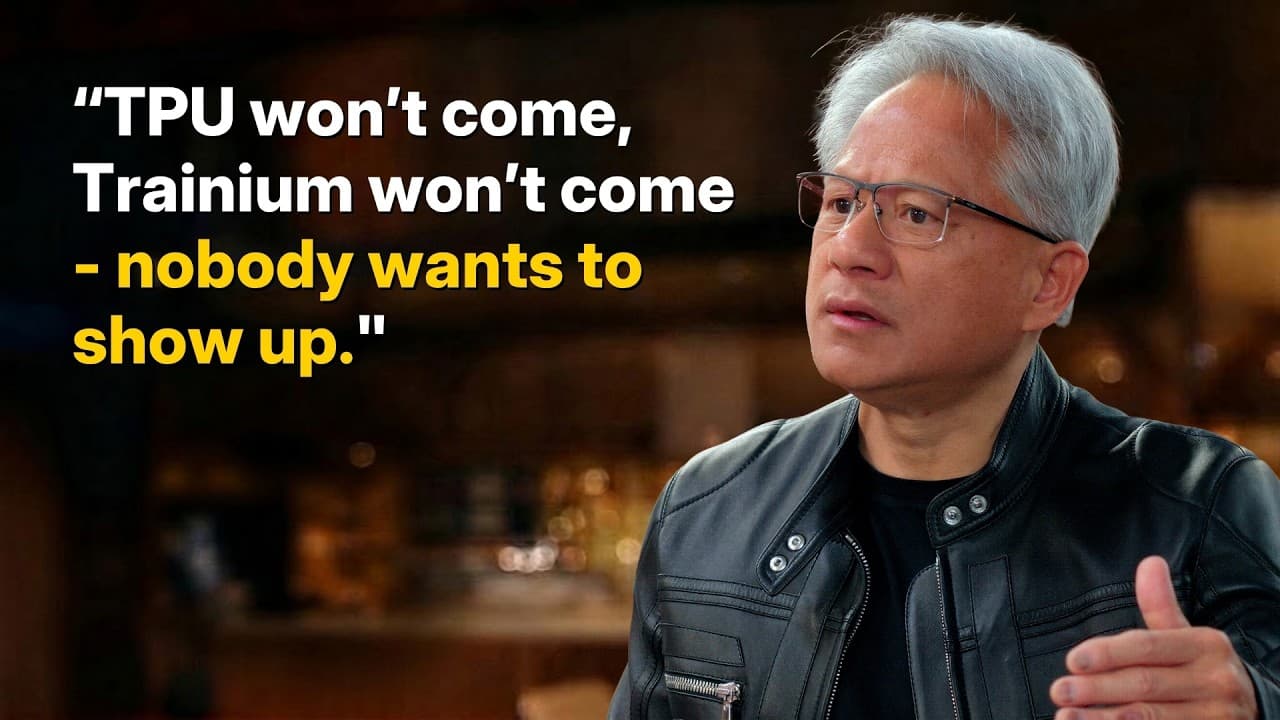
Nvidia views competition from TPUs and other accelerators as a natural part of the industry landscape. Jensen Huang emphasizes that Nvidia's strength lies in its comprehensive ecosystem, which includes a versatile architecture and rich developer support. The company continues to innovate and optimize its technology to provide the best performance and efficiency, ensuring that it remains a preferred choice for AI development and deployment.
Q: What are Nvidia's key strategies for future growth?
Nvidia's key strategies for future growth include advancing its technological leadership through continuous innovation in both hardware and software, fostering a global ecosystem of developers and partners, and engaging in strategic market competition. The company aims to lead across all layers of the AI stack, ensuring that its technology remains at the forefront of the industry. Additionally, Nvidia emphasizes the importance of open collaboration and avoiding isolationist policies.
Q: How does Nvidia balance national security concerns with global market engagement?
Nvidia balances national security concerns with global market engagement by advocating for policies that allow for competition and collaboration while ensuring U.S. leadership in AI technology. Jensen Huang argues that maintaining a strong presence in significant markets like China is crucial for the U.S. to lead in technology. The company focuses on ensuring that American technology remains ahead while also participating in the global ecosystem to foster innovation and growth.
Q: What role does open source play in Nvidia's strategy?
Open source plays a critical role in Nvidia's strategy by fostering collaboration and innovation across the AI ecosystem. Jensen Huang emphasizes the importance of a vibrant open source community for advancing AI technology and ensuring that it can be widely adopted and integrated. Nvidia supports open source initiatives and encourages contributions from developers worldwide, recognizing that this approach is essential for the industry's growth and success.
Q: How does Nvidia approach innovation in AI and computing technology?
Nvidia approaches innovation in AI and computing technology by focusing on advancing both hardware and software capabilities, fostering a rich ecosystem of developers, and engaging in strategic collaborations. The company invests in cutting-edge research and development to ensure that its technology remains at the forefront of the industry. Nvidia also emphasizes the importance of open collaboration and dialogue in driving innovation and addressing challenges in AI development.
Summary & Key Takeaways
-
Nvidia's ecosystem, including its developer base and technological advancements, is crucial for its sustained leadership in AI. The company strategically balances its global market engagement with national interests, particularly regarding export controls to China. Huang highlights the importance of open collaboration and innovation across all layers of AI technology.
-
Jensen Huang discusses Nvidia's unique position in the AI industry, emphasizing the need for a balanced approach to market competition and geopolitical challenges. The company's strategy focuses on nurturing its ecosystem and advancing technology to maintain leadership, while also advocating for open dialogue and collaboration in AI development.
-
Nvidia's approach to maintaining its leadership involves fostering a global ecosystem of developers and partners, while also ensuring that the U.S. remains a leader in AI technology. Huang stresses the importance of not conceding global markets and the need for nuanced policies that support both domestic and international engagement.
Read in Other Languages (beta)
Share This Summary 📚
Summarize YouTube Videos and Get Video Transcripts with 1-Click
Try YouTube Summary with ChatGPT & Claude or YouTube Transcript Generator
Explore More Summaries from Dwarkesh Patel 📚






Summarize YouTube Videos and Get Video Transcripts with 1-Click
Try YouTube Summary with ChatGPT & Claude or YouTube Transcript Generator