Understanding the Stock Market: Stocks and Bonds online course preview
Transcript
welcome to this lecture on the fundamentals of the stock market today we're talking about understanding the risks and potential returns of investing in the stock market suppose you just turned 67 at the end of 2012 and had just retired you would save for retirement starting at the age of 40 until you retired on your 67th birthday having invested al... Read More
Install to Summarize YouTube Videos and Get Transcripts
Explore YouTube Video Summarizer or Get YouTube Transcript Extractor
Summary
This lecture discusses the fundamentals of the stock market, focusing on understanding the risks and potential returns of investing. It explores scenarios of investing in the stock market for retirement savings and delves into the concept of diversification and how financial economists view the stock market as an asset.
Questions & Answers
Q: How well would you have done if you started saving for retirement at 40 and invested in the stock market until 67?
If you started saving for retirement at 40 in 1986 and invested all contributions in the stock market, with a 10% annual contribution of your income, you would have ended up with $592,000 in your account by the end of 2012.
Q: What if you started saving at 40 in 1983 instead of 1986?
If you started saving in 1983, your 67th birthday would have occurred during the trough of the stock market in February 2009. At that point, you would have ended up with around $429,000, which is about 28% less than if you had started three years later.
Q: Why is it difficult to know what to do when experiencing a significant downturn in the stock market?
When faced with seeing a significant portion of your retirement wealth evaporate in a short period, it becomes challenging to make decisions. Mean reversion in the stock market suggests that extreme increases and decreases will level out over time. However, it is difficult to force oneself to sell during booms and buy stocks during downturns, especially when everyone else is making or losing money in the market.
Q: Is it certain that the stock market always recovers after a fall?
No, it is not certain that the stock market always recovers after a fall. While the history of the stock market in the US shows a general pattern of recovery, there are examples from around the world, such as the Japanese stock market, where recovery took a very long time or never occurred.
Q: Why do many individuals choose to invest in stocks despite the risks?
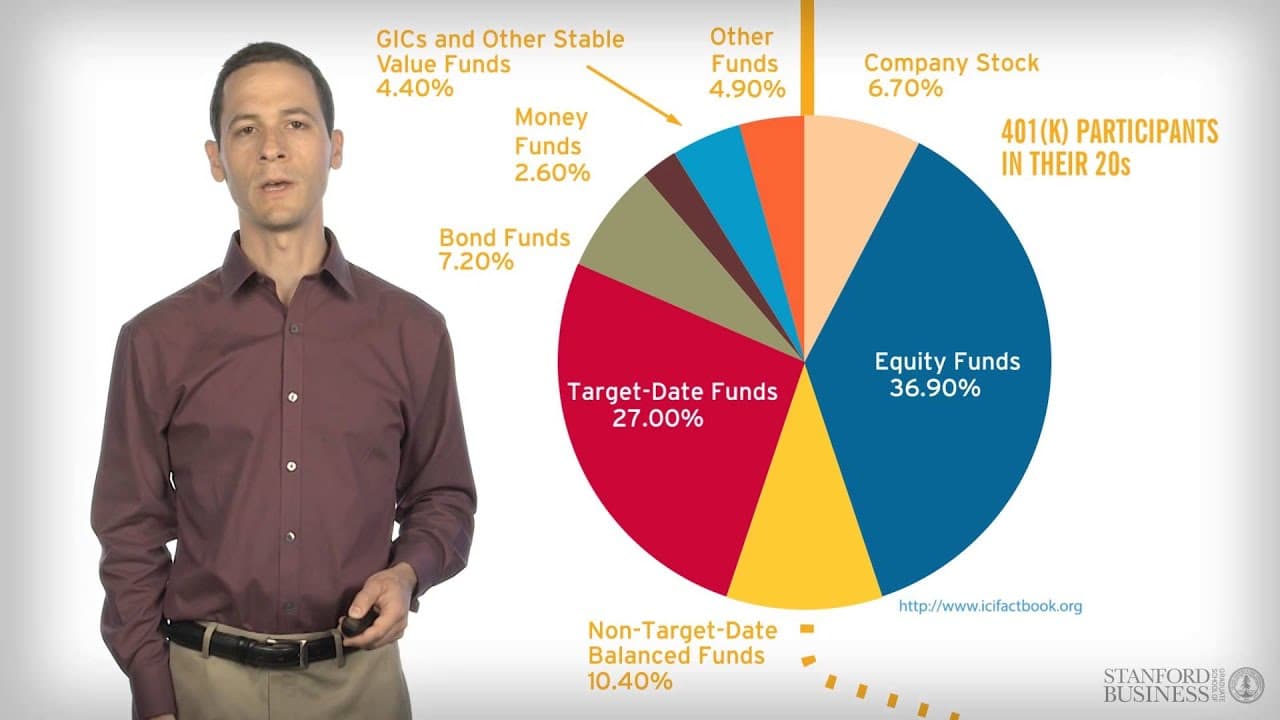
Many individuals invest in stocks because they see a favorable risk-return trade-off in the stock market. For example, in the case of 401(k) plans, which are popular retirement savings vehicles, participants in their 20s invest 44% of their assets in stocks, while participants in their 60s invest 41% in stocks. This allocation doesn't even include other types of retirement account investments that also include equities.
Q: How much money do state and local governments have in US-based pension funds invested in stocks?
At the end of 2012, state and local governments had approximately $3 trillion in US-based pension funds, with around $1.8 trillion invested in corporate stocks.
Q: What does diversification mean in the context of investing in stocks?
Diversification refers to combining stocks from many different companies into a portfolio. It is a fundamental principle in individual stock investing because it provides substantial benefits in terms of reducing risk.
Q: How does financial economics view the stock market?
Financial economics views the stock market as any other asset. It recognizes that there are various states of the world, such as the state of the economy, the cost of natural resources, and the level of inflation. Stocks, like any other asset, have different performances in each of these states, which contributes to their overall risk and potential returns.
Q: Has the stock market historically provided higher returns than risk-free assets?
Yes, historically, stocks have had higher returns than risk-free assets. However, this higher return is not guaranteed. Different states of the world can impact stock market performance, and there is a possibility of lower returns or even negative returns in certain states.
Q: What enables the stock market to potentially deliver higher returns than the risk-free rate?
The lack of a guarantee for higher returns in the stock market is what allows it to potentially deliver higher returns than risk-free assets in other states of the world. The variability in performance based on different economic conditions and factors contributes to the possibility of higher returns.
Takeaways
This lecture emphasizes the importance of understanding the risks and potential returns of investing in the stock market. While historical data suggests higher returns for stocks compared to risk-free assets, there is no certainty of future performance. The stock market's mean reversion patterns and the possibility of prolonged declines or lack of recovery in some cases highlight the need for careful consideration and diversification in investing. Financial economists view the stock market as an asset with different performances in various states of the world, which contributes to its risk and potential returns. It is essential to weigh the perceived risk-return trade-off and make informed decisions when investing in the stock market.
Read in Other Languages (beta)
Share This Summary 📚
Summarize YouTube Videos and Get Video Transcripts with 1-Click
Try YouTube Summary with ChatGPT & Claude or YouTube Transcript Generator
Explore More Summaries from Stanford Graduate School of Business 📚





Summarize YouTube Videos and Get Video Transcripts with 1-Click
Try YouTube Summary with ChatGPT & Claude or YouTube Transcript Generator