Jeremy Howard: Very Fast Training of Neural Networks | AI Podcast Clips
TL;DR
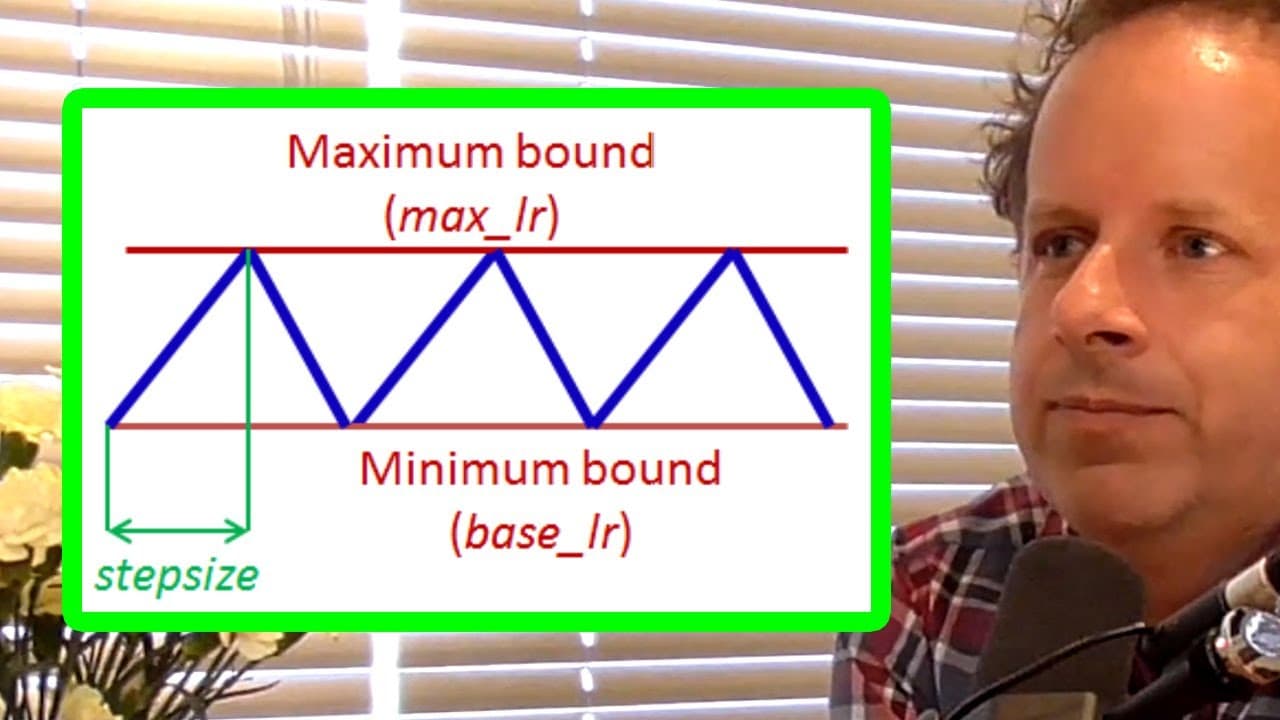
Using higher learning rates in certain neural network configurations can lead to significantly faster training and better generalization.
Transcript
there's some magic on learning rate that you played around with yeah interesting yeah so this is all work that came from a guy called Leslie Smith Leslie's a researcher who like us cares a lot about just the practicalities of training neural networks quickly and accurately which i think is what everybody should care about but almost nobody does and... Read More
Key Insights
- ⏬ Super convergence allows for significantly faster training and better generalization in certain neural network configurations.
- ❓ Academia is not receptive to publishing unexplained experimental results, hindering the spread of important discoveries.
- 🏑 Unpublished papers often contain valuable insights that can drive progress in the field.
- 🏭 Learning rate optimization remains an active area of research, with a growing understanding of its interaction with other factors like weight decay.
- 🏴☠️ Discriminative learning rates, which involve training different parts of the model at different rates, are crucial for transfer learning.
- 👽 The future of learning rate optimization lies in developing algorithms with minimal parameter adjustments.
- *️⃣ Understanding and interpreting gradients is key to setting appropriate parameters in neural networks.
Install to Summarize YouTube Videos and Get Transcripts
Explore YouTube Video Summarizer or Get YouTube Transcript Extractor
Questions & Answers
Q: What is super convergence and how does it affect training neural networks?
Super convergence refers to the ability to train certain networks much faster by using higher learning rates. This phenomenon allows for faster convergence and better generalization.
Q: Why could Leslie Smith not publish his findings on super convergence?
Deep learning in academia does not consider experimental results without explanations. Leslie's inability to explain the phenomenon prevented publication of his paper.
Q: How does using higher learning rates improve generalization in neural networks?
By training networks with higher learning rates, fewer epochs are needed, resulting in less exposure to the data. This leads to better generalization and improved accuracy.
Q: What changes have been observed in the research on learning rate optimization in the past year?
Researchers have realized the importance of various factors, including learning rate, weight decay, and optimizer settings. Different parts of the model may require different learning rates, and algorithms with fewer adjustable parameters are being developed.
Key Insights:
- Super convergence allows for significantly faster training and better generalization in certain neural network configurations.
- Academia is not receptive to publishing unexplained experimental results, hindering the spread of important discoveries.
- Unpublished papers often contain valuable insights that can drive progress in the field.
- Learning rate optimization remains an active area of research, with a growing understanding of its interaction with other factors like weight decay.
- Discriminative learning rates, which involve training different parts of the model at different rates, are crucial for transfer learning.
- The future of learning rate optimization lies in developing algorithms with minimal parameter adjustments.
- Understanding and interpreting gradients is key to setting appropriate parameters in neural networks.
- The concept of a "learning rate" is gradually being overshadowed by a broader understanding of parameter optimization techniques.
Summary & Key Takeaways
-
Leslie Smith discovered a phenomenon called super convergence, where certain networks can be trained 10 times faster with a 10 times higher learning rate.
-
Academic researchers have not recognized the importance of this discovery, preventing publication of the findings.
-
Unpublished papers often contain interesting insights, and the use of higher learning rates can lead to faster training and improved accuracy.
Read in Other Languages (beta)
Share This Summary 📚
Summarize YouTube Videos and Get Video Transcripts with 1-Click
Try YouTube Summary with ChatGPT & Claude or YouTube Transcript Generator
Explore More Summaries from Lex Fridman 📚




Summarize YouTube Videos and Get Video Transcripts with 1-Click
Try YouTube Summary with ChatGPT & Claude or YouTube Transcript Generator