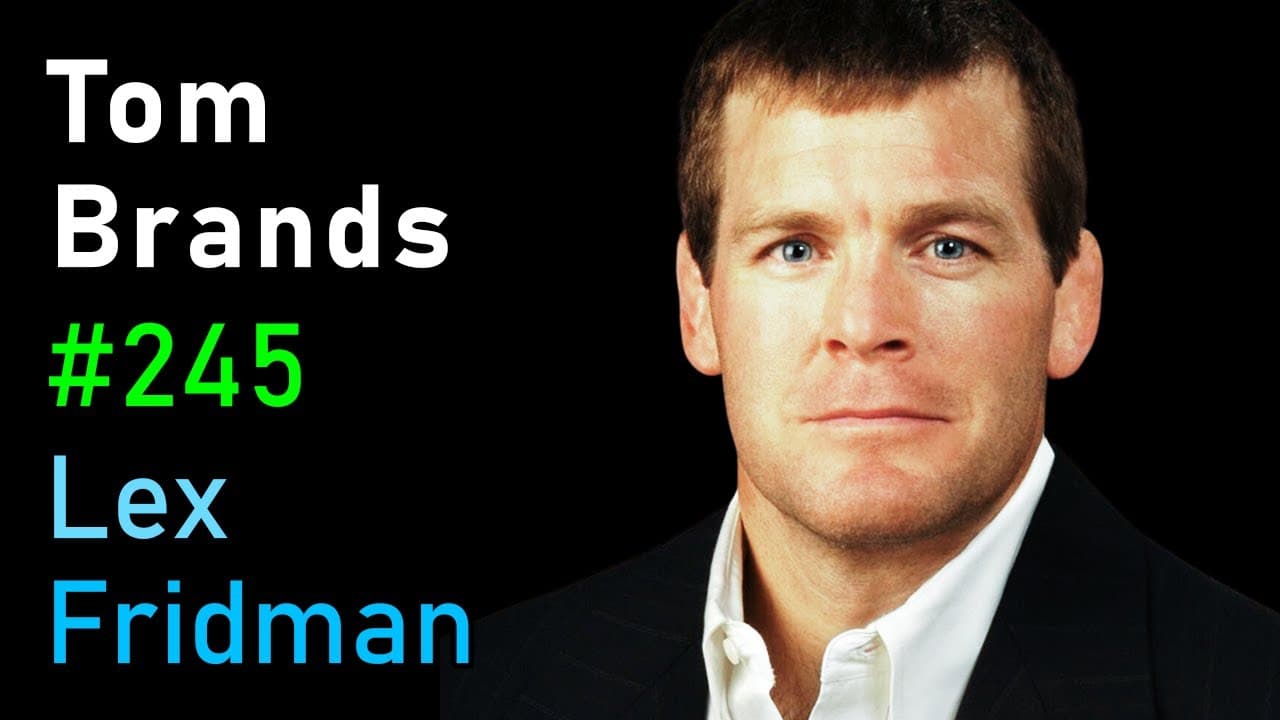
Tom Brands: Iowa Wrestling | Lex Fridman Podcast #245
TL;DR
Tom Brands is motivated by a deep hatred of losing rather than a love of winning, which fuels his intense dedication and mental toughness in wrestling. He emphasizes the importance of discipline, repetition, and learning from losses as key components to success in the sport.
Transcript
the following is a conversation with tom brands olympic champion and world champion in freestyle wrestling three-time ncaa wrestling champion at university of iowa and one of the greatest coaches in the history of wrestling leading the university of iowa hawkeyes for 15 years including in 2021 winning the national championships and getting a coach ... Read More
Key Insights
- 😉 Tom Brands prioritizes the hatred of losing over the love of winning in his approach to wrestling.
- 🤩 Repetition, discipline, and mental toughness are key factors in achieving success in wrestling.
- 📏 The balance between physical intensity and staying within the rules is crucial in training and competing.
- 🖐️ Family support and communication play a significant role in the success of wrestlers.
Install to Summarize YouTube Videos and Get Transcripts
Explore YouTube Video Summarizer or Get YouTube Transcript Extractor
Questions & Answers
Q: What drove you as a wrestler, the hatred of losing or the love of winning?
For Tom Brands, it was the hatred of losing that motivated him. He was focused on winning and didn't care about the pageantry or celebrations that came with it.
Q: Do you have any losses that still bother you?
Brands doesn't remember his career as well as others might think, but he does remember certain opponents that taught him valuable lessons. He recalls his loss to John Smith, where he learned the importance of positioning and constant movement.
Q: Do you think it's possible to overtrain in wrestling?
Brands believes that peaking and burnout are more about mindset than physical exhaustion. He emphasizes the need for discipline and a balanced approach to training.
Q: How do you train mental toughness as a coach?
Brands puts his athletes in challenging situations that push them to their limits but are still within the rules of the sport. He believes in the power of repetition and the importance of overcoming one's own demons.
Q: How do you inspire athletes to do thousands of repetitions of a technique?
Brands believes it is rare to find athletes who are willing to go above and beyond what their coach asks of them. However, those who do put in the work and embrace the discipline of repetition often see significant improvements in their skills.
Q: What is the role of family in wrestling?
Family plays a crucial role in the wrestling community, from supportive parents to coaches' significant others. Brands emphasizes the importance of open communication and accountability between athletes, families, and coaches.
Key Insights:
- Tom Brands prioritizes the hatred of losing over the love of winning in his approach to wrestling.
- Repetition, discipline, and mental toughness are key factors in achieving success in wrestling.
- The balance between physical intensity and staying within the rules is crucial in training and competing.
- Family support and communication play a significant role in the success of wrestlers.
- Wrestling is a sport that requires not only physical strength but also strategy, resilience, and a strong mindset.
Summary
In this conversation with Tom Brands, Olympic champion and world champion in freestyle wrestling, he shares insights into his mindset as a wrestler and coach. He discusses the importance of the hatred of losing as a motivator and the drive to be the best. He also talks about the impact of losses and the lessons he learned from them. Tom emphasizes the value of repetition, mental toughness, and the balance between extreme physicality and sportsmanship in wrestling. He also touches on the concept of winning being everything and the fine line between winning and losing at the highest level of competition.
Questions & Answers
Q: What was the best motivator for you, the hatred of losing or the love of winning?
Personally, the hatred of losing was the best motivator for me. I wasn't interested in the pageantry or parade that came with winning. I didn't care about the recognition or celebrations. It was the fear of losing and not wanting to experience that again that drove me to work harder and be the best.
Q: Can you recall any specific losses that still stand out in your mind?
I don't remember all the losses in my career, but there are some opponents that I learned a great deal from. For example, my loss to John Smith in 1991 US Open taught me a lot about positioning and the importance of parterre. Despite the lopsided score, I knew I could compete with him because I scored four takedowns. It taught me the importance of constantly moving my feet and never giving up, even against the best.
Q: Looking back at your career, would you do anything differently in terms of training?
If I could do it all over again, I would probably be more relaxed in my training. In my younger days, I was too focused on becoming the next top wrestler after Dan Gable retired, and I put a lot of pressure on myself. I would also have been smarter about my training, balancing hard work with recovery and understanding that less can sometimes be more.
Q: How important is the repetition of techniques in training?
Repetition is crucial in wrestling. It's through disciplined repetition that you become the best. I would often go above and beyond what my coaches asked of me in terms of drills and techniques. The things that you hate to do in the sport are the things that make you the very best. It's about pushing yourself to do the things that others may not be willing to do.
Q: Is it possible to overtrain or train too much in wrestling?
Yes, it is possible to overtrain if you have a lot of distractions and if you're not fully committed to the process. Sometimes, athletes focus too much on the clock or what the coach asks of them and fail to push themselves beyond that limit. However, there's a fine balance between pushing yourself to the limit and taking care of your body's recovery and overall well-being.
Q: How do you train mental toughness as a coach?
Mental toughness is developed by putting athletes in challenging situations and pushing them to go beyond what they think they're capable of. It's about instilling in them the belief that they can overcome any obstacle, even when they face losses or setbacks. Mental toughness is also developed through repetition, self-talk, and visualization, which help athletes stay focused and confident in high-pressure situations.
Q: How do you approach weight cutting in wrestling?
Weight cutting requires a lot of discipline and preparation. It's about finding a balance between being in the right weight class and maintaining your energy and hydration levels. It's crucial for athletes to understand the importance of making weight while also taking care of their bodies through proper nutrition and hydration. The goal is to be at your best physically and mentally when it comes time to compete.
Q: When did you first believe you would win Olympic gold?
I can't pinpoint an exact moment when I believed I would win Olympic gold. I became addicted to wrestling at a young age and had a dream of becoming an Olympic champion. I faced doubters along the way, but their skepticism only fueled my determination. Wrestling with my twin brother, Terry, and the fights we had when we were younger also built my resilience and understanding that losing wasn't an option.
Q: How do you find the line between extremely physical wrestling and rough wrestling?
Sportsmanship is essential in wrestling, and there are rules that need to be followed. As a coach, I emphasize the importance of being tough within the rules of the sport. It's about being disciplined, respectful, and not crossing the line into rough or unsportsmanlike behavior. Wrestling is a sport that requires strength and aggression, but it should always be within the boundaries set by the rules and values of the sport.
Q: Do you believe wrestling is bigger than just the specific rule styles?
Yes, wrestling is much bigger than the specific rule styles. It's one of the oldest forms of combat known to humanity, dating back thousands of years. Wrestling transcends specific styles like folk style, freestyle, or Greco-Roman. It's a pure form of combat that requires skill, strength, discipline, and mental toughness. The value of wrestling goes beyond the sport itself and extends into personal development and character-building.
Q: How do you balance the focus on individual champions with the focus on the team?
Both individual and team success are important in wrestling. As a coach, the goal is to create an environment where individual champions contribute to the overall team success. It's about instilling pride, unity, and discipline in each athlete while also fostering a collective mindset. The ideal situation is to have all weight classes performing at their best, contributing to the team's success, and ultimately striving for a championship together.
Takeaways
In this conversation, Tom Brands provides valuable insights into the world of wrestling and the mindset required for success. He emphasizes the importance of discipline, repetition, mental toughness, and balancing physicality with sportsmanship. Tom's approach to training and competition reveals the dedication and passion he has for the sport. Wrestling is presented as a multifaceted endeavor that goes beyond specific rule styles, with a rich history and profound impact on personal growth and character development. The conversation offers both athletes and coaches valuable lessons and perspectives on achieving greatness in wrestling.
Summary & Key Takeaways
-
Tom Brands discusses his motivation as a wrestler, driven by a hatred of losing rather than a love of winning.
-
He reflects on the losses he has experienced in his career and the lessons he has learned from them.
-
Brands emphasizes the importance of repetition, discipline, and mental toughness in wrestling.
Read in Other Languages (beta)
Share This Summary 📚
Summarize YouTube Videos and Get Video Transcripts with 1-Click
Try YouTube Summary with ChatGPT & Claude or YouTube Transcript Generator
Explore More Summaries from Lex Fridman Podcast 📚



Summarize YouTube Videos and Get Video Transcripts with 1-Click
Try YouTube Summary with ChatGPT & Claude or YouTube Transcript Generator