Products
Features
YouTube Video Summarizer
Summarize YouTube videos
Web & PDF Highlighter
Highlight web pages & PDFs
Chat with PDF
Ask any PDF questions with AI
Ask AI Clone
Chat with your highlights & memories
Audio Transcriber
Transcribe audio files to text
Glasp Reader
Read and highlight articles
Kindle Highlight Export
Export your Kindle highlights
Idea Hatch
Hatch ideas from your highlights
Integrations
Obsidian Plugin
Notion Integration
Pocket Integration
Instapaper Integration
Medium Integration
Readwise Integration
Snipd Integration
Hypothesis Integration
Apps & Extensions
Chrome Extension
Safari Extension
Edge Add-ons
Firefox Add-ons
iOS App
Android App
Discover
Discover
Ideas
Discover new ideas and insights
Articles
Curated articles and insights
Books
Book recommendations by great minds
Posts
Essays and notes from readers
Quotes
Inspiring quotes collection
Videos
Curated videos and summaries
Explore Glasp
Glasp Story
How we grew from 0 to 3 million users
Glasp Newsletter
Weekly insights and updates
Glasp Talk
Interview series with great minds
Glasp Blog
Latest news and articles
Glasp Use Cases
Learn how others use Glasp
Build & Support
Glasp API
Access Glasp's API for developers
MCP Connector
Connect Glasp to Claude & ChatGPT
Community
Glasp Reddit Community
Students
Student discount and benefits
FAQs
Frequently Asked Questions
AboutPricing
DashboardLog inSign up

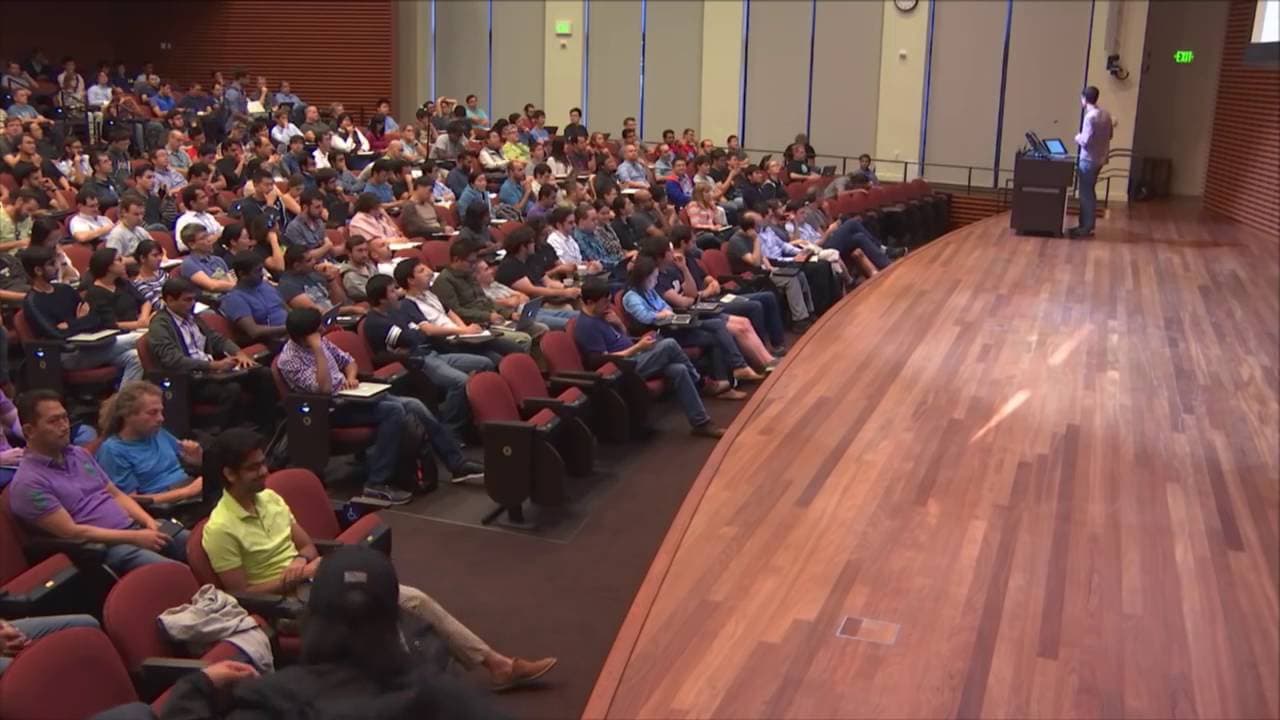
What Is Deep Reinforcement Learning and Its Applications?
September 27, 2016
by
Lex Fridman
YouTube video player
What Is Deep Reinforcement Learning and Its Applications?

TL;DR

Deep reinforcement learning combines reinforcement learning with neural networks, enabling agents to learn optimal actions through interaction with environments. Key techniques include policy gradient methods and Q-learning, with successful applications in robotics, inventory management, attention mechanisms, and machine translation.

Transcript

so good morning everyone so I'm going to talk about some of the core methods in deep reinforcement learning so the aim of this talk is as follows first I'll do a brief introduction to what deep RL is and whether it might make sense to apply it in your problem I'll talk about some of the core techniques so there on the one hand we have the policy gr... Read More

Key Insights

  • ❓ Deep reinforcement learning combines reinforcement learning with neural networks as function approximators.
  • 💯 Policy gradient methods and cue learning methods are the core techniques in deep RL.
  • 🎰 Deep RL has been successfully applied to robotics, inventory management, attention, and machine translation.

Install to Summarize YouTube Videos and Get Transcripts

Explore YouTube Video Summarizer or Get YouTube Transcript Extractor

Questions & Answers

Q: What is deep reinforcement learning?

Deep reinforcement learning is a branch of machine learning that combines reinforcement learning with neural networks as function approximators. It involves training agents to take actions in an environment to maximize cumulative rewards.

Q: What are the core techniques in deep reinforcement learning?

The core techniques in deep RL include policy gradient methods, which approximate the policy of the agent, and methods that learn a cue function, such as Q-learning and SARSA, which estimate the value functions or action values.

Q: What are the applications of deep reinforcement learning?

Deep RL has been applied to various domains, such as robotics, inventory management, attention, and machine translation. It has been used to train robots to perform manipulation tasks, optimize inventory management decisions, improve attention mechanisms in machine learning, and enhance translation systems.

Q: What are the pros and cons of different deep RL methods?

Policy gradient methods offer flexibility and can handle continuous action spaces, but they might have high variance. Q-learning and SARSA provide stability but can struggle with continuous action spaces. Different approaches have different trade-offs in terms of stability, generalization, and sample efficiency.

Summary & Key Takeaways

  • Deep reinforcement learning uses neural networks as function approximators, estimating policies, value functions, or dynamics models in order to optimize actions in a given environment.

  • Core techniques in deep RL include policy gradient methods and methods that learn a cue function, such as Q-learning and SARSA.

  • Deep RL has been successfully applied to various domains, including robotics, inventory management, attention, and machine translation.


Read in Other Languages (beta)

English

Share This Summary 📚

Summarize YouTube Videos and Get Video Transcripts with 1-Click

Download browser extensions on:

Try YouTube Summary with ChatGPT & Claude or YouTube Transcript Generator

Explore More Summaries from Lex Fridman 📚
Marc Andreessen: Future of the Internet, Technology, and AI | Lex Fridman Podcast #386 thumbnail
Marc Andreessen: Future of the Internet, Technology, and AI | Lex Fridman Podcast #386
Lex Fridman Podcast
Andrej Karpathy: Tesla AI, Self-Driving, Optimus, Aliens, and AGI | Lex Fridman Podcast #333 thumbnail
Andrej Karpathy: Tesla AI, Self-Driving, Optimus, Aliens, and AGI | Lex Fridman Podcast #333
Lex Fridman Podcast
George Hotz: Tiny Corp, Twitter, AI Safety, Self-Driving, GPT, AGI & God | Lex Fridman Podcast #387 thumbnail
George Hotz: Tiny Corp, Twitter, AI Safety, Self-Driving, GPT, AGI & God | Lex Fridman Podcast #387
Lex Fridman Podcast
Paul Rosolie: Amazon Jungle, Uncontacted Tribes, Anacondas, and Ayahuasca | Lex Fridman Podcast #369 thumbnail
Paul Rosolie: Amazon Jungle, Uncontacted Tribes, Anacondas, and Ayahuasca | Lex Fridman Podcast #369
Lex Fridman Podcast
Leonard Susskind: Quantum Mechanics, String Theory and Black Holes | Lex Fridman Podcast #41 thumbnail
Leonard Susskind: Quantum Mechanics, String Theory and Black Holes | Lex Fridman Podcast #41
Lex Fridman Podcast
Jim Keller: Moore's Law, Microprocessors, and First Principles | Lex Fridman Podcast #70 thumbnail
Jim Keller: Moore's Law, Microprocessors, and First Principles | Lex Fridman Podcast #70
Lex Fridman Podcast

Summarize YouTube Videos and Get Video Transcripts with 1-Click

Download browser extensions on:

Try YouTube Summary with ChatGPT & Claude or YouTube Transcript Generator

Apps & Extensions

  • Chrome Extension
  • Safari Extension
  • Edge Add-ons
  • Firefox Add-ons
  • iOS App
  • Android App

Key Features

  • YouTube Video Summarizer
  • Web & PDF Summarizer
  • Web & PDF Highlighter
  • Chat with PDF
  • Ask AI Clone
  • Audio Transcriber
  • Glasp Reader
  • Kindle Highlight Export
  • Idea Hatch

Integrations

  • Obsidian Plugin
  • Notion Integration
  • Pocket Integration
  • Instapaper Integration
  • Medium Integration
  • Readwise Integration
  • Snipd Integration
  • Hypothesis Integration

More Features

  • APIs
  • MCP Connector
  • Blog & Post
  • Embed Links
  • Image Highlight
  • Personality Test
  • Quote Shots
  • Open Graph Checker

Company

  • About us
  • Our Story
  • Blog
  • Community
  • FAQs
  • Job Board
  • Newsletter
  • Pricing
Terms

•

Privacy

•

Guidelines

© 2026 Glasp Inc. All rights reserved.