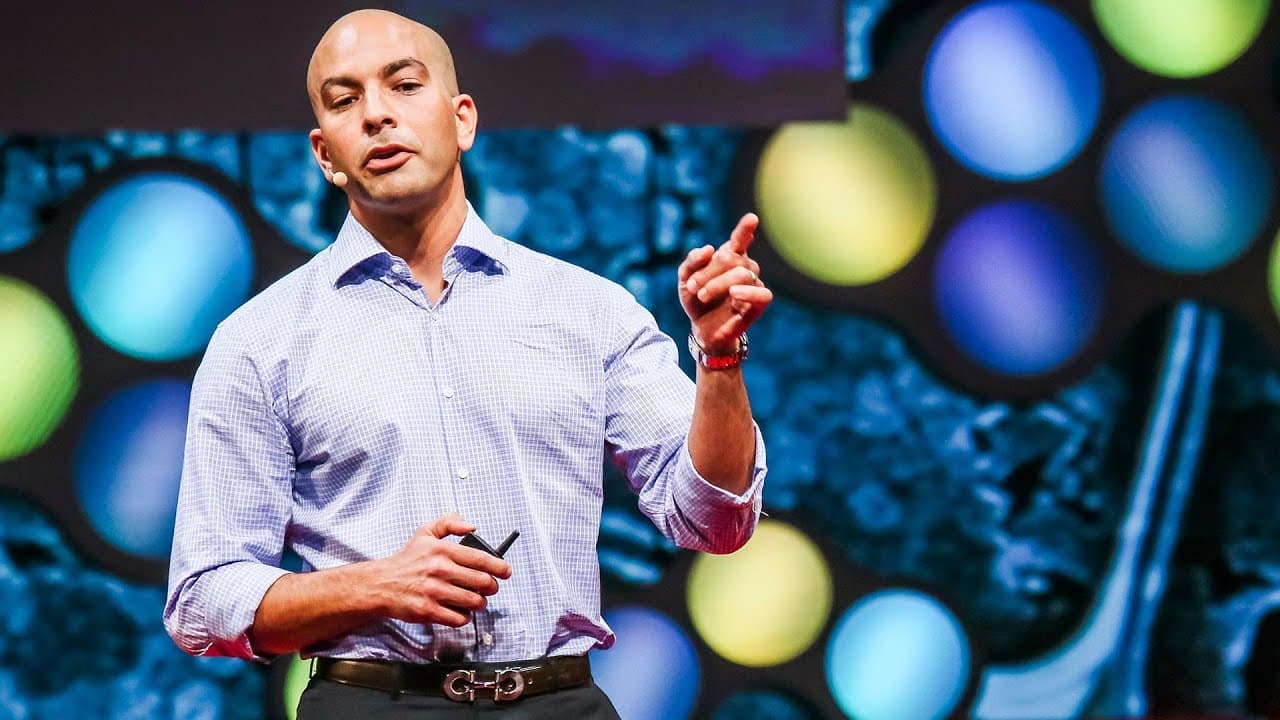
Peter Attia: What if we're wrong about diabetes?
TL;DR
In this TED Talk, a surgeon shares his journey of realizing the flaws in his thinking about obesity and diabetes and how it changed his approach to patient care.
Transcript
Read and summarize the transcript of this video on Glasp Reader (beta).
Key Insights
- 🏥 A surgeon reflects on his past judgments and biases towards patients with diabetes, realizing the need for empathy and compassion rather than judgment and contempt.
- 🏥 The surgeon questions conventional wisdom regarding diabetes and obesity, realizing the importance of questioning assumptions and holding them to scientific standards.
- 🏥 The surgeon shares his personal experience with metabolic syndrome and insulin resistance, leading him to question the relationship between obesity and insulin resistance.
- 🔥 The surgeon suggests that obesity may be a coping mechanism for a deeper problem, possibly insulin resistance, and proposes that the cause and effect of obesity and insulin resistance may be misunderstood.
- 🍽️ The surgeon hypothesizes that refined grains, sugars, and starches may be driving the obesity and diabetes epidemic through insulin resistance, rather than overeating and lack of exercise.
- 🌾 The surgeon emphasizes the importance of scientifically testing current beliefs about obesity, diabetes, and insulin resistance, and is dedicated to finding the right answers through rigorous scientific research.
- 🔍 The surgeon's research program focuses on understanding how various foods impact metabolism and hormones, identifying practical and safe dietary changes, and implementing behavior change to support healthier habits.
- ⚕️ The surgeon calls for empathy, compassion, and open-mindedness in the medical profession to better support patients with obesity and diabetes, and to challenge and evolve scientific understanding.
Install to Summarize YouTube Videos and Get Transcripts
Explore YouTube Video Summarizer or Get YouTube Transcript Extractor
Questions & Answers
Q: What was the speaker's experience with a diabetic patient in the ER that made them reflect on their own biases?
The speaker had a patient with a diabetic ulcer on her foot who was also obese. Despite providing compassionate care to another patient with advanced cancer, the speaker held the diabetic patient in contempt due to the assumption that her condition was a result of her weight and lifestyle choices.
Q: How did the speaker's perspective on diabetes and obesity change after their own health scare?
The speaker, who had been doing cancer research at the time, realized that they had unquestioningly accepted the conventional wisdom that obesity causes insulin resistance and diabetes. After personally experiencing metabolic syndrome and insulin resistance despite exercising regularly, the speaker started questioning this assumption.
Q: What hypothesis does the speaker propose regarding the relationship between obesity and insulin resistance?
The speaker suggests that insulin resistance may be the cause of weight gain and associated health issues, rather than weight gain being the cause of insulin resistance. The idea is that excess glucose (blood sugar) may lead to insulin resistance, and the body's natural response is to store the excess energy as fat, leading to obesity.
Q: Why does the speaker emphasize the need for more rigorous scientific research?
The speaker acknowledges that there are different hypotheses regarding the causes of obesity and insulin resistance. To truly understand and address these issues, the speaker believes that more comprehensive and evidence-based research is necessary. This will involve studying the impact of different types of food on metabolism, finding practical changes in diet, and understanding how to effectively change behavior.
Q: What does the speaker believe is necessary for healthcare professionals to better serve overweight and diabetic patients?
The speaker believes that healthcare professionals should approach their patients with empathy and compassion, rather than judgment and contempt. They emphasize the importance of considering that the healthcare system may be failing these patients, rather than blaming them for their conditions. The speaker highlights the need for open-mindedness and continual evolution of scientific knowledge in the pursuit of better patient care.
Summary
In this thought-provoking talk, Dr. Peter Attia, a medical professional and former surgical resident, reflects on his own biases and misconceptions regarding obesity and insulin resistance. He shares his personal experience of being diagnosed with metabolic syndrome despite leading a healthy lifestyle and raises questions about the conventional wisdom surrounding obesity and its causes. Dr. Attia encourages a shift in focus from blaming individuals for their weight to conducting rigorous scientific research to better understand the relationship between obesity, insulin resistance, and overall metabolic health.
Questions & Answers
Q: What experience led Dr. Attia to question his own biases about obesity and its causes?
Dr. Attia recounts a night during his surgical residency when he held contempt for a diabetic patient who needed an amputation due to her weight and type 2 diabetes. He contrasts his lack of judgment and empathy for a terminally ill cancer patient, questioning why he felt justified in judging the obese woman.
Q: What sparked Dr. Attia's curiosity to explore the relationship between obesity and insulin resistance?
After personally experiencing metabolic syndrome despite leading a healthy lifestyle, Dr. Attia became fascinated by the discrepancy between his efforts to prevent weight gain and the resultant insulin resistance. This led him to question the conventional belief that obesity causes insulin resistance and encouraged him to explore alternative hypotheses.
Q: How does insulin resistance affect the body's ability to store and burn calories?
Insulin resistance refers to the reduced capacity of cells to properly respond to insulin, a hormone that regulates the processing of food. This imbalance leads cells to be more inclined to store excess energy as fat rather than burn it. Dr. Attia suggests that insulin resistance may be the cause of weight gain, rather than the reverse, challenging the popular notion that obesity causes insulin resistance.
Q: What analogy does Dr. Attia use to illustrate his argument?
Dr. Attia compares obesity to a bruise on the shin caused by banging it into a coffee table. The bruise is a natural response to trauma, as immune cells rush to the injured area to prevent infection and aid in cellular healing. Similarly, he proposes that obesity may be the body's response to an underlying metabolic problem, rather than the primary issue itself.
Q: How does Dr. Attia suggest that our understanding of obesity and insulin resistance may be flawed?
Dr. Attia challenges the commonly held belief that obesity is solely caused by overeating and under-exercising. He suggests that excessive consumption of refined grains, sugars, and starches might be the primary driver of obesity, specifically through the development of insulin resistance. He argues that our assumptions about obesity need to be scientifically tested and potentially revised.
Q: What evidence does Dr. Attia present to support his argument?
Dr. Attia shares two thought-provoking facts: 30 million obese Americans do not have insulin resistance and do not exhibit a greater risk of disease compared to lean individuals. Conversely, six million lean Americans are insulin-resistant and are at an increased risk of metabolic diseases associated with obesity. These findings suggest that obesity may not be the direct cause of insulin resistance but rather a symptom of an underlying issue.
Q: What three meta-themes does Dr. Attia's research program focus on?
Dr. Attia's research program addresses three primary questions: 1. How do the various foods we consume impact our metabolism, hormones, and enzymes at a molecular level? 2. Based on these insights, can people make practical and safe changes to their diets? 3. How can behavioral changes be encouraged to make healthier eating habits the norm rather than the exception?
Q: What does Dr. Attia believe needs to change to better address obesity and insulin resistance?
Dr. Attia emphasizes the importance of challenging conventional wisdom and conducting rigorous scientific research. He calls for the medical community to shift their focus from blaming individuals for their weight to seeking a better understanding of the underlying causes of obesity and related metabolic diseases. He believes that only through open-mindedness and scientific exploration can effective solutions be found.
Q: How does Dr. Attia reflect on his past behavior towards his patients?
Dr. Attia acknowledges his own shortcomings as a doctor, particularly in how he judged and held contempt for his diabetic patient who needed an amputation. He expresses regret for not showing empathy and compassion and admits that he failed to consider the larger systemic issues at play. He highlights the importance of shifting the blame away from individuals and focusing on improving the healthcare system itself.
Q: What is Dr. Attia's hope for the future of obesity and insulin resistance research?
Dr. Attia dreams of a time when patients with obesity and insulin resistance can effectively address their health conditions by shedding excess weight and improving metabolic health. He calls for a renewed commitment to open-mindedness, the willingness to challenge existing ideas, and a dedication to scientific truth. He believes that prioritizing these values will ultimately benefit both patients and the advancement of scientific knowledge.
Takeaways
Dr. Attia's talk highlights the need to question and challenge the conventional wisdom surrounding obesity and insulin resistance. He suggests that obesity may be a symptom rather than the primary cause of metabolic illness, such as insulin resistance. By conducting rigorous scientific research and maintaining an open-minded approach, we can gain a deeper understanding of the complex relationship between diet, metabolic health, and obesity. Rather than blaming individuals for their weight, it is crucial to focus on improving our healthcare system and empowering individuals with accurate information and practical solutions to improve their metabolic health.
Summary & Key Takeaways
-
The speaker recounts a personal experience where he treated a diabetic patient with bitterness and judgement, questioning why he felt this way.
-
The speaker suggests that obesity may be a symptom rather than a cause of insulin resistance, and challenges conventional beliefs about the relationship between obesity and diabetes.
-
The speaker highlights the importance of rigorous scientific research to understand the impact of different foods on our metabolism and address the obesity and diabetes epidemic.
Read in Other Languages (beta)
Share This Summary 📚
Summarize YouTube Videos and Get Video Transcripts with 1-Click
Try YouTube Summary with ChatGPT & Claude or YouTube Transcript Generator
Explore More Summaries from TED 📚




Summarize YouTube Videos and Get Video Transcripts with 1-Click
Try YouTube Summary with ChatGPT & Claude or YouTube Transcript Generator