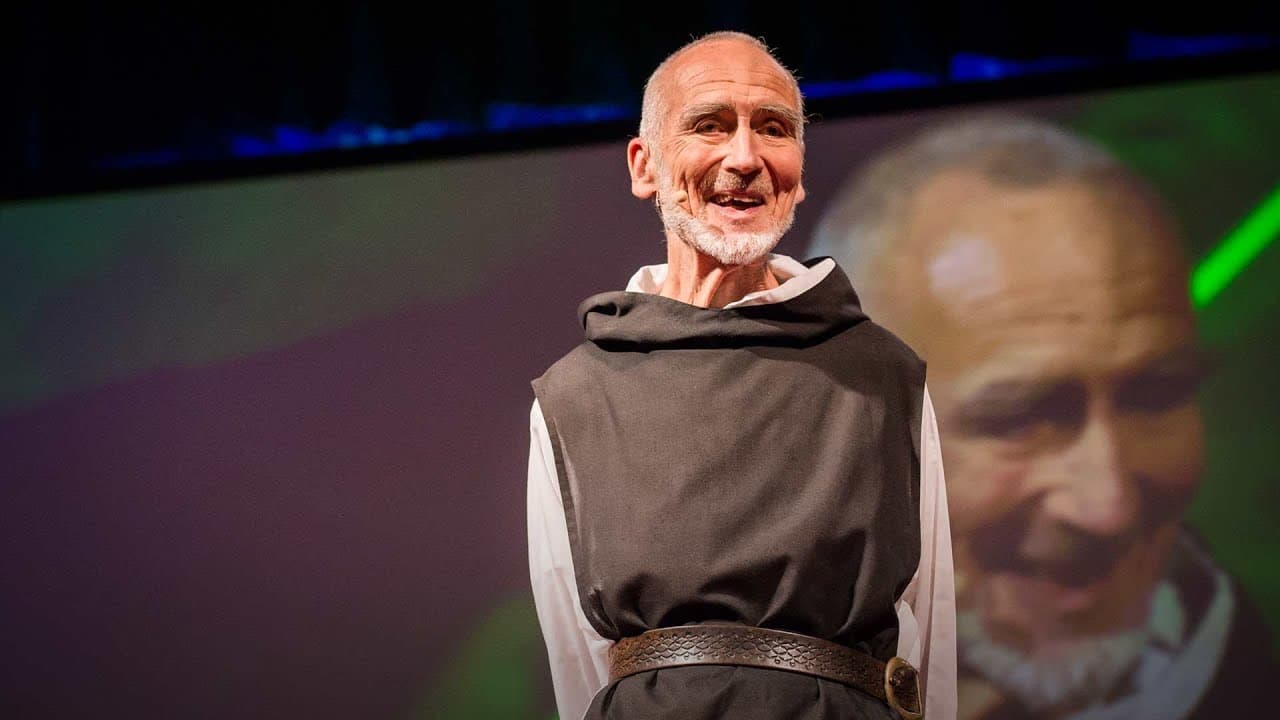
Want to be happy? Be grateful | David Steindl-Rast
TL;DR
In this content, the speaker discusses the connection between happiness and gratefulness and emphasizes the importance of living gratefully in order to find true happiness and create a joyful world.
Transcript
Read and summarize the transcript of this video on Glasp Reader (beta).
Key Insights
- 🌟 Gratefulness is the connection between happiness and gratitude. Happy people are not necessarily grateful, but grateful people are happy. Gratefulness arises when something valuable is freely given to us.
- 🔑 Grateful living means experiencing every moment as a gift and being aware that each moment is a new opportunity. The true gift within every gift is the opportunity it presents.
- ✨ Gratefulness allows us to respond to difficult situations and challenges by rising to the occasion and learning valuable lessons, such as patience and standing up for our convictions.
- 🛑 We often rush through life and miss opportunities for gratitude. To live gratefully, we must stop, look, and go. Stop to get quiet and build stop signs into our lives, look to appreciate the richness surrounding us, and go by taking action and enjoying what is given to us.
- 🌍 Gratefulness has the power to revolutionize our world by reducing fear, violence, and the sense of scarcity. It promotes equal respect and joyful interactions among people, creating a networked society instead of a power pyramid.
- 💡 There is a growing wave of gratefulness in society, with people recognizing its importance in changing our world. The more joyful and grateful individuals there are, the happier the world becomes.
- 🕯️ The network for grateful living has gained significant traction, with 15 million candles lit in a decade. People are realizing that a grateful world is a happy world and each of us has the power to transform the world by embracing gratefulness in our everyday lives.
Install to Summarize YouTube Videos and Get Transcripts
Explore YouTube Video Summarizer or Get YouTube Transcript Extractor
Questions & Answers
Q: What is the connection between happiness and gratefulness?
The connection between happiness and gratefulness is often misunderstood. Contrary to popular belief, it is not happiness that makes us grateful, but rather gratefulness that makes us happy. While happy people may naturally feel gratitude, there are also individuals who possess everything necessary for happiness yet remain unhappy due to unfulfilled desires. On the other hand, individuals facing misfortune can still radiate happiness if they possess a sense of gratefulness. Gratefulness, therefore, plays a pivotal role in our overall happiness.
Q: How does gratefulness arise within us?
Gratefulness arises within us when we experience something valuable that is freely given. It is not something we have earned or acquired through effort, but rather a gift bestowed upon us. When we realize that we have received something genuinely valuable and acknowledge that it is a present rather than an entitlement, gratefulness spontaneously arises within our hearts. This genuine appreciation and gratitude lead to a sense of happiness.
Q: Can we be grateful for everything?
While we cannot be grateful for things like violence, war, oppression, or personal losses, it is crucial to understand that gratefulness is not about being grateful for everything that happens to us. Rather, gratefulness lies in recognizing the opportunities presented to us in each given moment. Even in the face of difficult circumstances, we can choose to rise to the occasion, learn from the experience, and find meaning and growth in the challenges we encounter.
Q: How can we cultivate a life of grateful living?
Cultivating a life of grateful living is remarkably simple yet requires conscious effort. It involves incorporating three fundamental steps: stop, look, and go. We must learn to pause, quiet our minds, and be fully present in the moment. By doing so, we can truly look, appreciate, and be receptive to the richness and opportunities that life presents us. Finally, we must act upon these opportunities, whether they involve experiencing joy, helping others, or facing difficult circumstances with resilience and growth. By embracing this method, we can live gratefully and experience the transformative power of gratitude in our lives.
Q: How can living gratefully contribute to the betterment of the world?
Living gratefully can have a profound impact on improving the state of the world. Grateful people are inherently joyful, and their gratitude diminishes fear and violence. When we live in a state of gratitude, we recognize that we have enough rather than succumbing to a mentality of scarcity. This abundance mindset encourages us to share and be respectful of others' differences. Ultimately, a grateful world fosters a network of interconnected individuals who interact respectfully, leading to greater equality and ultimately a more joyful and peaceful world.
Summary
In this video, the speaker discusses the connection between happiness and gratefulness. He emphasizes that it is not happiness that makes us grateful, but rather gratefulness that makes us happy. Gratefulness arises when we receive something valuable as a gift, and we become aware of its true worth. The speaker suggests that living gratefully means recognizing that every moment is a gift and an opportunity. He explains that the key is to stop, look, and go—to pause and appreciate the present moment, open our senses to the richness of life, and take action. By living gratefully, we can find joy and bring about positive change in the world.
Questions & Answers
Q: What is the connection between happiness and gratefulness?
The speaker asserts that it is not happiness that leads to gratefulness, but rather gratefulness that brings about happiness.
Q: Can happy people always be considered grateful?
No, as the speaker explains, there are many individuals who seem to have everything needed for happiness but are not happy because they always want something else or more of the same. On the contrary, there are people who have experienced great misfortune but radiate happiness because they are grateful for what they have.
Q: How does gratefulness arise?
Gratefulness arises when we receive something that is valuable to us and we recognize that it is a real gift, freely given. The combination of the value of the gift and the awareness of its being freely given evokes gratefulness and happiness within us.
Q: Can we only experience gratefulness occasionally?
No, we have the capacity to live gratefully, not just experience grateful moments. The speaker suggests that grateful living involves recognizing that each moment is a gift and an opportunity.
Q: What is the key to living gratefully?
The key to living gratefully is to be aware that every moment is a given moment—a gift. This moment, with all the opportunities it holds, is invaluable. By recognizing the preciousness of each moment and the opportunities it presents, we can live gratefully.
Q: What is the gift within every gift?
The speaker explains that the gift within every gift is the opportunity it offers. We should be grateful for the opportunity rather than solely focusing on the thing that is given to us. The opportunity is what truly brings forth gratefulness.
Q: Can we be grateful for everything?
No, the speaker acknowledges that there are many things, such as violence, war, oppression, and personal losses, for which we cannot be grateful. However, even in the face of difficult situations, we can still be grateful for the opportunities they present to learn, grow, and respond to the challenges.
Q: How can we live gratefully on a daily basis?
The speaker proposes a simple method: stop, look, go. We need to stop and pause, get quiet, and build stop signs into our lives. Then, we should look and open our senses to the richness that surrounds us. Finally, we should go and take action, seizing the opportunities that present themselves in each moment.
Q: In what ways can we make use of the opportunities that life offers us?
The speaker suggests that we can make use of the opportunities by doing whatever life presents to us in each moment. Often, it will be opportunities to enjoy, but sometimes it may be more challenging opportunities that require us to learn, suffer, or take a stand. By being creative and making the most of these opportunities, we become the agents of positive change.
Q: How can gratefulness change our world?
Gratefulness can create a nonviolent revolution, a change in consciousness. When we are grateful, we are not fearful or violent. We act out of a sense of enough rather than scarcity, and we are willing to share. Gratefulness leads to equal respect and enjoyment of differences, fostering a network of smaller groups that interact and know one another—a grateful world. This network of joyful people can bring about a joyful world.
Takeaways
Gratefulness is the key to happiness. Living gratefully involves recognizing the value of each moment and being aware of the opportunities it presents. By implementing the simple practice of stop, look, and go, we can transform our lives and make the world a happier place. Gratefulness eliminates fear, violence, and feelings of scarcity. It promotes equal respect, joyful living, and the networking of smaller groups. Ultimately, it is through gratefulness that we can revolutionize our world and create a more joyful and peaceful society.
Summary & Key Takeaways
-
Gratefulness is the connection between happiness and gratefulness; being grateful in every given moment for the opportunity is what makes us happy.
-
Gratefulness is not dependent on having everything, but on recognizing and appreciating the valuable things freely given to us.
-
Living gratefully involves stopping, looking, and taking action in each moment, and can revolutionize our world by promoting equality, respect, and joy.
Read in Other Languages (beta)
Share This Summary 📚
Summarize YouTube Videos and Get Video Transcripts with 1-Click
Try YouTube Summary with ChatGPT & Claude or YouTube Transcript Generator
Explore More Summaries from TED 📚

Summarize YouTube Videos and Get Video Transcripts with 1-Click
Try YouTube Summary with ChatGPT & Claude or YouTube Transcript Generator