What Can We See in Ultraviolet Light?
TL;DR
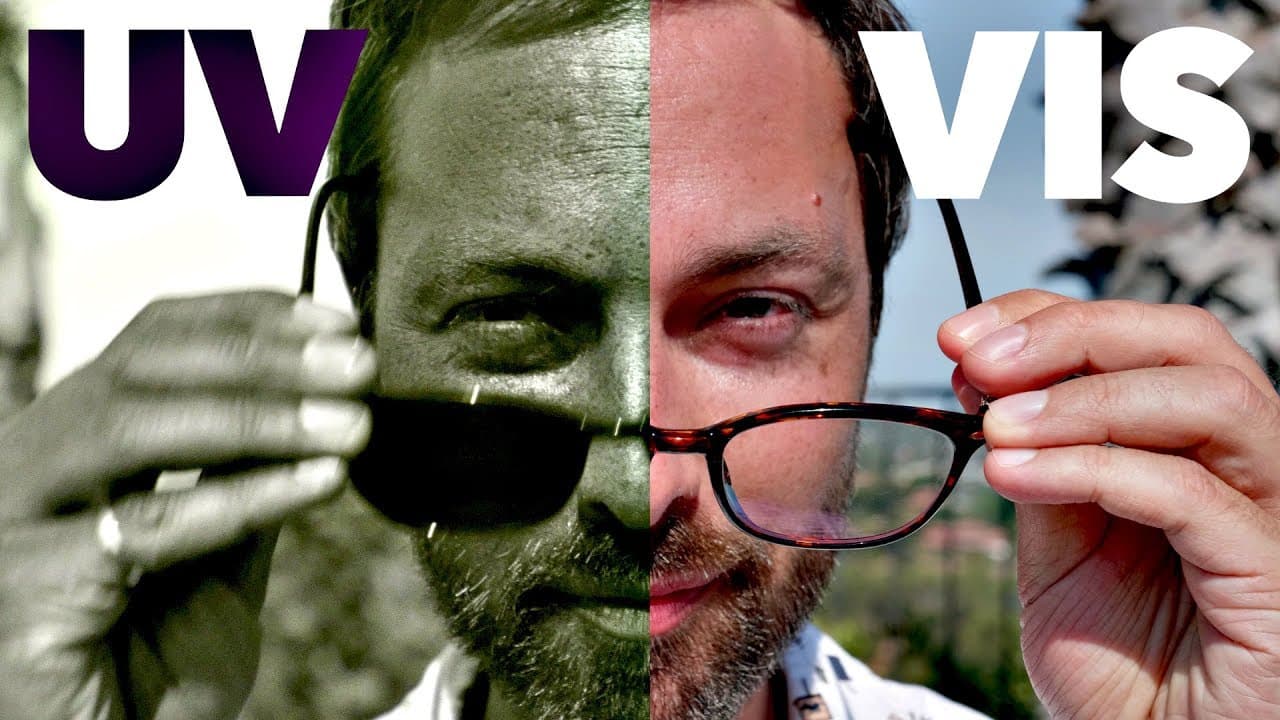
Ultraviolet light reveals how objects interact differently, making transparent glasses opaque and tonic water glow while appearing dark otherwise. The hazy look of the UV world results from Rayleigh scattering, and substances like melanin in skin or pigments in flowers absorb UV to protect or attract species, illustrating a hidden dimension of our environment.
Transcript
hey you look purple I guess I should come clean can you smile for me eating my two front teeth are fake oh my god they're purple and fake teeth look different than real teeth in the ultraviolet that's crazy [Applause] at first glance the world through a UV camera looks like a black-and-white version of the normal visible light world I mean these wh... Read More
Key Insights
- 🙂 Ultraviolet light reveals a hidden world where objects can appear differently, with glasses, filters, and liquids absorbing or fluorescing UV light.
- 🌱 Plants have evolved pigments that can be seen by insects in ultraviolet light, leading to the evolution of dark pigments on flower petals.
- 🙂 Melanin in human skin absorbs UV light, creating a protective layer over the DNA in the nucleus to prevent damage.
- 🙂 Animals like harp seal pups and certain species absorb UV light, which aids in their camouflage or helps in accurate counting during surveys.
- 🙂 Sunscreen works by absorbing or reflecting UV light, converting it into heat, and protecting the skin from DNA damage.
- 🙂 Rayleigh scattering is responsible for the hazy appearance in ultraviolet light, as shorter wavelengths of light scatter more in the atmosphere.
- 🙂 Ultraviolet light shows us a different perspective of the world, revealing hidden details and phenomena that go unnoticed in visible light.
Install to Summarize YouTube Videos and Get Transcripts
Explore YouTube Video Summarizer or Get YouTube Transcript Extractor
Questions & Answers
Q: Why does the world appear hazy in ultraviolet light?
The hazy appearance is caused by Rayleigh scattering, the same phenomenon responsible for making the sky blue. Shorter wavelengths of light, such as ultraviolet, are scattered more by tiny molecules in the atmosphere.
Q: Why do glasses and filters appear differently in UV light?
Glasses and filters can appear opaque in UV and transparent in visible light due to their ability to absorb UV light. This difference is due to the molecular properties of the materials used.
Q: Why does tonic water glow in UV light?
Tonic water contains the molecule quinine, which fluoresces by absorbing UV light and reemitting it as visible light. This fluorescence gives it a bright appearance in UV light and a dark appearance in visible light.
Q: What are some uses of ultraviolet photography?
Ultraviolet photography can be used to count harp seal pups in aerial surveys, locate arctic foxes or polar bears, and identify fluorescent molecules in laundry detergents and other products.
Summary & Key Takeaways
-
Ultraviolet light interacts differently with matter, causing visibility to reduce and objects like clouds to blend with the sky, creating a hazy appearance.
-
Glasses and filters can appear opaque in UV light while being transparent in visible light due to their ability to absorb UV light.
-
Tonic water contains the quinine molecule, which absorbs and reemits UV light as visible light, making it appear bright in UV and dark in visible light.
Read in Other Languages (beta)
Share This Summary 📚
Summarize YouTube Videos and Get Video Transcripts with 1-Click
Try YouTube Summary with ChatGPT & Claude or YouTube Transcript Generator
Explore More Summaries from Veritasium 📚



Summarize YouTube Videos and Get Video Transcripts with 1-Click
Try YouTube Summary with ChatGPT & Claude or YouTube Transcript Generator