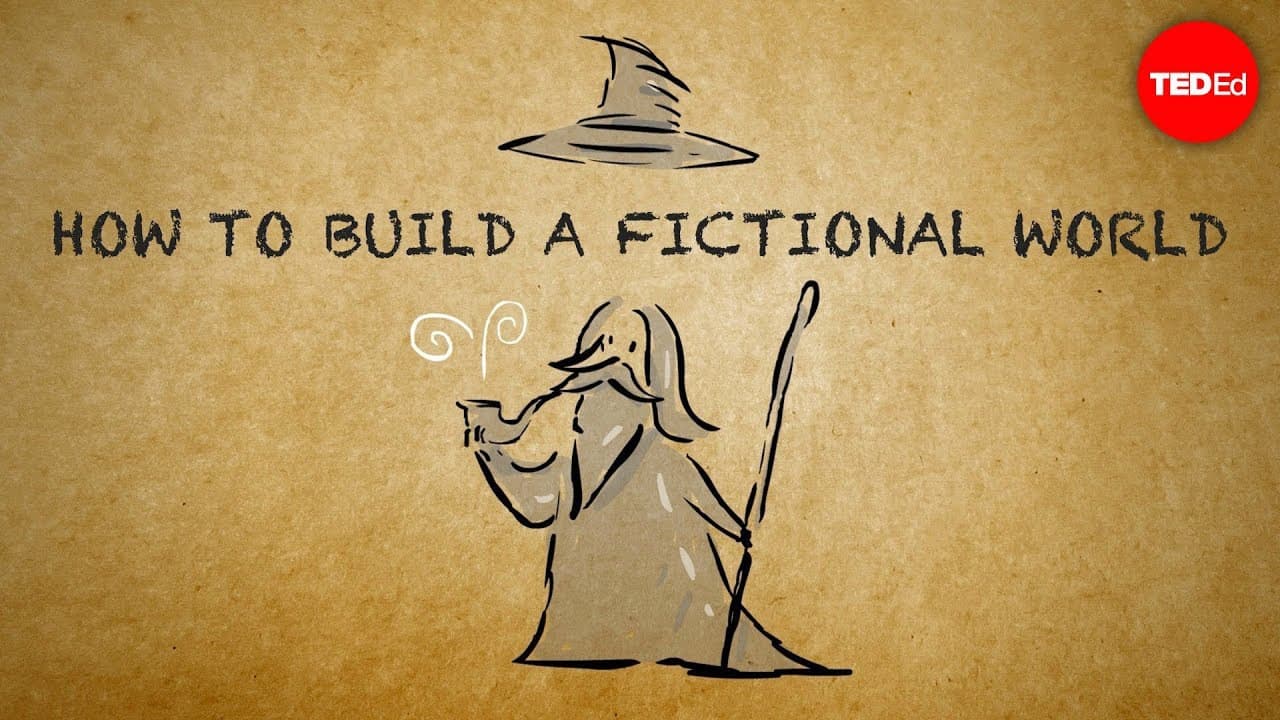
How to build a fictional world - Kate Messner
TL;DR
Authors create intricate fictional worlds with rules that shape characters and stories.
Transcript
In J.R.R.'s world, Gandalf is one of five wizards sent by the Valar to guide the inhabitants of Middle Earth in their struggles against the dark force of Sauron. Gandalf's body was mortal, subject to the physical rules of Middle Earth, but his spirit was immortal, as seen when he died as Gandalf the Grey and resurrected as Gandalf the White. Accord... Read More
Key Insights
- 🌍 Fictional worlds must follow consistent rules for believability.
- ❓ Authors meticulously craft details such as lineages, languages, and cultures.
- 🌍 Understanding a world's impact on characters is essential for compelling storytelling.
- 🌍 The setting's timeline and rules shape the world's present state.
- 🌍 Considerations like government, beliefs, and societal values are crucial in world-building.
- 🥳 Day-to-day life details, technology, and relationships enrich the world's complexity.
- 🌍 Immersing oneself in the world's tasks and answers to key questions aids in world-building.
Install to Summarize YouTube Videos and Get Transcripts
Explore YouTube Video Summarizer or Get YouTube Transcript Extractor
Questions & Answers
Q: How do authors make fictional worlds believable?
Authors create consistent rules, lineages, cultures, and societies within their fictional worlds, allowing readers to suspend disbelief and immerse themselves in the story.
Q: What considerations are essential when building a fictional world?
Authors need to define the world's timeline, rules, government, beliefs, day-to-day life, technology, and relationships with animals and plants to create a comprehensive and engaging setting.
Q: Why is it important to understand the impact of a world on its characters?
The world shapes the characters' beliefs, behaviors, and conflicts, giving depth and complexity to the story and enhancing reader engagement.
Q: How can aspiring writers begin crafting their own fictional worlds?
By starting with a basic setting, creating a timeline, answering key questions about the world, and understanding the impact of the world on characters, writers can lay the foundation for a compelling story.
Summary
In this video, the speaker explains how authors of science fiction and fantasy build intricate and believable fictional worlds. They discuss the importance of establishing rules, creating maps and lineages, and developing cultures and universes. The speaker also explores the impact of these worlds on readers and how they can shape perspectives on the real world. They share their own methods for world-building and offer advice for aspiring writers.
Questions & Answers
Q: How is Gandalf both mortal and immortal in J.R.R. Tolkien's world?
In J.R.R. Tolkien's world, Gandalf is a mortal wizard sent by the Valar to guide the inhabitants of Middle Earth. While his body is subject to the physical rules of Middle Earth, his spirit is immortal. When he dies as Gandalf the Grey, he resurrects as Gandalf the White, showcasing his immortality.
Q: How do awakened humans in the Matrix learn how to fly a helicopter?
According to the Wachowski's script, an awakened human only needs to link up and hack the neon binary code of the Matrix to quickly learn how to fly a helicopter. This ability can be acquired in a matter of seconds. However, if one is the chosen One or one of the Ones, they can even fly without the need for a helicopter, simply by wearing cool shades.
Q: How are Cheshire cats portrayed in fictional worlds?
In some fictional worlds, Cheshire cats are depicted as being capable of juggling their own heads. This whimsical characteristic adds to the fantastical elements of these worlds.
Q: What is the significance of the Golden Snitch in Quidditch matches?
In the fictional sport of Quidditch, the Golden Snitch is a small, fast-moving ball with wings. The match continues until the Golden Snitch is caught. The capture of the Snitch usually awards a large number of points and often determines the ultimate outcome of the game.
Q: How do authors make their fictional worlds believable?
Authors of science fiction and fantasy create consistent sets of rules within their fictional worlds. These rules govern everything from physical laws, like gravity, to societal norms and behaviors. By establishing these rules and sticking to them throughout the story, authors make their worlds believable and comprehensible to readers.
Q: Why do readers often understand fictional worlds as well as the characters in them?
When authors effectively build fictional worlds, readers can come to understand them just as well, if not better, than the characters who inhabit them. This is because authors provide sufficient information and context for readers to grasp the intricacies and rules of the fictional world, allowing them to fully immerse themselves in the narrative.
Q: How do human-made squiggles on a page elicit emotional responses and understanding from readers?
The speaker acknowledges that the answer to how written words can evoke strong emotional and logical responses from readers is not fully understood. However, well-crafted narratives have the power to move and engage readers by creating complex worlds and compelling stories. It is the combination of skilled storytelling, imaginative writing, and the reader's own interpretation that allows for the emotional and intellectual connection.
Q: What do authors need to get started in building a fictional world?
The speaker suggests that all an author needs to start building a fictional world is their imagination and a willingness to create and inhabit their own world. They emphasize the importance of establishing a setting, whether in a fantasy realm or a futuristic society within the real world, and creating a timeline of significant events that have shaped that world.
Q: What questions should authors answer to develop the details of their fictional world?
To develop the details of a fictional world, authors should consider a range of questions. Some of these include:
- What rules govern the world? (e.g., laws of physics, societal rules)
- What kind of government exists and who holds power?
- What are the beliefs and values of the society?
- What is day-to-day life like for the inhabitants? (e.g., weather, living conditions, food, relationships)
- What technology exists in this world? (e.g., transportation, communication, access to information)
Q: How can authors shape their story based on the world they have built?
Once authors have a deep understanding of the world they have created, they can release their characters into that world and observe the conflicts and challenges that arise. By considering how the world shapes the individuals who live in it and identifying the likely sources of conflict, authors can develop compelling and coherent storylines.
Takeaways
Creating intricate and believable fictional worlds involves establishing rules, crafting rich histories and backstories, and addressing various aspects of daily life and society within the world. By immersing themselves in their own imagination and carefully considering these elements, authors can engage readers and provide a compelling reading experience. The ability to shape readers' perspectives on the real world through well-crafted storytelling is a powerful and cherished tool for writers.
Summary & Key Takeaways
-
Fictional worlds follow consistent rules, making them believable and worth exploring.
-
Authors of science fiction and fantasy meticulously construct worlds with maps, lineages, and cultures.
-
Understanding a fictional world's rules and society is crucial for crafting engaging stories.
Read in Other Languages (beta)
Share This Summary 📚
Summarize YouTube Videos and Get Video Transcripts with 1-Click
Try YouTube Summary with ChatGPT & Claude or YouTube Transcript Generator
Explore More Summaries from TED-Ed 📚



Summarize YouTube Videos and Get Video Transcripts with 1-Click
Try YouTube Summary with ChatGPT & Claude or YouTube Transcript Generator