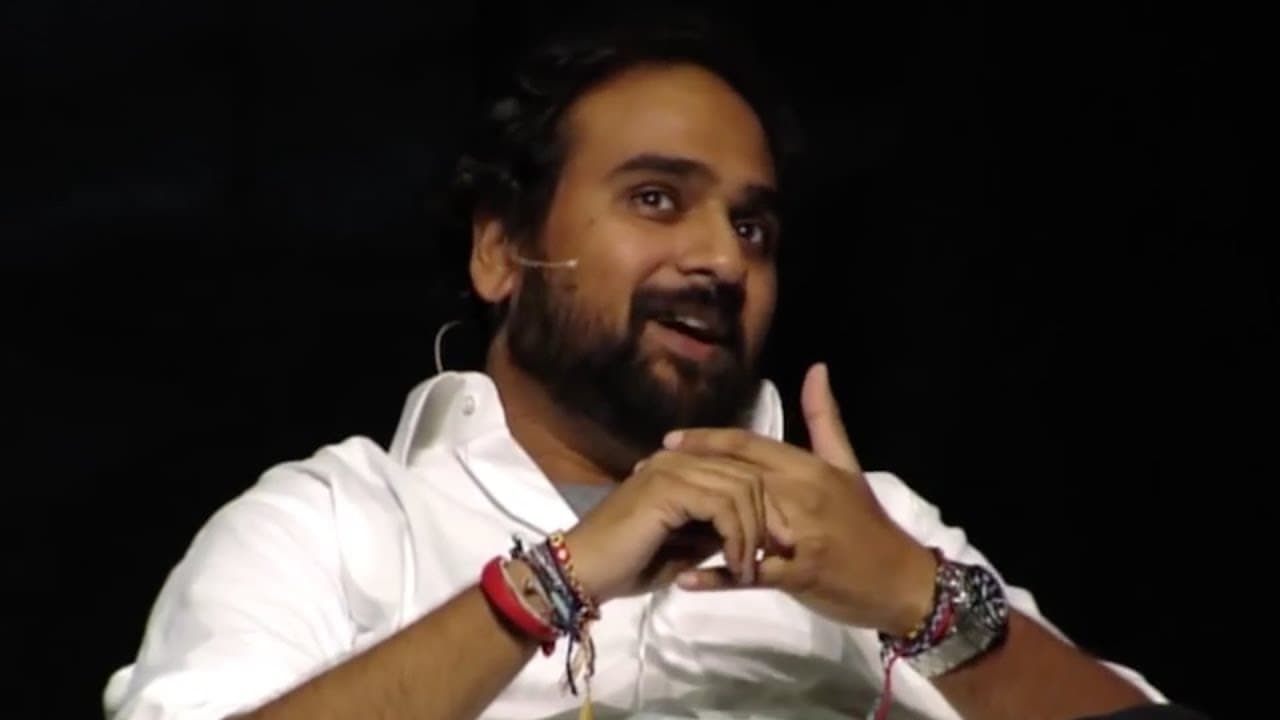
Hosain Rahman at Startup School SV 2014
TL;DR
Hosain Rahman discusses the challenges and triumphs in building Jawbone.
Transcript
thank you for coming I hope to do not much talking at all and I'm going to just ask you because it's sort of a strange thing you have this I want you to sort of go through the chronology of the early days yeah um and talk about you really did have a lot of close calls and I'd love for you to talk about them and how you got through them and sort of ... Read More
Key Insights
- Hosain Rahman started his company in 1999, aiming to create a voice interaction system for mobile devices, similar to Siri, but faced numerous challenges in raising initial capital.
- The breakthrough for Rahman’s company came with the invention of noise cancellation technology, which became a significant advancement in mobile audio.
- Despite the impressive technology, initial attempts to integrate it into devices faced resistance due to cost concerns from manufacturers.
- DARPA funding played a crucial role in sustaining the company during tough times, allowing them to refine their technology for military applications.
- The company's first consumer product launch was unsuccessful, leading to a shutdown and Rahman taking back control with limited resources.
- A pivotal moment came when Steve Jobs provided brutally honest feedback on their product design, reinforcing the importance of staying true to customer experience.
- The company eventually succeeded with a consumer headset, achieving significant revenue growth, but faced new challenges during the 2008 financial crisis.
- Rahman emphasizes the importance of integrating software, hardware, and data to solve customer problems effectively, learning from past failures to drive future success.
Install to Summarize YouTube Videos and Get Transcripts
Explore YouTube Video Summarizer or Get YouTube Transcript Extractor
Questions & Answers
Q: What was the initial vision for Hosain Rahman's company?
The initial vision for Hosain Rahman's company was to create a voice interaction system for mobile devices, akin to what Siri is today. Inspired by early mobile devices like Palm, the goal was to transform the user interface experience by allowing users to interact with their phones through voice commands. This idea was developed in the late 1990s, a time when mobile voice technology was not yet a focus in Silicon Valley.
Q: What technological breakthrough did Rahman's company achieve?
Rahman's company achieved a significant technological breakthrough with the invention of noise cancellation technology. This advancement was considered the biggest in mobile audio in 30 years. It was initially developed to improve speech recognition but ended up addressing a core function of mobile phones at the time: voice communication. This technology became the foundation for further innovations and was a critical factor in the company's eventual success.
Q: How did DARPA funding impact the company?
DARPA funding had a profound impact on the company by providing the necessary resources to continue operations during difficult times. The funding allowed the company to refine their noise cancellation technology for military applications, specifically for battlefield communication. This unconventional source of capital was crucial in keeping the company afloat and enabled them to further develop their technology into a market-ready product.
Q: What was the outcome of the company's first consumer product launch?
The company's first consumer product launch was unsuccessful, leading to a shutdown of operations. Despite initial buzz and media attention, the product, a headset, did not sell well due to design and functionality compromises made to meet deadlines. This failure resulted in the company being shut down, with employees laid off and the office doors literally chained. Rahman, however, managed to regain control and learned valuable lessons about the importance of design and staying true to customer needs.
Q: How did Steve Jobs influence Rahman's approach to product development?
Steve Jobs had a significant influence on Rahman's approach to product development through a brutally honest critique of their product. Jobs pointed out several design flaws and decisions that compromised the user experience. This feedback reinforced the importance of not compromising on quality and design, even under time and financial constraints. Rahman took this lesson to heart, emphasizing the need to trust their instincts and focus on delivering the best possible customer experience.
Q: What challenges did the company face during the 2008 financial crisis?
During the 2008 financial crisis, the company faced the challenge of having a million units on backorder, with many orders canceled due to the economic downturn. This left them with a large inventory in China that needed to be managed. They spent much of 2009 working to reduce this inventory, including making a significant deal with Costco. This period was marked by financial strain and required strategic maneuvering to navigate the crisis.
Q: How did the company recover from the issues with the Up product launch?
Following issues with the Up product launch, where units were breaking at scale, the company focused on addressing the problem by first ensuring customer safety. Rahman issued a public apology, offering refunds while allowing customers to keep the product. This approach, focusing on transparency and customer satisfaction, helped rebuild trust. The company learned from the experience, leading to improvements in product design and functionality, ultimately resulting in a successful relaunch.
Q: What is Rahman's philosophy on integrating software, hardware, and data?
Rahman's philosophy on integrating software, hardware, and data centers on solving customer problems effectively. He emphasizes the importance of these elements working together seamlessly, rather than in silos. By organizing teams around customer issues and ensuring that software and hardware development are aligned, the company can create cohesive and innovative solutions. This approach draws on lessons from past failures and aims to deliver high-quality products that meet customer needs.
Summary & Key Takeaways
-
Hosain Rahman's entrepreneurial journey began with the vision of creating a voice interaction system for mobile devices. Despite early challenges, his company made a significant breakthrough with noise cancellation technology, although manufacturers were initially hesitant to adopt it due to cost concerns.
-
DARPA funding was instrumental in keeping the company afloat, allowing them to refine their technology for military use. A failed product launch led to a company shutdown, but Rahman regained control, learning valuable lessons about the importance of design and customer experience.
-
The company eventually succeeded with a consumer headset, achieving rapid revenue growth but facing new challenges during the 2008 financial crisis. Rahman highlights the importance of integrating software, hardware, and data to effectively solve customer problems, drawing on past experiences to guide future innovation.
Read in Other Languages (beta)
Share This Summary 📚
Summarize YouTube Videos and Get Video Transcripts with 1-Click
Try YouTube Summary with ChatGPT & Claude or YouTube Transcript Generator
Explore More Summaries from Y Combinator 📚





Summarize YouTube Videos and Get Video Transcripts with 1-Click
Try YouTube Summary with ChatGPT & Claude or YouTube Transcript Generator