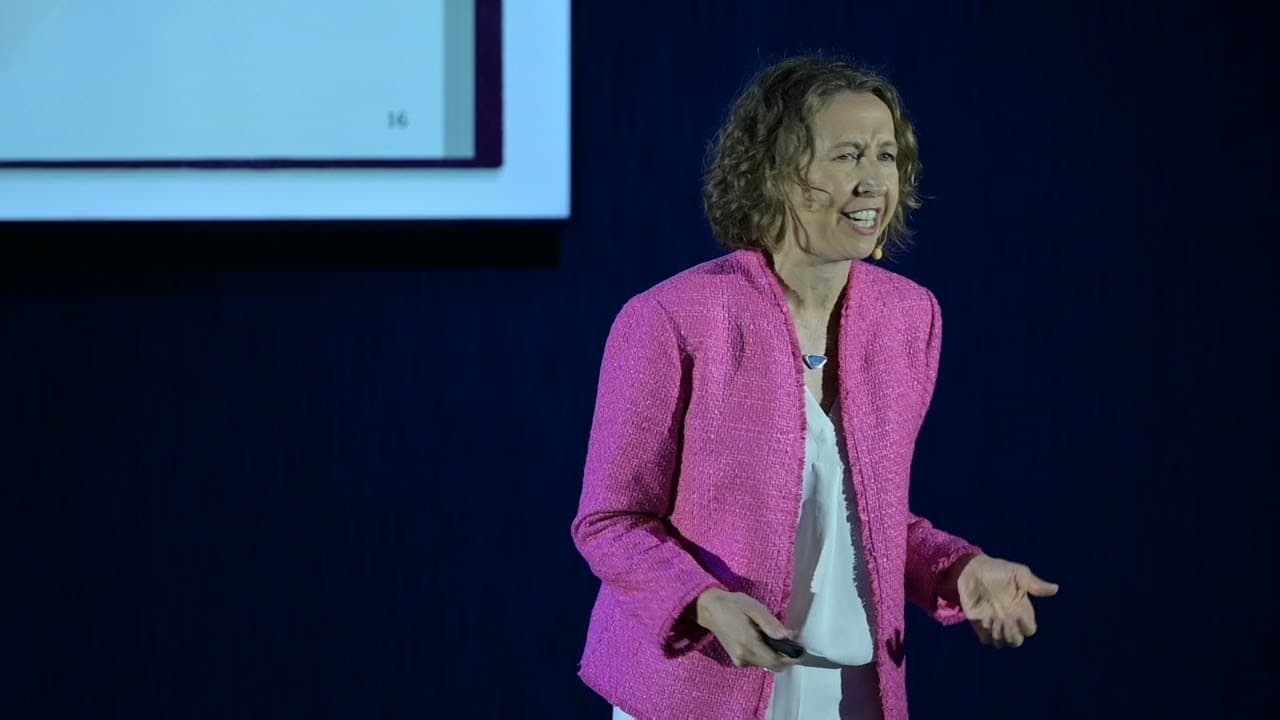
Work-Life Balance is a Lie: Finding Alignment | Kathryn Keller Wood | TEDxRockville
TL;DR
To achieve fulfillment in your professional and personal life, focus on alignment rather than striving for balance. Understanding your purpose work and integrating it with your other life pieces can lead to greater happiness and meaning. Consider both internal and external shifts to create a supportive environment that nurtures your unique life mosaic.
Transcript
[Applause] are you thinking about quitting your job do you know someone who is if so you are not alone a Pew research survey last year found that roughly one in five workers was somewhat or very likely to look for a new job in just the next six months that's a lot of unhappy people but 73% of American workers this year said that their job or career... Read More
Key Insights
- 🤳 Many workers contemplate leaving their jobs, highlighting the need for exploration and self-reflection.
- 🥺 Achieving work-life balance through alignment rather than perfection leads to greater fulfillment.
- 💦 Montessori education principles emphasize blurring boundaries between work and play, providing valuable insights for adults.
- 🥺 Understanding one's purpose work and prioritizing alignment can lead to a more meaningful and fulfilling life journey.
- 🗯️ Finding the right balance and alignment unique to an individual's life mosaic ensures personal and professional growth.
- 💱 Internal shifts empower individuals to make significant changes within themselves to realign with their purpose and values.
- 💦 External shifts, such as career changes or location adjustments, can also contribute to achieving alignment between work and life.
Install to Summarize YouTube Videos and Get Transcripts
Explore YouTube Video Summarizer or Get YouTube Transcript Extractor
Questions & Answers
Q: How do workers view the importance of their careers?
A Pew research survey shows that 73% of American workers find their job or career somewhat important to their identity, emphasizing the significance of work in people's lives.
Q: What does the concept of "alignment" encompass in relation to work and life?
Alignment involves harmonizing work, life, and purpose to find fulfillment and balance, emphasizing the integration of all aspects of an individual's existence.
Q: How can internal shifts contribute to achieving alignment?
Internal shifts involve changes within oneself, such as altering attitudes, habits, or boundaries, empowering individuals to take control of their personal development and align with their purpose work.
Q: How can external shifts impact alignment between work and life?
External shifts may involve drastic changes like quitting a job or moving locations. However, subtle adjustments in the environment can also play a significant role in supporting individual thriving and alignment.
Summary
This video explores the concept of work-life alignment and offers insights on how to find alignment in our own lives. It starts with the recognition that work is an important part of our identity and that many people contemplate quitting their jobs. The speaker shares a personal story of her sister who was considering leaving her job as an oncology nurse. Through the lessons learned from Montessori education, the video presents a different perspective on work and emphasizes the importance of finding our purpose work or cosmic task. It suggests asking two key questions - which pieces of our life mosaic need attention and how can we bring those pieces back into alignment through internal and external shifts.
Questions & Answers
Q: What did a Pew research survey reveal about workers' likelihood of looking for a new job?
According to a Pew research survey, about one in five workers was somewhat or very likely to look for a new job in the next six months, indicating a significant number of unhappy employees.
Q: How did the speaker's sister feel about her job as an oncology nurse?
The speaker's sister, an award-winning oncology nurse, took great pride in providing compassionate care to her patients. She had loved her work for nearly a decade and had even received thank-you notes from patients and their families displayed on her apartment fridge.
Q: What did the speaker compare quitting a job to?
The speaker compared quitting a job to the butterfly effect, which is the concept that small changes can have a big impact. She pondered the loss and ripple effects that occur when someone walks away from their work.
Q: When did the speaker realize that something was not working in her own career?
The speaker realized that something was not working in her own career when her husband expressed concern about her stressed and overwhelmed state. Despite her efforts to achieve work-life balance through strict rules and boundaries, she felt that her work was not fulfilling.
Q: What is the speaker's perspective on work-life balance?
The speaker argues that work-life balance is a lie because work is an integral part of life and cannot be separated. She asserts that there is no perfect ratio of work to life and that seeking balance is akin to food scientists seeking the perfect combination of flavors in a potato chip.
Q: How does the speaker suggest thinking about work and life instead of seeking balance?
The speaker introduces the concept of alignment and advocates for finding alignment between work and life. She suggests that instead of striving for a specific balance, we should bring our lives into alignment by prioritizing the pieces of our mosaic that contribute to our purpose work or cosmic task.
Q: What can we learn from Montessori education about work and play?
Montessori classrooms blur the distinction between work and play. They refer to engaging activities as work, and the speaker shares the story of a child who associated "no work" with "no fun." This perspective highlights the idea that work can be interesting, engaging, and even fun.
Q: How does Montessori education define work?
Montessori education takes a broad view of work, considering it as any meaningful activity that contributes to the functioning and well-being of the interconnected universe. It encompasses both paid employment (paycheck work) and one's unique role or purpose in the world (purpose work or cosmic task).
Q: How does the speaker propose visualizing our lives in alignment?
The speaker suggests visualizing our lives as an ever-expanding mosaic artwork. Each piece of the mosaic represents different aspects of our lives, such as work, relationships, hobbies, service, and faith. Alignment means choosing the correct relative positions for each piece according to our own needs and values.
Q: When should we consider making changes to bring our lives back into alignment?
When we feel a general unease or that something is not working, it indicates that something is out of alignment. The speaker advises asking two questions to determine which pieces of our mosaic need attention and how they can be brought back into healthy alignment.
Takeaways
Finding work-life alignment is more meaningful than pursuing work-life balance. It involves recognizing and prioritizing our purpose work or cosmic task, blurring the lines between work and play, and making internal and external shifts to realign our lives. Asking ourselves which pieces of our mosaic need attention and how to bring them into alignment can help us find fulfillment and make an impact in our own unique way. Each person's journey to alignment will be different, but embracing our role and bringing our own brand of magic to the world is essential.
Summary & Key Takeaways
-
Many workers consider quitting their jobs, but 73% find importance in their careers.
-
Balancing work and life through alignment is more effective than striving for perfection.
-
Montessori education principles can teach valuable lessons about finding purpose and integration.
Read in Other Languages (beta)
Share This Summary 📚
Summarize YouTube Videos and Get Video Transcripts with 1-Click
Try YouTube Summary with ChatGPT & Claude or YouTube Transcript Generator
Explore More Summaries from TEDx Talks 📚



Summarize YouTube Videos and Get Video Transcripts with 1-Click
Try YouTube Summary with ChatGPT & Claude or YouTube Transcript Generator