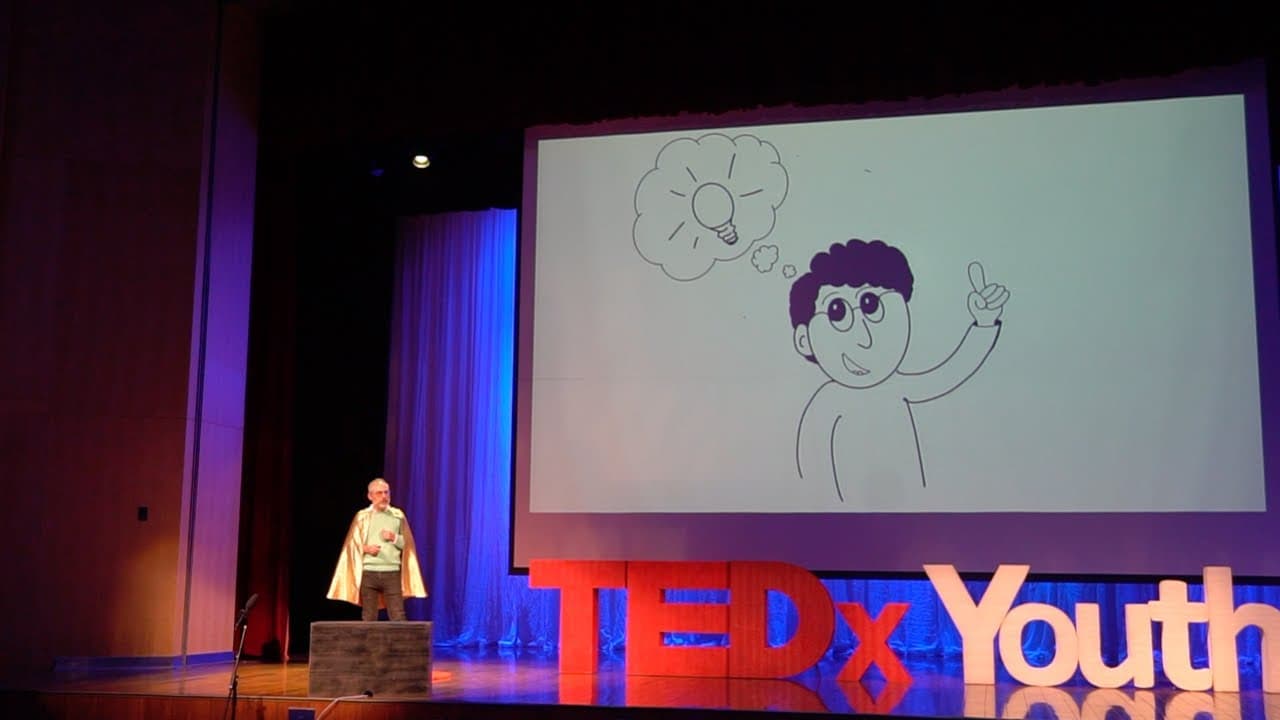
How My "Deficit" Became My Superpower | Seth Silberner | TEDxYouth@NIS
TL;DR
A journey of self-acceptance and empowerment for individuals with ADHD, highlighting the importance of mentors, allies, and embracing one's unique strengths.
Transcript
Transcriber: Trần Thái Hưng (English tutor: 0938147500) Reviewer: İlker ÖZBAŞ I may look like an ordinary human being, but I have a superpower. And like all superheroes, I have an origin story, one that began with a power that I didn't understand at first and that I was told was a problem. But with the timely advice of mentors through team ups, wit... Read More
Key Insights
- 🤔 ADHD can present challenges in traditional educational settings but can also offer unique strengths such as hyper focus and divergent thinking.
- 🖐️ Mentors and allies play a crucial role in supporting individuals with ADHD in harnessing their strengths and overcoming obstacles.
- 🤳 Embracing one's neurodivergence involves self-acceptance, finding a supportive community, and recognizing the value of diverse perspectives.
- 🉐 Neurodivergent individuals can excel in areas of interest, gaining expertise and skills through hyper focus and passion.
- 🉑 Educating oneself about neurodivergence, supporting neurodivergent individuals, and fostering inclusivity are essential steps towards creating a more understanding and accepting society.
Install to Summarize YouTube Videos and Get Transcripts
Explore YouTube Video Summarizer or Get YouTube Transcript Extractor
Questions & Answers
Q: How did the individual's journey with ADHD impact their academic experience?
The individual faced challenges in school, struggling with fitting into standardized norms, facing negative feedback, and internalizing self-doubt. ADHD affected their ability to focus, leading to missed assignments and exams.
Q: How did mentors and allies contribute to the individual's growth?
Mentors, like their grade five teacher and principal, provided support, guidance, and understanding. Allies, such as a friend named Seth, helped regulate emotions and navigate personal challenges, showcasing the importance of a strong support system.
Q: What strategies did the individual develop to cope with ADHD in academic settings?
The individual worked with school learning support to develop organizational tools and coping mechanisms. By grade 11, they were able to manage their ADHD symptoms independently and utilized hyper focus for academic success.
Q: How does the individual encourage others to embrace neurodivergence?
The individual advocates for self-acceptance, finding mentors and allies, and leveraging unique strengths. They emphasize the value of divergent thinking and the importance of supporting neurodiverse individuals in society.
Summary
In this video, the speaker shares their personal journey with ADHD and how they transformed their perceived "problem" into a superpower. They discuss their struggles in school, the importance of mentors and allies, and the misconceptions surrounding ADHD. The speaker emphasizes the need to embrace one's differences, find support, and harness their unique abilities.
Questions & Answers
Q: What challenges did the speaker face in school?
The speaker faced challenges in school due to their ADHD. They asked too many questions, daydreamed, and exhibited curiosity that wasn't appreciated by their teachers. They also struggled with remembering assignments and exams.
Q: How did the speaker's experiences with teachers and students affect their self-confidence?
The speaker experienced rigidity and unkindness from both teachers and students, which led to negative messages and a decrease in self-confidence. They internalized the belief that they were lazy and not capable, despite being told they had potential.
Q: Who was one of the speaker's early mentors?
Mrs. Glassman, the speaker's grade five teacher, was one of their early mentors. She recognized that books were their sanctuary and allowed them to spend hours reading from her own home library.
Q: What role did the speaker's friend Seth play in their life?
Seth, a friend the speaker met in high school, became a crucial ally for them. He helped the speaker regulate their emotions and provided support during challenging times.
Q: How did Hirsch Jacobson, the principal, influence the speaker's journey?
Hirsch Jacobson, the principal, became one of the speaker's most important early mentors. Although he appeared no-nonsense, he was extremely kind and supportive. He played a pivotal role in the speaker's diagnosis of ADHD and their subsequent evaluation.
Q: What is the speaker's opinion on the name "Attention Deficit Hyperactivity Disorder"?
The speaker believes that the name "Attention Deficit Hyperactivity Disorder" is misleading. They argue that it is not a deficit of attention, but rather an excessive amount of attention that goes where it wants. The speaker prefers the term "executive function difference" instead.
Q: Why are individuals with ADHD important in hunter-gatherer societies?
In hunter-gatherer societies, individuals with ADHD played essential roles. They were risk-takers, leaders in migrations, and had the ability to spot dangers and locate new food sources. Their adventurous nature contributed to the discovery of valuable resources.
Q: How does the modern educational system reward executive functioning?
The modern educational system tends to reward highly organized individuals with strong executive functioning skills. Teachers value detailed planning, focus, and attention to detail. This can be challenging for individuals with ADHD, whose executive functioning may lead them down winding back alleys of curiosity.
Q: How did the speaker's school learning support help them cope with ADHD?
The speaker received support from their school's learning support system, which helped them develop organizational strategies to succeed in school. By grade 11, the speaker was largely able to cope on their own.
Q: What positive aspects can come from ADHD?
One positive aspect of ADHD is hyperfocus. Individuals with ADHD can gain amazing expertise and skills when they are interested in something. The speaker learned to turn on their hyperfocus at will, enabling them to excel in certain tasks.
Takeaways
The speaker encourages neurodivergent individuals to embrace their differences and find mentors and allies who can provide support. They emphasize the importance of educating oneself about neurodiversity and offering kindness to those who may feel alone or misunderstood. The speaker urges everyone to open their minds and befriend neurodivergent individuals, as their fascinating minds and unique abilities can enrich the lives of others.
Summary & Key Takeaways
-
An individual shares their origin story of struggling with ADHD, facing challenges in school due to differences in learning and behavior.
-
With the support of mentors, allies, and a diagnosis of ADHD, the individual learns to harness their hyper focus and unique perspective as strengths.
-
Embracing neurodivergence, the individual encourages self-acceptance, finding allies, and appreciating the benefits of divergent thinking.
Read in Other Languages (beta)
Share This Summary 📚
Summarize YouTube Videos and Get Video Transcripts with 1-Click
Try YouTube Summary with ChatGPT & Claude or YouTube Transcript Generator
Explore More Summaries from TEDx Talks 📚




Summarize YouTube Videos and Get Video Transcripts with 1-Click
Try YouTube Summary with ChatGPT & Claude or YouTube Transcript Generator