How AI is Transforming the Design Process
TL;DR
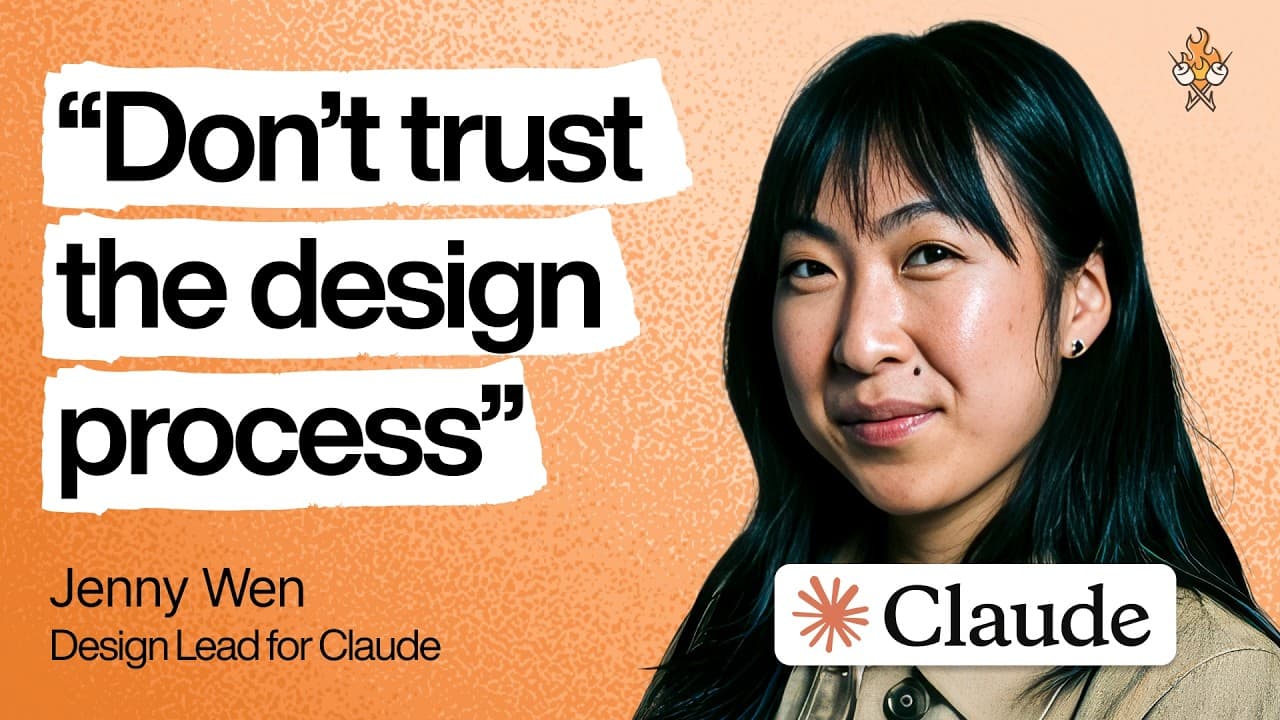
The traditional design process, heavily reliant on research, discovery, and prototyping, is becoming obsolete. With the rapid advancements in AI, designers now focus more on supporting execution and creating short-term visions rather than detailed mockups. The role is evolving to adapt to faster engineering cycles, requiring collaboration and flexibility.
Transcript
This design process that designers have been taught, we sort of treat it as gospel. That's basically dead. You as a designer actually like do not have the time to make these beautiful mocks anymore. A big part of the design role now is helping engineers and teams execute, not just telling them here's the design. Few years ago, 60 to 70% of it was m... Read More
Key Insights
- The traditional design process emphasizing discovery and prototyping is becoming outdated due to AI advancements.
- Designers are shifting focus from creating detailed mockups to supporting execution and short-term vision creation.
- Engineering advancements are driving changes in the design role, necessitating adaptation and flexibility.
- Design work is becoming stratified into supporting execution and creating directional visions.
- AI is influencing the design process, requiring designers to adapt to faster-paced engineering cycles.
- The future of design involves more collaboration with engineers and less time on detailed mockups.
- AI tools are becoming integral to the design process, enabling designers to implement and prototype more efficiently.
- Despite changes, human judgment and decision-making remain crucial in determining what gets built.
Install to Summarize YouTube Videos and Get Transcripts
Explore YouTube Video Summarizer or Get YouTube Transcript Extractor
Questions & Answers
Q: How is the traditional design process changing due to AI?
The traditional design process, which focused heavily on research, discovery, and detailed prototyping, is becoming less relevant. With AI enabling faster engineering cycles, designers are now more involved in supporting execution and creating short-term visions. This shift requires designers to be more flexible and collaborative, adapting quickly to changes in technology and engineering practices.
Q: What are the two new types of design work emerging?
The two emerging types of design work are supporting implementation and execution, and creating directional visions. Supporting implementation involves working closely with engineers to execute ideas quickly, while creating directional visions focuses on setting short-term goals and directions for projects. This shift reflects the need for designers to adapt to faster-paced environments and collaborate more effectively with engineering teams.
Q: How widespread is the shift in the design process across industries?
The shift in the design process is becoming more widespread, especially in industries heavily influenced by AI and rapid technological advancements. While some traditional industries may still rely on classic design methodologies, many companies, particularly those at the forefront of technology, are adopting new approaches to design that emphasize speed, flexibility, and collaboration with engineering teams.
Q: What role does AI play in the evolving design process?
AI plays a significant role in the evolving design process by enabling faster prototyping and execution. AI tools allow designers to implement ideas more efficiently, reducing the time spent on detailed mockups and increasing focus on collaboration with engineers. This shift requires designers to adapt to new technologies and integrate AI tools into their workflows to remain effective and competitive.
Q: Why is human judgment still important in the design process?
Human judgment remains crucial in the design process because it involves making decisions about what to build and prioritizing features based on user needs and business goals. While AI can assist with execution and provide insights, it lacks the ability to fully understand context, creativity, and the nuances of human experience. Designers play a key role in interpreting AI outputs and ensuring that products align with user expectations and company objectives.
Q: How can designers maintain craft and quality in the AI era?
Designers can maintain craft and quality in the AI era by focusing on collaboration with engineers, setting clear short-term goals, and continuously iterating on designs based on user feedback. While AI tools can assist with execution, designers must ensure that the final product meets high standards of usability and aesthetics. This involves balancing speed with attention to detail and leveraging AI to enhance, rather than replace, human creativity.
Q: Will AI eventually surpass humans in taste and judgment?
While AI is improving in taste and judgment, human designers still play a crucial role in making final decisions about what gets built. AI can provide valuable insights and assist with execution, but it lacks the ability to fully understand context and user experiences. Human judgment is essential for interpreting AI outputs and ensuring that products meet user needs and expectations. As AI continues to evolve, it will complement human decision-making rather than replace it entirely.
Q: What are the key skills designers need in the evolving landscape?
In the evolving design landscape, key skills include adaptability, collaboration, and proficiency with AI tools. Designers need to be flexible in their approach, able to work closely with engineers, and open to new methodologies and technologies. Proficiency with AI tools is increasingly important, as these tools enable faster prototyping and execution. Additionally, strong communication skills and the ability to interpret user feedback are essential for maintaining craft and quality in the design process.
Summary & Key Takeaways
-
The traditional design process is evolving due to AI, with less emphasis on detailed mockups and more on execution and short-term vision. Designers are adapting to faster engineering cycles, focusing on collaboration and flexibility.
-
Engineering advancements are forcing changes in design roles, with AI tools enabling more efficient implementation and prototyping. The future of design involves supporting execution and creating directional visions.
-
Despite AI's influence, human judgment remains crucial in the design process. Designers must adapt to new tools and methods, balancing collaboration with engineers and maintaining creative direction.
Read in Other Languages (beta)
Share This Summary 📚
Summarize YouTube Videos and Get Video Transcripts with 1-Click
Try YouTube Summary with ChatGPT & Claude or YouTube Transcript Generator
Explore More Summaries from Lenny's Podcast 📚






Summarize YouTube Videos and Get Video Transcripts with 1-Click
Try YouTube Summary with ChatGPT & Claude or YouTube Transcript Generator