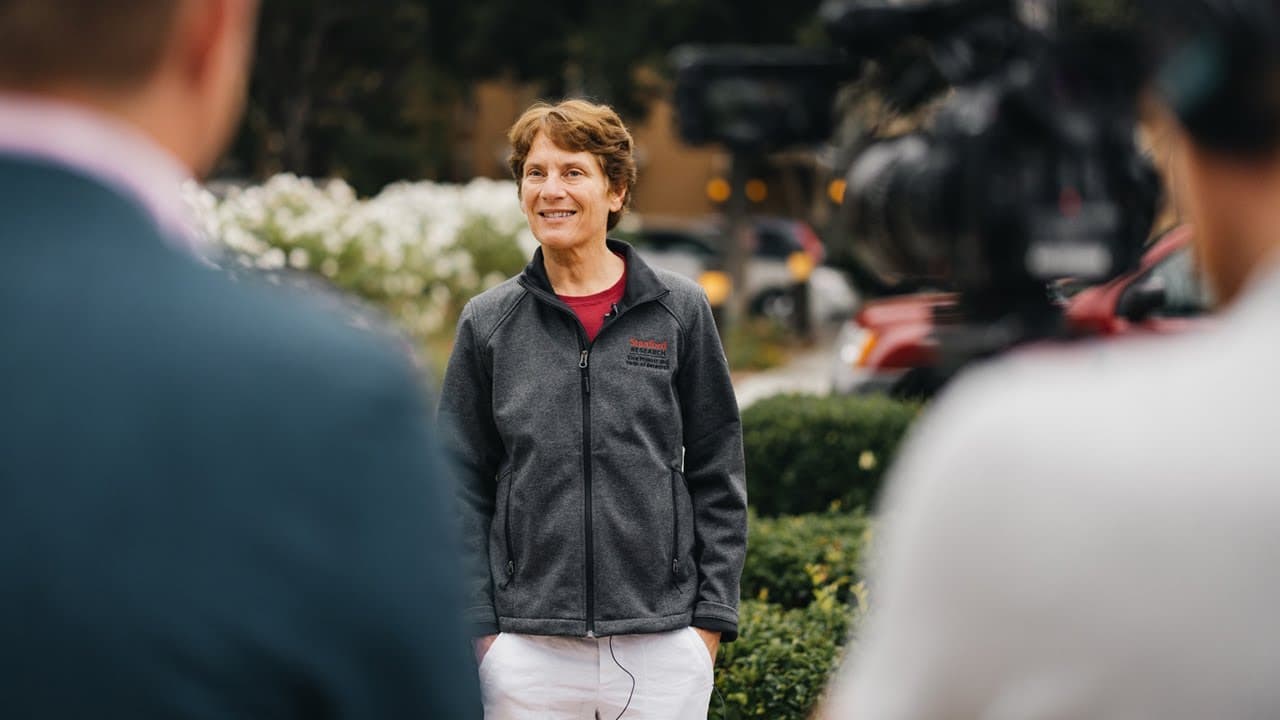
Stanford’s Carolyn Bertozzi wins Nobel Prize in chemistry
TL;DR
Professor Bertozi's groundbreaking work in Bio Orthogonal Chemistry earns her a Nobel Prize recognition, sparking inspiration for future scientists.
Transcript
[Applause] I went to bed last night as if it were any other regular night and then the phone rang so I answered the phone and it was the chair of the Nobel Prize committee it was just a stunning shocking moment of excitement and exhilaration the final word was within the next 50 minutes you know your life is normal as you have known it but as soon ... Read More
Key Insights
- 👶 Scientific experiments' outcomes that are not anticipated are not failures but opportunities to learn something new.
- 🥺 Passion for a subject can lead to significant contributions and groundbreaking discoveries.
- 🧑🔬 Recognition through awards like the Nobel Prize can inspire and motivate future scientists.
Install to Summarize YouTube Videos and Get Transcripts
Explore YouTube Video Summarizer or Get YouTube Transcript Extractor
Questions & Answers
Q: How did Professor Bertozi feel upon receiving the Nobel Prize call?
Professor Bertozi describes feeling stunned, excited, and exhilarated, recognizing the life-changing nature of the recognition.
Q: Why did Professor Bertozi initially choose organic chemistry?
She took organic chemistry as part of her biology major but fell in love with the subject due to its elegance and intrinsic understandability.
Q: What field did Professor Bertozi create with her work?
Professor Bertozi is recognized for pioneering the field of Bio Orthogonal Chemistry, which involves labeling self-surface sugars with imaging molecules and has various applications in diagnostics and therapeutics.
Q: How does Professor Bertozi view the Nobel Prize's impact?
She believes that the Nobel Prize shines a spotlight on a field and individuals, providing an opportunity to do good things for their profession and the world at large.
Summary
This video features an interview with a Nobel Prize Laureate in Science, discussing her journey in the field of organic chemistry and her groundbreaking work in Bio orthogonal chemistry. She reflects on the impact of science and the importance of mentorship, as well as the significance of being a woman Nobel Laureate in male-dominated fields.
Questions & Answers
Q: How did the Nobel Prize committee contact the Laureate?
The Laureate received a phone call from the chair of the Nobel Prize committee, which was met with excitement and exhilaration. The call was unexpected and resulted in a life-changing moment for the Laureate.
Q: How does the Laureate view failures in science?
The Laureate believes that there are no true failures in science. Instead, she emphasizes that unexpected outcomes in experiments provide opportunities to learn something new and expand knowledge. Science should be seen as a field of continuous learning and growth.
Q: What prompted the Laureate's interest in organic chemistry?
Initially, the Laureate took organic chemistry as a requirement for her biology major. However, she found the subject to be elegant, beautiful, and easily understandable. Her fascination with organic chemistry grew to a point where she would choose studying over socializing, falling in love with the subject.
Q: How does the Stanford community feel about the Laureate's achievements?
The Stanford community is incredibly proud of the Laureate's accomplishments and recognizes her groundbreaking work in the field of Bio orthogonal chemistry. They celebrate her recognition by the Nobel Prize committee and view her success as a shining example of great science illuminating the world.
Q: What is the Laureate recognized for in her field of study?
The Laureate is recognized for creating a new field of Bio orthogonal chemistry. This involved developing chemistry techniques to label self-surface sugars with imaging molecules in cells, living organisms, and even human patients. Her work has revolutionized our understanding of the basic building blocks of life, improved diagnostics in diseases like tuberculosis, and pioneered novel approaches to cancer therapeutics.
Q: What does receiving a Nobel Prize mean for a scientist?
Receiving a Nobel Prize shines a spotlight on both the field of study and the individuals involved. It provides an opportunity for laureates to use their platform to make positive contributions to their profession and the world at large. It is a prestigious recognition that carries weight and inspires others in their scientific pursuits.
Q: How does the Laureate feel about being a woman Nobel Laureate in the sciences?
The Laureate acknowledges the significance of being a woman in a field that traditionally lacks gender diversity. While there has been progress, she recognizes the importance of her achievement in inspiring younger and early-career scientists. She feels a deep sense of gratitude if her path and success can serve as inspiration for others.
Takeaways
The interview highlights the transformative power of science and the importance of embracing unexpected outcomes as learning opportunities. It showcases the breakthroughs made in the field of Bio orthogonal chemistry and their potential to enhance diagnostics and develop innovative cancer therapeutics. The Laureate's journey as a woman in science serves as inspiration for aspiring scientists, emphasizing the need for diversity and representation in these fields.
Summary & Key Takeaways
-
Professor Bertozi describes her shock and excitement upon receiving the Nobel Prize call and emphasizes the transformative power of science.
-
She explains her passion for organic chemistry and how it led her to make significant contributions in the field of Bio Orthogonal Chemistry.
-
Professor Bertozi's work has profoundly impacted the understanding of life's building blocks, improved diagnostics, and opened possibilities for novel cancer therapeutics.
Read in Other Languages (beta)
Share This Summary 📚
Summarize YouTube Videos and Get Video Transcripts with 1-Click
Try YouTube Summary with ChatGPT & Claude or YouTube Transcript Generator
Explore More Summaries from Stanford 📚

Summarize YouTube Videos and Get Video Transcripts with 1-Click
Try YouTube Summary with ChatGPT & Claude or YouTube Transcript Generator