Spinning Black Holes
TL;DR
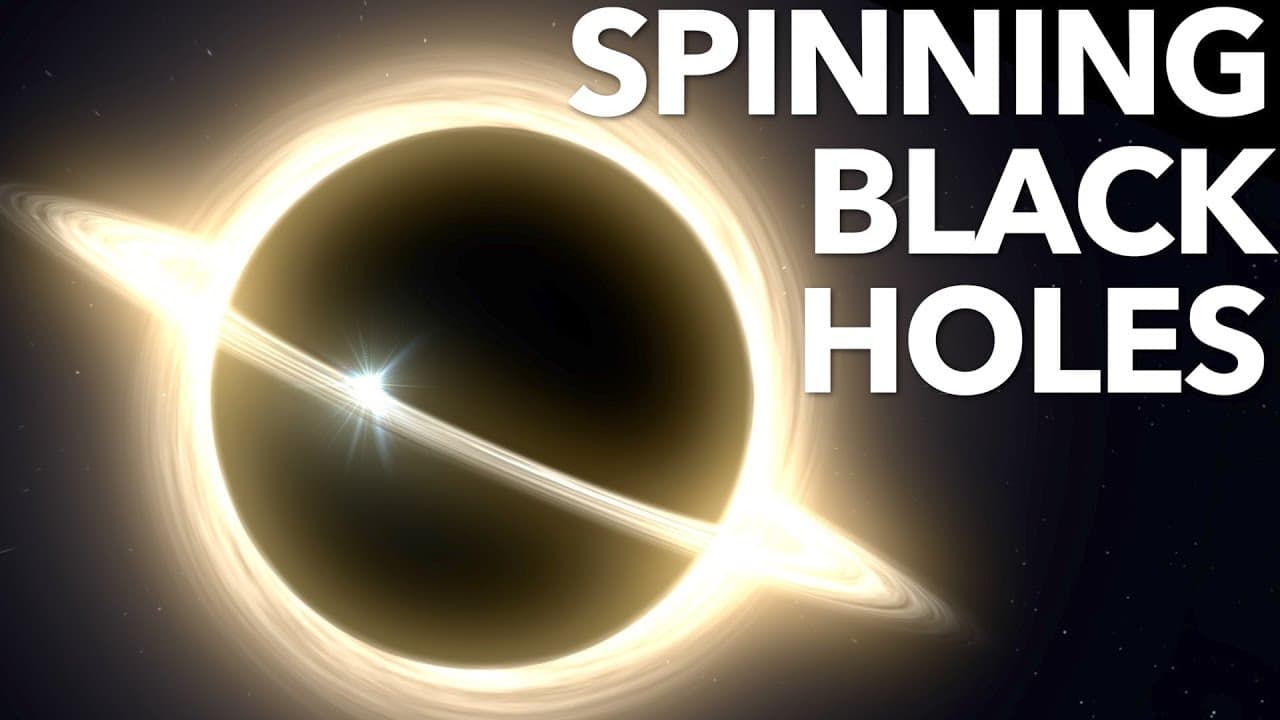
A star was ripped apart by a supermassive black hole, leading to an accretion disk that emitted X-rays in a periodic pattern, allowing scientists to measure the spin of the black hole.
Transcript
On November 22, 2014 a burst of x-rays was detected by ASASSN that's the All Sky Automated Survey for Super Novae but this was no supernova the signal came from the center of a galaxy around 290 million light-years away and what we now belive happened was a star came too close to a supermassive black hole with a mass millions of times that of our ... Read More
Key Insights
- ✴️ Tidal disruption events occur when a star comes too close to a supermassive black hole, resulting in the formation of an accretion disk and the emission of observable X-rays.
- 📤 By observing regular X-ray pulses from the accretion disk, scientists can measure the spin of the black hole.
- 🖤 Measuring black hole spin provides insights into their growth mechanisms, which impacts our understanding of galaxy formation.
- 🫥 Three methods, including analyzing the radiation from the accretion disk, studying iron emission lines, and observing periodic oscillations, can be used to determine black hole spin.
- 🖤 Supermassive black holes are believed to be present in the centers of most galaxies.
- 🖤 Accretion disks play a crucial role in determining the spin of black holes.
- 📤 The periodic X-ray pulses observed in this study suggest the presence of clumps of matter orbiting near the black hole at high velocities.
Install to Summarize YouTube Videos and Get Transcripts
Explore YouTube Video Summarizer or Get YouTube Transcript Extractor
Questions & Answers
Q: How did scientists determine the spin of the black hole?
Scientists used several methods, including measuring the radius of the innermost stable circular orbit (r-isco) using the accretion disk's black-body radiation, analyzing the broadening of an iron emission line, and observing periodic oscillations in the X-ray data.
Q: Why is determining the spin of black holes important?
Measuring black hole spins provides insights into their growth mechanisms. If supermassive black holes primarily grow through the continuous feeding of matter, their spins are expected to be large. Conversely, if they mainly grow through mergers, their spins would be lower. Understanding black hole growth contributes to our understanding of galaxy formation and evolution.
Q: How often do tidal disruption events occur?
Tidal disruption events are thought to be rare, occurring once every 10,000 to 100,000 years in a galaxy.
Q: What is the significance of the observed periodic X-ray pulses?
The regular pulse of X-rays every 131 seconds indicates the presence of clumps of matter orbiting the black hole near r-isco. By studying these oscillations, scientists can determine the spin of the black hole.
Summary & Key Takeaways
-
In 2014, a star was torn apart by a supermassive black hole, resulting in the formation of an accretion disk that emitted X-rays observable from Earth.
-
Scientists observed a regular pulse of X-rays every 131 seconds, which increased in strength over time, providing insights into the black hole's spin.
-
By measuring the spin of black holes, scientists can gain a better understanding of how these objects grow and contribute to the formation and evolution of galaxies.
Read in Other Languages (beta)
Share This Summary 📚
Summarize YouTube Videos and Get Video Transcripts with 1-Click
Try YouTube Summary with ChatGPT & Claude or YouTube Transcript Generator
Explore More Summaries from Veritasium 📚






Summarize YouTube Videos and Get Video Transcripts with 1-Click
Try YouTube Summary with ChatGPT & Claude or YouTube Transcript Generator