3 Sources of Water on the Moon
TL;DR
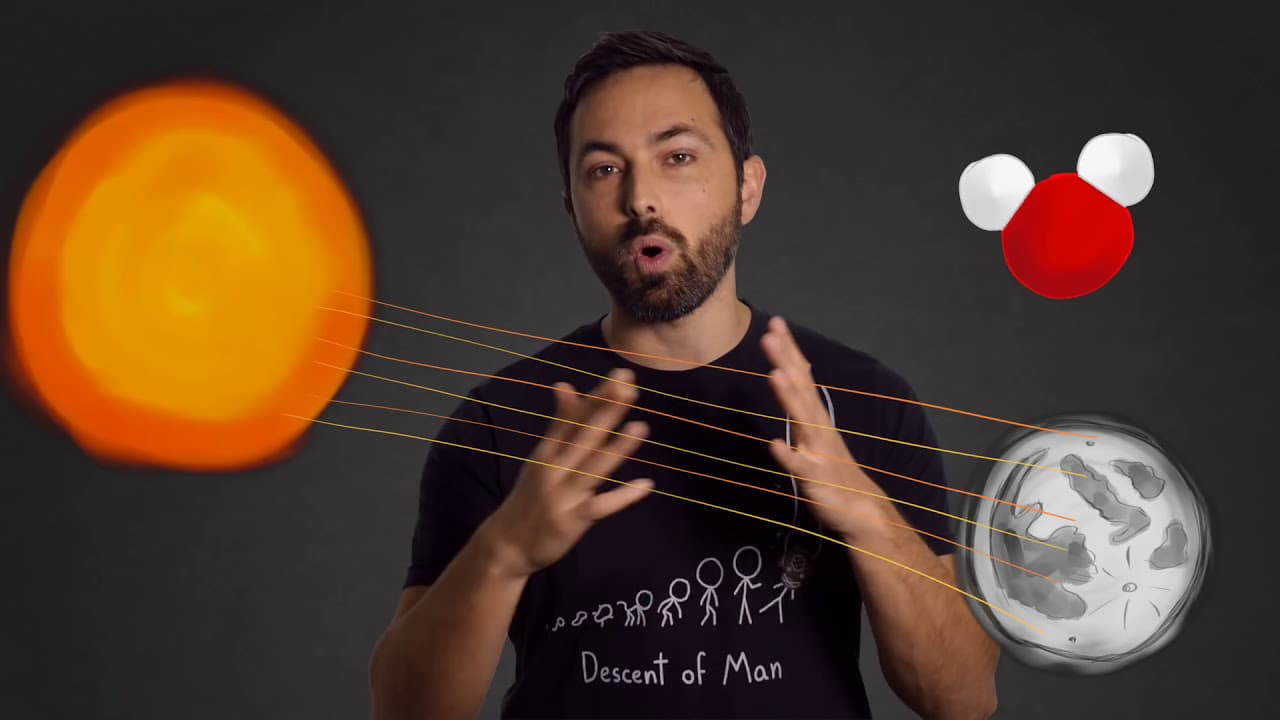
Water has been found on the Moon, originating from frozen water molecules in permanently shadowed regions, trapped water in glass beads formed from volcanic activity, and water created from the reaction of oxygen and hydrogen on the lunar surface.
Transcript
Is there water on the Moon The obvious answer seems to be No. because during a day on the Moon, which lasts 2 earth weeks, the temperature on the lunar surface gets up to 123 degrees celsius, which would be enough to boil away any water if the Moon had an atmosphere like Earth, which it doesn't. And the reason that it doesn't is because the Moon's ... Read More
Key Insights
- 🥺 The absence of an atmosphere and weak gravity on the Moon led scientists to believe that water would not exist on its surface due to evaporation.
- 💦 The discovery of water on the Moon was made possible through intentionally crashing a rocket into the lunar surface and analyzing the emitted water vapor.
- 💦 Water on the Moon is sourced from frozen water molecules, comets, and asteroids, which have impacted the lunar surface over time.
- 😎 Glass beads formed from volcanic activity on the Moon contain significant amounts of trapped water.
- 👾 The ability to create rocket fuel using the water on the Moon can greatly reduce the challenges and costs of space travel.
- 🥶 The Moon's permanently shadowed regions act as cold traps, maintaining a consistently low temperature where water can remain frozen as ice.
- 💦 Oxygen, which makes up 45% of the lunar surface, combines with protons from the solar wind to create water on the Moon's surface.
Install to Summarize YouTube Videos and Get Transcripts
Explore YouTube Video Summarizer or Get YouTube Transcript Extractor
Questions & Answers
Q: Why was it previously believed that there was no water on the Moon?
The absence of an atmosphere, weak gravity, and the intense heat on the lunar surface led scientists to believe that any water would have evaporated or escaped into space.
Q: How was water discovered on the Moon?
Scientists intentionally crashed a rocket into the Moon's surface, releasing water vapor from frozen water molecules in permanently shadowed regions. Cameras on an orbiting spacecraft detected the emission lines of water in the dust.
Q: Where does the water on the Moon come from?
The water on the Moon originates from frozen water molecules, comets, and asteroids, which have impacted the Moon over time. Additionally, glass beads formed from volcanic activity on the Moon contain trapped water.
Q: What is the significance of finding water on the Moon?
The discovery of water on the Moon has implications for future space missions. It can be used as a valuable resource for drinking, crops, and can also be processed into rocket fuel, reducing the challenges and costs of space travel.
Summary & Key Takeaways
-
Water was previously assumed to be absent on the Moon due to its lack of atmosphere and weak gravity, which can't hold onto water molecules. Rock samples from Apollo missions contained negligible amounts of water.
-
In 2009, scientists crashed a rocket into the Moon's surface and found that 5.6% of the debris was water. The water was sourced from frozen water molecules, comets, and asteroids in permanently shadowed regions.
-
Glass beads formed from volcanic activity on the Moon also contain significant amounts of water, potentially trapped during the initial eruption. Water can also be created on the lunar surface from the reaction of oxygen and hydrogen.
Read in Other Languages (beta)
Share This Summary 📚
Summarize YouTube Videos and Get Video Transcripts with 1-Click
Try YouTube Summary with ChatGPT & Claude or YouTube Transcript Generator
Explore More Summaries from Veritasium 📚




Summarize YouTube Videos and Get Video Transcripts with 1-Click
Try YouTube Summary with ChatGPT & Claude or YouTube Transcript Generator