Reviving Culture Through Fashion - The Santal Saree Story | Lipsa Hembram | TEDxKIITUniversity
TL;DR
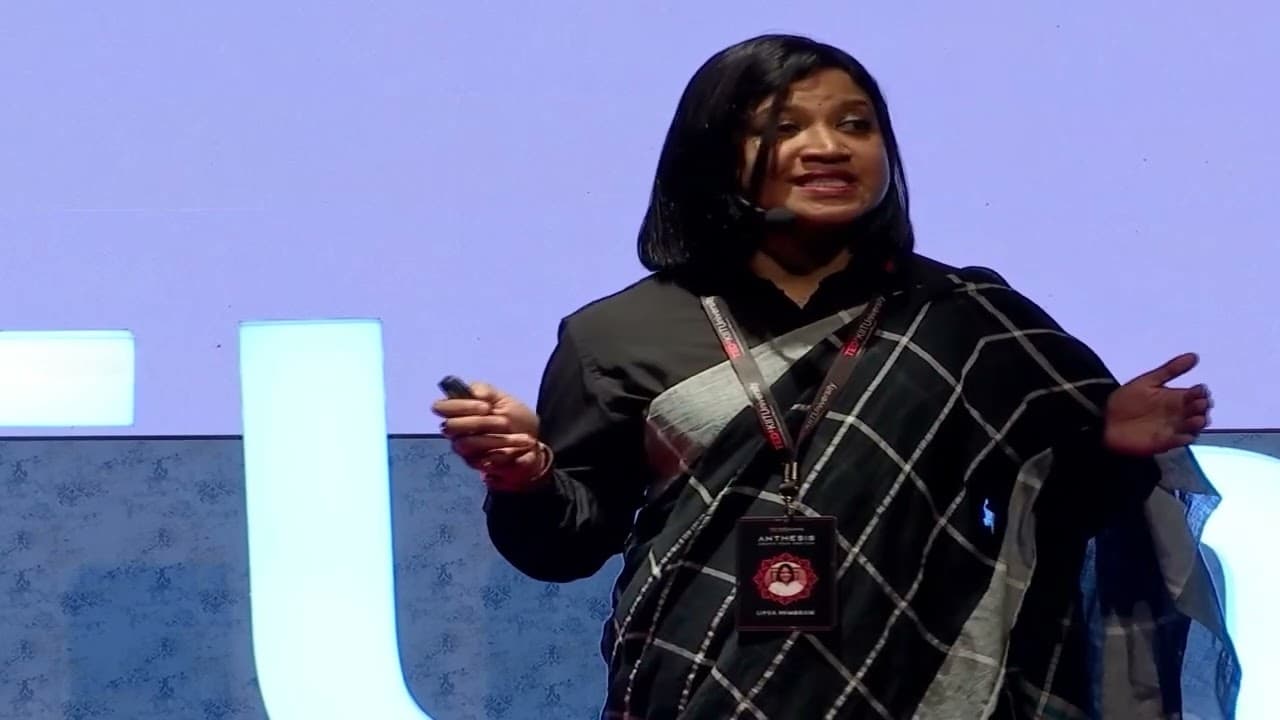
Lipsa Himbrim shares her journey as a Santal saree designer, preserving traditional drapes and patterns through conscious designs.
Transcript
[Applause] good afternoon everyone and thank you for being here today starting with a little about myself I belong to the santal community it is one of the largest tribal groups in India this community has given a lot of great leaders in the past like who led a rebellion against British colonists and mainstream leaders of today such as our honorabl... Read More
Key Insights
- 🕰️ The evolution of Santal sarees from two-piece costumes to the longer Jala saree reflects changing societal roles and fashion preferences.
- 🎨 Lipsa Himbrim's focus on sustainability and conscious design choices align with her passion for natural textiles and traditional craftsmanship.
- 🫚 Traditional Santal sarees feature unique drapes without pleats and distinctive anchal designs, reflecting the tribe's farming roots and simple clothing sensibilities.
- 🐵 Preservation of traditional Santal saree aesthetics amidst changing market trends is a key challenge faced by Lipsa as a designer.
- 🌉 Lipsa's design journey serves as a bridge between her tribal heritage and modern fashion, showcasing Santal sarees at prestigious fashion events.
- 🛟 The role of designers in preserving cultural heritage through conscious design choices and documentation of traditional patterns and drapes is essential for the continuity of traditional crafts.
- 🫚 Lipsa Himbrim's journey as a Santal saree designer showcases the importance of connecting with one's roots, pursuing a purposeful career, and inspiring others to preserve their cultural heritage.
Install to Summarize YouTube Videos and Get Transcripts
Explore YouTube Video Summarizer or Get YouTube Transcript Extractor
Questions & Answers
Q: What inspired Lipsa Himbrim to start working on Santal sarees?
Lipsa's mother's request to design a formal Santal saree for her office inspired her to explore and preserve the traditional Santal costume through her design journey.
Q: How does Lipsa ensure the authenticity of Santal sarees in a market filled with fusion styles?
Lipsa focuses on conscious design choices, handwoven textiles, and documenting traditional drapes to preserve the authenticity of Santal sarees amidst changing market trends.
Q: Why is the Santal saree's unique drape without pleats and distinctive anchal important to the tribe's cultural identity?
The pragmatic design of the Santal saree, with a front anchal for collecting fruits and seeds and distinct borders, reflects the tribe's farming roots and traditional clothing sensibilities.
Q: How does Lipsa Himbrim's journey as a Santal saree designer connect her to her cultural heritage?
Lipsa's design journey nurtures a deep connection to her Santal roots, preserving the tribe's identity and traditions while sharing their rich cultural heritage with the world.
Summary
In this video, Lipsa Himbrim, a tribal santal designer, shares her story of how she started working on the santal saree, a unique female clothing of the santal tribe. She talks about the evolution of the santal costume, the challenges she faced in preserving the traditional design sensibility, and her efforts to document and revive the traditional drape. Lipsa also discusses the cultural significance of the santal saree and how it has gained recognition beyond the santal community.
Questions & Answers
Q: What is the traditional santal saree like?
The traditional santal saree, known as a jhala, is shorter and narrower than a regular six-yard saree. It was designed this way to make it convenient for santal women to work in the fields. Unlike regular sarees, it does not have pleats and is tucked at the waist. The anchal, or the loose end of the saree, is brought from the back to the front, creating a pouch where fruits and seeds can be collected. The rest of the saree is plain, with the put (motifs) concentrated on the anchal.
Q: How did Lipsa start her journey to explore information about the santal costume?
Lipsa started her journey by talking to her parents, relatives, and village elders. She also visited weaving communities that previously catered to the santal tribe's textile needs. In her research, Lipsa referred to folk tales, folk songs, conducted local market surveys, and spoke to seasoned traders. She discovered that there were limited written records and documentation about the designs, textile history, and drapes of the santal costume.
Q: What inspired Lipsa to become a santal saree designer?
Lipsa's inspiration to become a santal saree designer came from her mother's challenge. Her mother, a government employee, wanted to wear the santal saree in a formal drape to her office and in her day-to-day life. This challenge required Lipsa to modify and contemporize the traditional saree while preserving its memory and cultural significance. This sparked Lipsa's interest in exploring the santal costume and sharing its richness with the world through her work.
Q: How does Lipsa contribute to preserving the aesthetic of the santal costume?
Lipsa's contribution to preserving the aesthetic of the santal costume focuses on three aspects. First, she ensures that the design sensibility remains true to the traditional style. Second, the sarees are hand-woven, promoting the craftsmanship of the santal weavers. Finally, Lipsa documents the traditional drape and educates people about it. By doing so, she helps prevent misinformation and ensures that the santal community's history is accurately represented.
Q: What challenges does Lipsa mention regarding the current santal saree market?
Lipsa mentions that the current santal saree market has seen a lot of fusion with influences from other regions in India. While this fusion may not always be a result of choice, modern technologies such as power looms, prints, and machine embroideries make it difficult to control these changes. As a designer, Lipsa understands these challenges and aims to preserve the aesthetic of the santal costume while adapting it to contemporary trends.
Q: How has the santal saree gained recognition beyond the santal community?
The santal saree has made its presence felt beyond the santal community and is now proudly showcased at various prestigious fashion events and runways in the country. Women from different regions in India and across the world now want to have santal sarees in their wardrobes. The saree serves as a doorway to the tradition, culture, livelihood, and festivals of the santal tribe. It has become an authentic representation of the santal heritage.
Q: What does Lipsa believe the role of a designer should be?
Lipsa believes that being a designer is not just a career choice but an opportunity, a responsibility, and a privilege to help preserve history. She emphasizes the importance of having a purpose while designing and asks designers to ask themselves questions such as the intent, the goal, and the potential benefits to others. By finding answers to these questions, designers can develop ideas, conduct research, and contribute to the revival of lost arts and crafts.
Takeaways
Lipsa Himbrim's journey as a santal saree designer showcases her dedication to preserving and promoting the aesthetic of the santal costume. Through her work, she strives to ensure that the traditional design sensibility, hand-woven craftsmanship, and the unique drape of the santal saree are preserved and accurately represented. Lipsa's story serves as an inspiration for designers to have a purpose and contribute to the revival of cultural heritage in the fast-paced world of fashion.
Summary & Key Takeaways
-
Lipsa Himbrim, a Santal designer, explores the evolution of Santal sarees, focusing on traditional drapes and patterns.
-
The traditional Santal costume was a two-piece outfit for girls and women, evolving into the longer Jala saree for adolescents and ladies.
-
Facing challenges of misinformation and changing trends, Lipsa strives to preserve the aesthetic of Santal sarees through sustainable, handwoven designs.
Read in Other Languages (beta)
Share This Summary 📚
Summarize YouTube Videos and Get Video Transcripts with 1-Click
Try YouTube Summary with ChatGPT & Claude or YouTube Transcript Generator
Explore More Summaries from TEDx Talks 📚

Summarize YouTube Videos and Get Video Transcripts with 1-Click
Try YouTube Summary with ChatGPT & Claude or YouTube Transcript Generator