Mellody Hobson on Finding Security in Knowledge
TL;DR
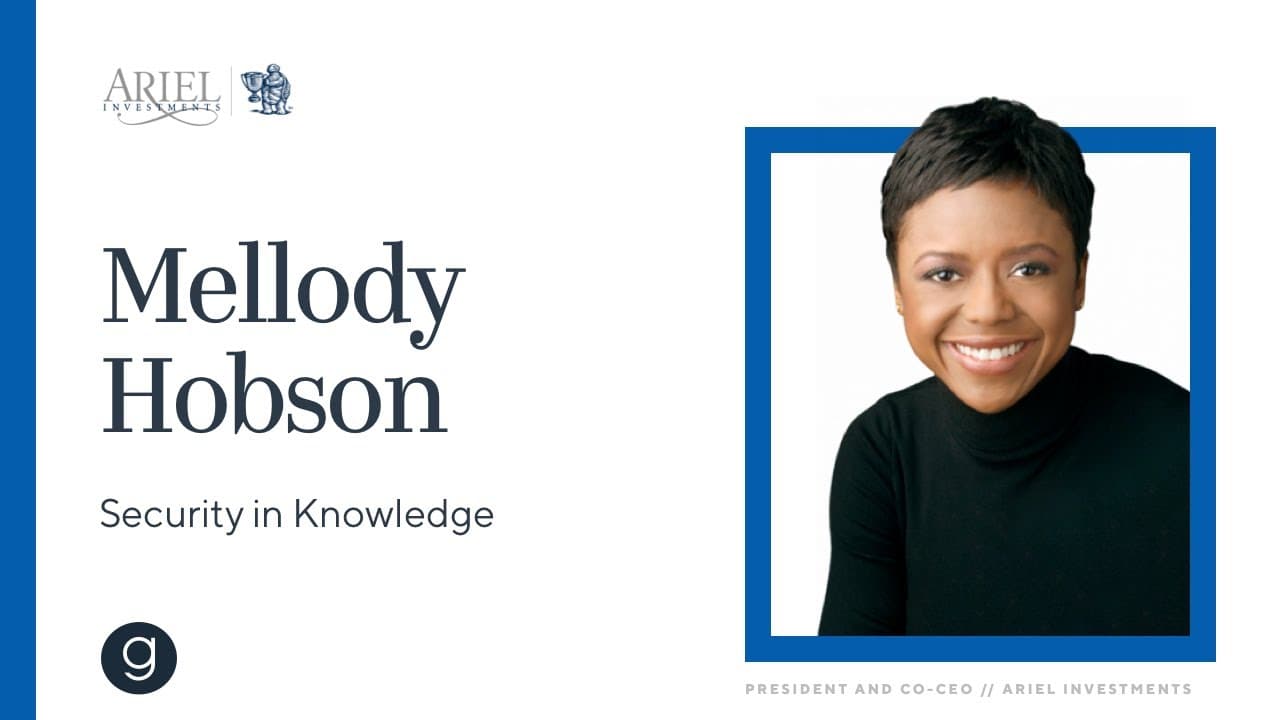
Melody Hobson discusses financial literacy, economic resilience, and cultural challenges, advocating for diversity and inclusion.
Transcript
excellent uh hello everyone sorry for uh being a couple minutes late um we as usual have av uh fun and games in this modern pandemic area of zoom so hi everyone i'm reed hoffman and i'm happy to welcome you thai conversations a greylock speaker series where we chat with iconic figures across tech finance media and culture today i'm thrilled to have... Read More
Key Insights
- ❓ Financial literacy is crucial for empowering individuals and addressing economic inequality.
- 🪛 Advocacy for diversity and inclusion is essential for driving societal progress and economic resilience.
- 🎹 Setting clear goals, collaborating, and fostering a culture of candor are key elements in effective corporate boards.
- 😫 Addressing diversity recruiting challenges requires setting targets, incentivizing diverse hires, and promoting a culture of inclusion.
- 🥺 Leading with empathy and advocating for systemic change can drive positive economic and cultural impact.
- ❓ Embracing adaptability and resilience is crucial in navigating economic and cultural crises.
- 🥺 Prioritizing financial education and promoting diverse representation in decision-making can lead to positive societal change.
Install to Summarize YouTube Videos and Get Transcripts
Explore YouTube Video Summarizer or Get YouTube Transcript Extractor
Questions & Answers
Q: How does Melody Hobson view the intersection between financial literacy and economic inequality?
Hobson believes that financial literacy is essential for addressing economic inequality as it equips individuals with the knowledge to make informed financial decisions, ultimately leading to financial empowerment.
Q: What strategies does Melody Hobson suggest for advocating for financial literacy and investing classes in public schools?
Hobson advises taxpayers and parents to lobby for financial literacy classes in schools, emphasizing the importance of setting targets and incentives to drive progress and ensure meaningful change.
Q: How does Melody Hobson perceive the role of corporate boards in promoting diversity and inclusion?
Hobson stresses the significance of collaboration and candor in effective boards, highlighting the need for diverse representation to drive innovation and decision-making, ultimately improving organizational performance.
Q: How does Melody Hobson approach diversity recruiting challenges in tech companies and other industries?
Hobson emphasizes the importance of setting targets for diversity recruitment, encouraging multiple hires to build a diverse workforce, and creating incentives to drive progress towards inclusion.
Summary
In this video, Reed Hoffman interviews Melody Hopson, the co-CEO and president of Ariel Investments, about her career in finance, her role as a board member, and her work in financial literacy. Melody discusses her upbringing and how her mother's expectations shaped her work ethic, as well as her early experiences at Ariel Investments and the growth of the company. She also talks about her mentorship with John Rogers, the co-CEO and founder of Ariel, and the challenges and successes in their working relationship. Melody then shares her insights on being the first and only person in the room, the importance of building diverse networks, and the need for greater representation on corporate boards. The conversation concludes with a discussion of Ariel's new initiative, Ariel Alternatives, which aims to scale sustainable minority-owned businesses by providing capital and access to customers.
Questions & Answers
Q: Can you tell us about your upbringing and how it set the tone for your professional career?
Melody grew up as the youngest of six children in a low-income family led by a single mother. Despite financial struggles, her mother instilled in her a strong work ethic and high expectations. Melody was taught to put her best effort into everything she did, which greatly influenced her approach to work. Her mother's emphasis on waking up early and seizing the day also shaped her focus and productivity.
Q: How did you transition from waking up at 6:30 AM to 4:30 AM?
Melody gradually shifted her waking time from 6:30 AM to 4:30 AM because she found that her brain works best in the morning. She values the quiet and uninterrupted time as an opportunity to get things done. Starting her day early gives her a sense of having an edge over others and allows her to accomplish more tasks.
Q: What drew you to the financial world and how has it captivated your attention?
Melody's desire to understand money and overcome the financial struggles she experienced in her upbringing drew her to the financial industry. She saw education as a key to a better life and recognized that knowledge about money could prevent her from perpetuating the same circumstances. She believes her career in finance is not coincidental but a natural outcome of her circumstances. The countervailing force of her difficult childhood pushed her towards seeking security and understanding in the financial services industry.
Q: When you joined Ariel Investments as an intern, what was the organization like, and how has it evolved?
When Melody joined Ariel Investments, the company was still small, with around 19 employees and approximately one billion dollars under management. The team worked in a tiny office space but had a strong sense of teamwork and camaraderie. Over the years, Ariel Investments has grown significantly, now having 107 employees and offices in multiple locations. The company manages around 16 billion dollars and has become a diverse and unique organization. Melody highlights the importance of a diverse workforce and the strong performance of Ariel's flagship funds.
Q: Can you share a little about your mentorship with John Rogers?
Melody initially started as an intern at Ariel and referred to herself as John Roger's "grasshopper". In the beginning, her role was to assist John in any tasks and learn from him. Their mentor-mentee relationship evolved as Melody grew within the company. John invested a lot of time and effort into her development, challenging her and pushing her to be better. Despite the challenges that surfaced as their positions changed within the company, they maintained their deep mutual respect and a shared dedication to Ariel's success.
Q: What advice do you have for people who are the "first and only" in the room?
Melody explains that being the "first and only" is a proud but lonely position to be in. It comes with a great responsibility to shape others' perception of people who will come after. She emphasizes the importance of being a role model and pushing for more representation in the room. Melody also suggests that individuals in the majority group should actively work on diversifying their networks and examine their nonverbal cues and behaviors to ensure inclusivity.
Q: What is the significance of boards in corporate America, and how can they be improved?
Melody points out that boards in corporate America still lack diversity and do not reflect the demographics of society. She believes that changes have been slow but expects a frenzied activity following the events of social and racial justice movements. Companies need to diversify their boards to have a broader range of perspectives and experiences. Melody stresses the importance of collaboration and candor in boardrooms and how these attributes are vital for effective decision-making.
Q: What led you to establish Ariel Alternatives, and what do you hope to accomplish with this new initiative?
Ariel Alternatives is Ariel Investments' first foray into private equity. The initiative aims to scale sustainable minority-owned businesses by bringing together capital and customers. Melody emphasizes that access to customers is as important as access to capital for minority-owned businesses. The goal is to target middle-market businesses with revenues between $10 million and $1 billion and help them become tier-one suppliers to Fortune 500 companies. Melody sees this as an opportunity to address the scale challenge faced by many minority businesses.
Q: What has been the reception to Ariel Alternatives so far?
Melody shares that there has been an overwhelmingly positive response to Ariel Alternatives. Within 48 hours of announcing the initiative, they received 600 emails, and the interest continues to grow. People resonate with the idea of combining capital and customers to scale minority-owned businesses. Melody believes that there is a lot of untapped potential and opportunities for growth in this space.
Q: What have you learned from your work in financial literacy, and why do you consider it so important?
Melody is passionate about financial literacy because she believes that America is financially illiterate. The lack of financial education in schools contributes to this problem, and Melody advocates for investment education to be included in curricula. She highlights the power of compounding and emphasizes that financial literacy is a language that everyone should learn. Melody also points out the disparities in wealth and opportunities and the need to close the wealth gap through financial education.
Q: What attributes make for effective boards, and what have you learned from your experience as a board member?
Melody has learned a great deal from her experience as a board member. She highlights two key attributes of effective boards: collaboration and candor. Collaboration allows for collective decision-making and teamwork, while candor promotes open and honest discussions. Melody has had the privilege of being part of boardrooms with leaders who possess a founder's mentality, which drives bold thinking and attracts a diverse set of individuals.
Summary & Key Takeaways
-
Melody Hobson emphasizes the importance of financial literacy and its impact on economic opportunities, highlighting the need for education from an early age.
-
She shares insights on navigating economic and cultural crises, promoting diversity and inclusion as critical for societal progress.
-
Hobson's optimistic outlook for economic recovery post-pandemic includes the importance of adaptability, collaboration, and setting clear goals in addressing systemic issues.
Read in Other Languages (beta)
Share This Summary 📚
Summarize YouTube Videos and Get Video Transcripts with 1-Click
Try YouTube Summary with ChatGPT & Claude or YouTube Transcript Generator
Explore More Summaries from Greylock 📚




Summarize YouTube Videos and Get Video Transcripts with 1-Click
Try YouTube Summary with ChatGPT & Claude or YouTube Transcript Generator