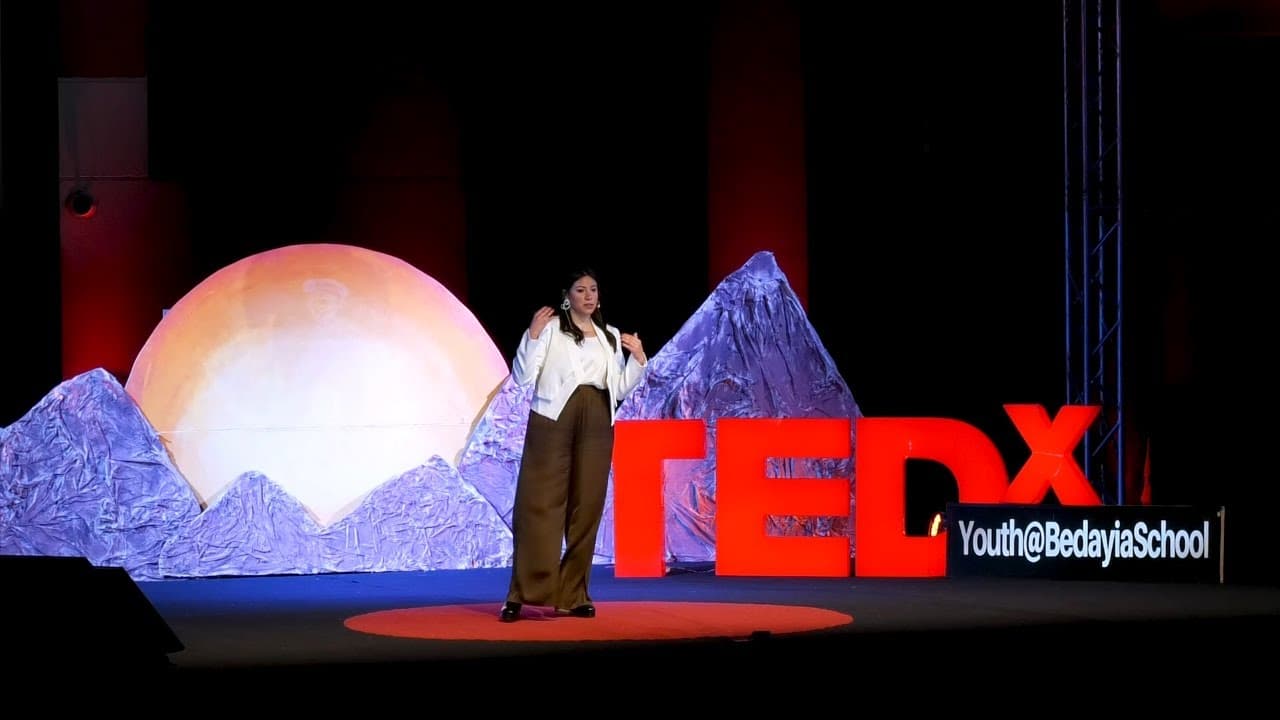
The extraordinary journey | Rania El Kalla | TEDxYouth@BedayiaSchool
TL;DR
Designer repurposes food waste like eggshells into sustainable materials for various industries.
Transcript
foreign thank you for the great introduction thank you everyone for being here in such a cold weather my mom recently told me when I was three years old that I was always the combined food with playing I always when I don't want to finish up my meal I used to hide the food in the video recorder or in the cassette somehow it's a kind of a bizarre ho... Read More
Key Insights
- 😋 Repurposing food waste like eggshells into sustainable materials offers innovative solutions for various industries.
- 🎨 Sustainable design can combine aesthetics and functionality to create unique products with a positive environmental impact.
- 💦 Raniel Kala's journey showcases the importance of hard work, persistence, and creativity in sustainable design innovations.
- 😋 The diversity of applications, from 3D printing filaments to jewelry, demonstrates the versatility of sustainable materials created from food waste.
- 🤗 Exploring local waste materials opens up possibilities for regional innovation and sustainable solutions.
- 🎨 Sustainable design innovation not only addresses environmental issues but also educates consumers and challenges industry norms.
- 😋 By utilizing food waste in design, Raniel Kala promotes a circular economy and encourages sustainable practices across different sectors.
Install to Summarize YouTube Videos and Get Transcripts
Explore YouTube Video Summarizer or Get YouTube Transcript Extractor
Questions & Answers
Q: What inspired Raniel Kala to delve into sustainable design using food waste?
Raniel Kala's childhood memories and a desire to tackle food waste prompted him to explore repurposing eggshells for sustainable design.
Q: How did Raniel Kala transform eggshells into sustainable materials?
Raniel Kala collected eggshells, ground them into powder, and experimented with various processes like pressing and extruding to create sustainable materials.
Q: What are the potential applications of the sustainable materials created by Raniel Kala?
The sustainable materials can be used in industries like additive manufacturing, furniture design, lighting, jewelry, fashion, consumable goods, and more for sustainable and creative solutions.
Q: How does Raniel Kala incorporate aesthetics into his sustainable designs?
Raniel Kala uses natural colors, organic forms, and humorous elements to create visually appealing designs that educate consumers about sustainability in a unique way.
Summary
In this video, Raniel Kala, a multidisciplinary designer, talks about his journey in creating a sustainable and biodegradable material out of food waste, specifically egg and nutshells. He shares his passion for design and problem-solving, as well as his exploration of different materials and their properties. He also discusses his process of collecting, cleaning, and processing the shells to create various applications such as 3D filaments, furniture, lighting, jewelry, fashion, and consumable goods. Overall, his goal is to change the perception of waste and create impactful designs that are both functional and sustainable.
Questions & Answers
Q: How did Raniel come up with the idea of using egg and nutshells as a material?
Raniel was inspired when he witnessed his father cracking nuts during breakfast and realized how hard and effortful it was to crack them. He wondered why not make something out of the shells and extend their lifespan. This curiosity led him to explore the properties of food waste and the potential to create something valuable out of it.
Q: How much food is lost or wasted?
Raniel found out that 30 percent of food is lost or wasted globally, making it a significant issue. This waste inspired him to change the perception of waste and find ways to utilize these resources in a sustainable manner.
Q: How many eggshells and tree nuts are produced worldwide?
Worldwide, there are approximately 1.59 trillion eggs produced and 5.18 million metric tons of tree nuts produced. These staggering numbers highlight the abundance of shells available and the potential for utilizing them as a material.
Q: What are some interesting facts about egg and nutshells?
Raniel discovered several interesting facts about egg and nutshells. Firstly, since they are composed of 95 percent calcium carbonate, they can be used as a boost for pets or as feed for chickens. They also serve as a great fertilizer for the soil and are beneficial for skin irritation due to their collagen content. Additionally, they can enhance coffee flavor and capture up to 78 percent of carbon dioxide in the air. Raniel also learned that eggs were used in construction in the past to reinforce bricks, showcasing the versatility of these shells.
Q: How did Raniel approach the design process?
Raniel wanted to follow the path of material engineers and combine their technical steps with his own spontaneous and creative design approach. He aimed to come up with a new material that was sustainable and biodegradable while also considering the aesthetical aspects. He collected egg and nutshells, sterilized them, ground them into various particle sizes, and experimented with different applications.
Q: What were some of the applications Raniel created using egg and nutshell material?
Raniel explored various applications for his material. He created a 3D filament for additive manufacturing, furniture with high impact resistance, seating options for indoor and outdoor use, lighting with varying translucency, jewelry as an alternative to traditional gemstones, sustainable garments, consumable goods, and surface designs resembling popular food items like a banana milkshake or white chocolate bar.
Q: What was Raniel's design philosophy?
Raniel's design philosophy was to combine functionality and aesthetics while incorporating humor and indirect education for end-users. He aimed to create designs that could appreciate food waste and have a positive impact on the environment. His goal was to challenge conventional materials and create sustainable alternatives that could be easily composted and serve as fertilizer.
Q: How did Raniel approach the technical challenges in his design process?
Raniel embarked on a master research program in Germany to learn how to use various machines and techniques in material engineering. Coming from a spontaneous and creative background, he had to familiarize himself with technical terminology and processes. He experimented with different recipes and underwent a trial and error process to achieve the desired results.
Q: What did Raniel hope to achieve with his designs?
Raniel aimed to replace plastic materials with his biodegradable creations and promote sustainability. He wanted to have a positive impact on various industries and engage a wide audience. His designs were intended to educate and inspire people to think differently about waste and consumption.
Q: What is Raniel's key to success?
Raniel believes that success comes from hard work, persistence, and continuous effort. He emphasizes the importance of dedication and being willing to go through a long process of trial and error to achieve desired outcomes. For Raniel, resistance is the key to success.
Takeaways
Raniel Kala's journey in turning food waste into valuable material showcases the potential for design to solve environmental challenges. By exploring different properties of egg and nutshells and applying technical knowledge, he was able to create sustainable alternatives to traditional materials. His designs encompass various fields, from 3D printing and furniture to jewelry and consumable goods. Raniel's designs highlight the importance of sustainability and the need for innovative thinking in our everyday lives.
Summary & Key Takeaways
-
The speaker, Raniel Kala, shares his passion for design inspired by childhood experiences.
-
He explores repurposing eggshell waste into sustainable materials for industries.
-
By combining aesthetics and functionality, he creates innovative designs for various applications.
Read in Other Languages (beta)
Share This Summary 📚
Summarize YouTube Videos and Get Video Transcripts with 1-Click
Try YouTube Summary with ChatGPT & Claude or YouTube Transcript Generator
Explore More Summaries from TEDx Talks 📚


Summarize YouTube Videos and Get Video Transcripts with 1-Click
Try YouTube Summary with ChatGPT & Claude or YouTube Transcript Generator