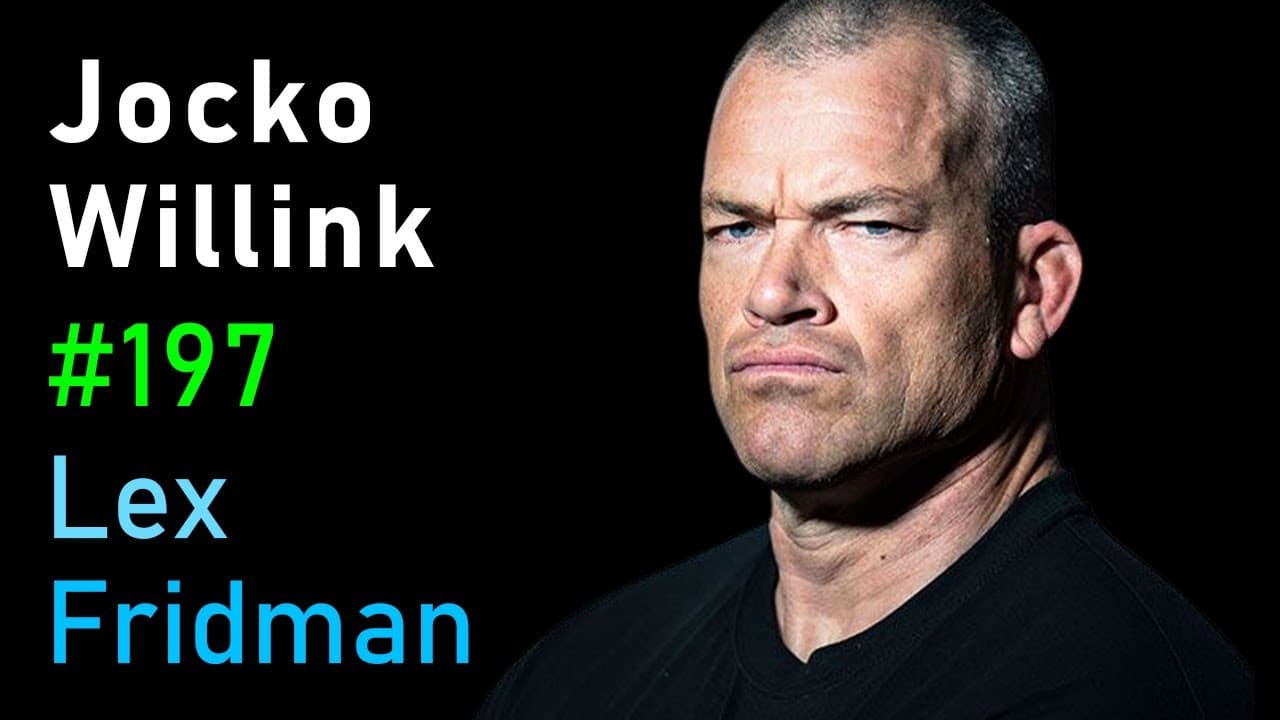
Jocko Willink: War, Leadership, and Discipline | Lex Fridman Podcast #197
TL;DR
War can create both tragic and beautiful bonds between people, and military tactics and leadership play crucial roles in combat. The love of country can be a powerful force, but it must be balanced with humanism. Effective leaders prioritize their teams and establish strong cultures within their organizations.
Transcript
the following is a conversation with jaco willink a retired u.s navy seal co-author of extreme ownership dichotomy of leadership discipline equals freedom and many other excellent books and he's the host of jaco podcast jacob spent 20 years in the seal teams he was the commander of seal team 3's task unit bruiser that became the most highly decorat... Read More
Key Insights
- 🫱 War can create both tragic and beautiful bonds between people, solidified by shared hardship and the need to rely on each other for survival.
- 🥰 The love of country and patriotism should be balanced with humanism and a desire for a better world.
- 😤 Effective leadership entails prioritizing the team, fostering a strong culture, and striking a balance between micro-management and delegation.
- 🤪 The quality of output and the multiplication effect of excellence can outweigh the negative aspects of leadership styles such as harshness or ego.
- 👥 It is important for leaders to understand varying personalities, build complementary teams, and establish protocols that prevent ethical violations and catastrophic consequences in the use of autonomous weapon systems.
Install to Summarize YouTube Videos and Get Transcripts
Explore YouTube Video Summarizer or Get YouTube Transcript Extractor
Questions & Answers
Q: What creates the strong bonds between people in war?
The trauma of war and the reliance on each other for survival can create a unique and strong bond between comrades.
Q: How does military training foster strong connections among soldiers?
Military training, particularly boot camp and advanced infantry schools, puts soldiers through shared hardship and suffering, which strengthens their bond as a team.
Q: How did World War II impact the Soviet Union and its people?
World War II, particularly the extreme suffering and shared survival experience, created a deep and lasting bond among the Soviet Union's population, shaping their culture and perspective on life.
Q: Do military leaders and political leaders have different approaches to war?
Military leaders, like Hitler, can make bold and initially successful tactical decisions, but if they let their ego and overconfidence cloud their judgment, it can lead to disastrous outcomes. Political leaders, like Stalin, may struggle with strategic planning and fail to anticipate different trajectories in war.
Q: Is war ever considered a just war?
Many people believe that wars fought to resist or prevent the imposition of one nation's will on others are just wars. It involves protecting freedom, self-determination, and the well-being of nations and their people.
Q: What are the considerations before deciding to go to war?
The decision to go to war requires considering the potential loss of human life, including civilians, and understanding the implications for one's own troops. It should be a last resort and based on a clear understanding of the situation and the potential consequences.
Q: How does killing a human being affect an individual?
The emotional and psychological impact of killing a human being varies depending on the circumstances and the individual's mindset. Factors such as self-defense, protecting others, and the nature of the conflict can influence how a person perceives and internalizes the act of killing.
Q: Is war ultimately a foolish endeavor?
War can have both catastrophic and transformative consequences. While it may be necessary to defend one's freedom and way of life, it should always be a last resort. The realities of war and its impacts on human life and suffering make it a complex and profound subject.
Key Insights:
- War can create both tragic and beautiful bonds between people, solidified by shared hardship and the need to rely on each other for survival.
- The love of country and patriotism should be balanced with humanism and a desire for a better world.
- Effective leadership entails prioritizing the team, fostering a strong culture, and striking a balance between micro-management and delegation.
- The quality of output and the multiplication effect of excellence can outweigh the negative aspects of leadership styles such as harshness or ego.
- It is important for leaders to understand varying personalities, build complementary teams, and establish protocols that prevent ethical violations and catastrophic consequences in the use of autonomous weapon systems.
- Preparation for leadership succession and the development of strong subordinate leadership are critical for the long-term success and sustainability of an organization.
Summary
In this conversation with Jocko Willink, a retired U.S. Navy SEAL and author, they discuss various topics such as the bonds formed in war, the ethics of military tactics, the leadership failures of Stalin, the concept of a just war, the consequences of killing in war, and the love of country. They also delve into the potential dangers of autonomous weapons and the implications of AI in warfare, as well as the qualities of great leaders.
Questions & Answers
Q: Is it tragic or beautiful that some of the closest bonds are formed through war?
It is both tragic and beautiful. It is tragic because many people die, but it is beautiful because the bonds formed in war are extremely strong and difficult to break.
Q: What is it about the trauma of war that makes these bonds difficult to break?
The trauma of war forces people to rely on each other for survival. The realization that their survival depends on their teamwork creates a strong bond that extends beyond the realm of war. This level of reliance and trust is unique to the military experience.
Q: How does military training form strong bonds among soldiers?
Military training, especially the intense experiences like boot camp and specialized schools, expose soldiers to shared suffering and challenges. Overcoming these challenges together builds a common background and a stronger bond among the soldiers.
Q: How did World War II shape the culture in the Soviet Union?
World War II had a profound impact on the Soviet Union, shaping its culture, music, literature, and even the way people see the world. The shared suffering and survival created a common thread that still resonates in the Russian people today.
Q: Is there a gray area when deciding which wars to engage in?
There is always a gray area when deciding to go to war. It is essential to assess the situation, consider the potential consequences, and weigh the costs of human life, both civilian and military. The decision to go to war should be a last resort and made with a clear understanding of the potential impact.
Q: What are some notable mistakes made by leaders in war?
Hitler's decision to attack the Soviet Union while still engaged in a war on another front was a bad move, driven by his ego and overestimation of his capabilities. Stalin, along with other leaders like Churchill and FDR, also made mistakes in their military strategies, either due to poor military strategy or prioritizing the interests of their country above global concerns.
Q: What makes a war just?
A war can be considered just when one nation or group is trying to impose its will on others, threatening their freedom and way of life. The need to defend against aggression and protect the values of a free society often justifies intervention and conflict.
Q: How does killing a human being change someone?
The impact of killing a human being depends on the individual and the circumstances. In some cases, it can lead to guilt, remorse, and an awareness of the value of life. However, it also depends on the psychology and motivations behind the act of killing.
Q: Does the dehumanization of the enemy play a role in war?
Dehumanization of the enemy is a common tactic in war, where both sides perceive the other as less than human. It is a defense mechanism to justify killing and minimize empathy towards the enemy. In the case of the Iraqi insurgents, their actions of murder and torture dehumanized themselves in the eyes of the American soldiers.
Q: Are you worried about the potential dangers of AI in warfare?
Jocko does not worry too much about the potential dangers of AI in warfare. He believes that as long as there are protocols and kill switches in place, the risks can be mitigated. However, he acknowledges that unforeseen consequences and bugs in the system could pose challenges.
Q: What qualities make a great leader?
A great leader is someone who puts others above themselves and has the ability to communicate effectively. Different leaders may possess various characteristics and strengths, but it is essential to strike a balance between different traits and have the ability to adapt to different situations.
Summary & Key Takeaways
-
Retired Navy SEAL Jocko Willink discusses the bonds formed through war and the importance of military tactics and leadership in combat.
-
The love of country and patriotism can be powerful forces, but they must be balanced with humanism and a desire for a better world.
-
Effective leaders prioritize their teams and create strong cultures within their organizations.
Read in Other Languages (beta)
Share This Summary 📚
Summarize YouTube Videos and Get Video Transcripts with 1-Click
Try YouTube Summary with ChatGPT & Claude or YouTube Transcript Generator
Explore More Summaries from Lex Fridman Podcast 📚





Summarize YouTube Videos and Get Video Transcripts with 1-Click
Try YouTube Summary with ChatGPT & Claude or YouTube Transcript Generator