How to control someone else's arm with your brain | Greg Gage
TL;DR
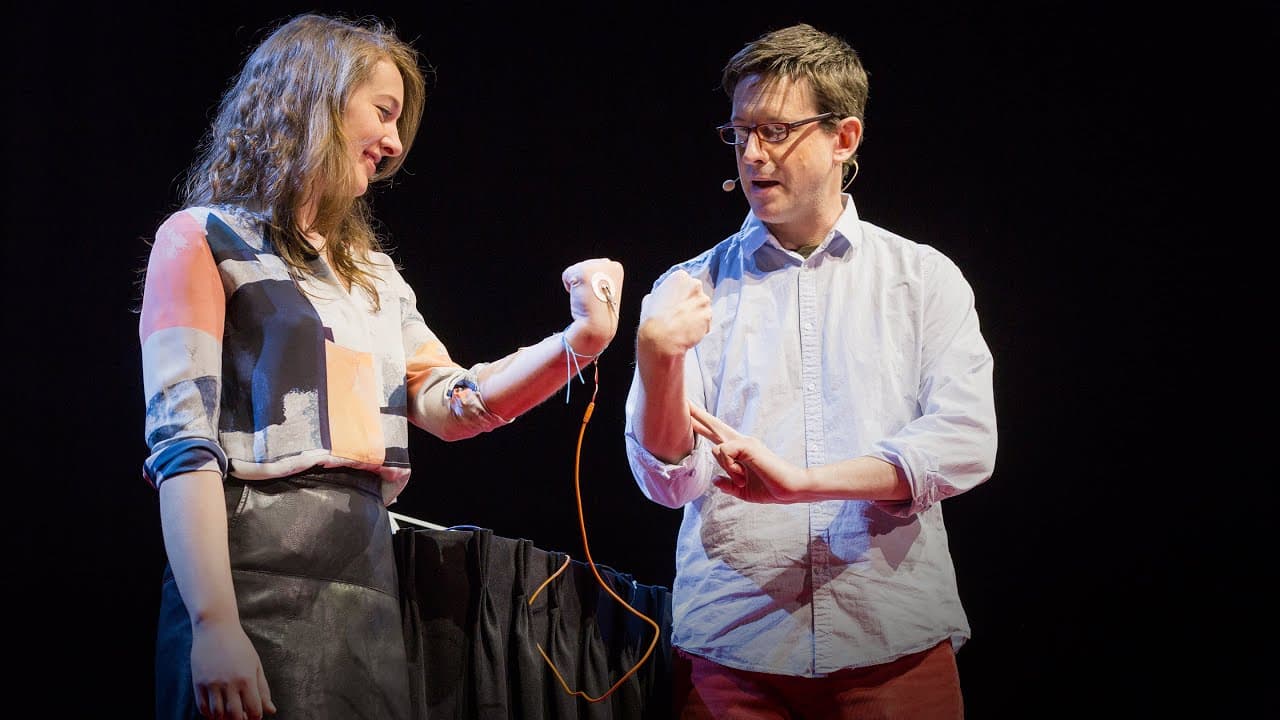
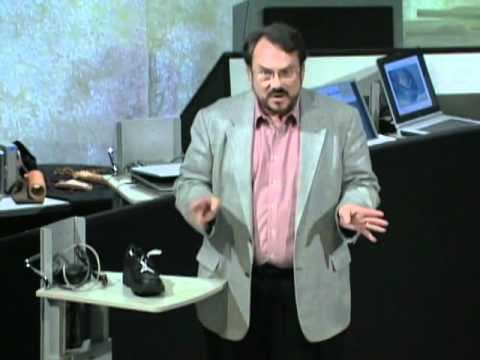
You can control someone else's arm by using electrodes to read brain signals and then stimulating their muscles with those signals. This is achieved through technology that allows for the transfer of motor commands from one brain to another, illustrating the interface between brain activity and physical movement in a groundbreaking demonstration.
Transcript
The brain is an amazing and complex organ. And while many people are fascinated by the brain, they can't really tell you that much about the properties about how the brain works because we don't teach neuroscience in schools. And one of the reasons why is that the equipment is so complex and so expensive that it's really only done at major universi... Read More
Key Insights
- 🎯 Neuroscience education is currently lacking in schools due to the complexity and cost of the equipment required, limiting access to becoming a neuroscientist.
- 🧠 One in five individuals worldwide will have a neurological disorder, with no current cures available.
- 💡 Backyard Brains aims to make neuroscience equipment more accessible and affordable for amateurs and high school students, allowing them to participate in neuroscience discovery.
- 🤝 Backyard Brains offers DIY neuroscience equipment, such as electrodes, that can be used to record and analyze brain activity.
- 🔬 By using electrodes on a person's arm, Backyard Brains can pick up electrical discharges from neurons and allow individuals to listen to and visualize their own brain activity.
- 🌟 Backyard Brains also demonstrates the ability to copy and inject brain signals into another person's hand, effectively taking away their free will.
- 🌍 The field of electrophysiology and neuroscience is experiencing a revolution, with advancements in technology allowing for greater understanding and control of the brain.
- 👥 These advancements have the potential to impact individuals worldwide and ultimately lead to significant advancements in the treatment and understanding of neurological disorders.
Install to Summarize YouTube Videos and Get Transcripts
Explore YouTube Video Summarizer or Get YouTube Transcript Extractor
Questions & Answers
Q: Why don't schools teach neuroscience?
Schools don't teach neuroscience because the equipment necessary to study the brain is complex and expensive, making it only accessible to major universities and large institutions.
Q: What percentage of the world's population will have a neurological disorder?
One out of every five people, or 20 percent of the entire world, will have a neurological disorder.
Q: What is Backyard Brains?
Backyard Brains is a company that produces do-it-yourself (DIY) neuroscience equipment, making it simple and affordable for anyone, including amateurs and high school students, to learn and participate in the discovery of neuroscience.
Q: What did the speaker demonstrate using the DIY neuroscience equipment?
The speaker demonstrated the use of electrodes to record electrical activity in a volunteer's arm, allowing them to listen to and visualize the motor units and signals sent by the brain to the muscles. They also showed how brain signals can be copied and injected into another person's hand, temporarily taking away their control over it.
Summary
In this video, the speaker highlights the lack of education in neuroscience and the limited access to complex and expensive equipment needed for studying the brain. He emphasizes the importance of educating students about neuroscience early on and introduces his company, Backyard Brains, which produces affordable DIY neuroscience equipment. The speaker then proceeds to demonstrate the use of the equipment by recording and analyzing electrical activity in a volunteer's arm muscles. He further showcases how brain signals can be copied and injected into another person's hand, temporarily bypassing their free will. The video concludes with a call to revolutionize neuroscience through widespread use of electrophysiology.
Questions & Answers
Q: Why is neuroscience not commonly taught in schools?
Neuroscience is not commonly taught in schools because the equipment used to study the brain is complex and expensive, limiting access to major universities and large institutions.
Q: What percentage of the world population will have a neurological disorder?
One out of every five individuals, which is approximately 20% of the entire world population, will experience a neurological disorder.
Q: What is Backyard Brains?
Backyard Brains is a company that produces do-it-yourself (DIY) neuroscience equipment, making it more accessible and affordable for amateur enthusiasts and high school students to participate in neuroscience research and discovery.
Q: How does the speaker demonstrate recording brain activity?
The speaker demonstrates recording brain activity by placing electrodes on a volunteer's arm and explaining that the electrical signals generated by the motor cortex when the volunteer moves their arm can be picked up and analyzed.
Q: How does the speaker allow another person to control someone else's hand?
The speaker connects the ulnar nerve of the person controlling the hand to a human-to-human interface, allowing the brain signals from the person moving their own hand to be copied and injected into the other person's hand, temporarily bypassing their free will.
Q: Why does losing control of one's hand feel strange?
Losing control of one's hand feels strange because it involves someone else becoming the agent of control, resulting in a sensation of loss of free will.
Q: What is the purpose behind the speaker's demonstrations?
The purpose behind the speaker's demonstrations is to showcase the capabilities of DIY neuroscience equipment and to inspire a neuro-revolution that brings electrophysiology to the forefront.
Q: What kind of movement do the electrodes detect in the volunteer's arm?
The electrodes detect the activation of motor units in the volunteer's arm, specifically the electrical activity generated by the neurons sending messages down the spinal cord to the muscles when the arm is squeezed.
Q: How does the speaker visualize the electrical activity in the volunteer's arm?
The speaker uses an app and a computer to visualize the electrical activity in the volunteer's arm, displaying motor units and allowing for closer examination and analysis of individual action potentials.
Q: What happens when the speaker takes control of the volunteer's hand?
When the speaker takes control of the volunteer's hand, nothing happens because the brain is the one that initiates the movement. The volunteer must perform the action for the hand to move.
Takeaways
This video highlights the need for improved education in neuroscience and greater accessibility to equipment for studying the brain. By making neuroscience equipment more affordable and user-friendly, there is potential for more individuals, including students and amateurs, to engage in neuroscience research and contribute to the understanding and treatment of neurological disorders. The demonstrations shown in the video serve as a proof-of-concept for the power of electrophysiology and the potential for a neuro-revolution driven by widespread adoption of such techniques.
Summary & Key Takeaways
-
Neuroscience is not taught in schools due to the complexity and expense of the equipment required, limiting access to the study of the brain.
-
One out of five people will have a neurological disorder, but there are no cures. Teaching neuroscience earlier in education could potentially lead to more brain scientists in the future.
-
Backyard Brains, a company started by Greg Gage, creates affordable neuroscience equipment that allows anyone to participate in the discovery of neuroscience, as demonstrated by recording brain activity and stimulating muscles using electrodes.
Read in Other Languages (beta)
Share This Summary 📚
Summarize YouTube Videos and Get Video Transcripts with 1-Click
Try YouTube Summary with ChatGPT & Claude or YouTube Transcript Generator
Explore More Summaries from TED 📚


Summarize YouTube Videos and Get Video Transcripts with 1-Click
Try YouTube Summary with ChatGPT & Claude or YouTube Transcript Generator