How to Understand What Black Holes Look Like
TL;DR
The first-ever image of a black hole, to be released by the Event Horizon Telescope, will help test the general theory of relativity and show the complex dynamics around the black hole.
Transcript
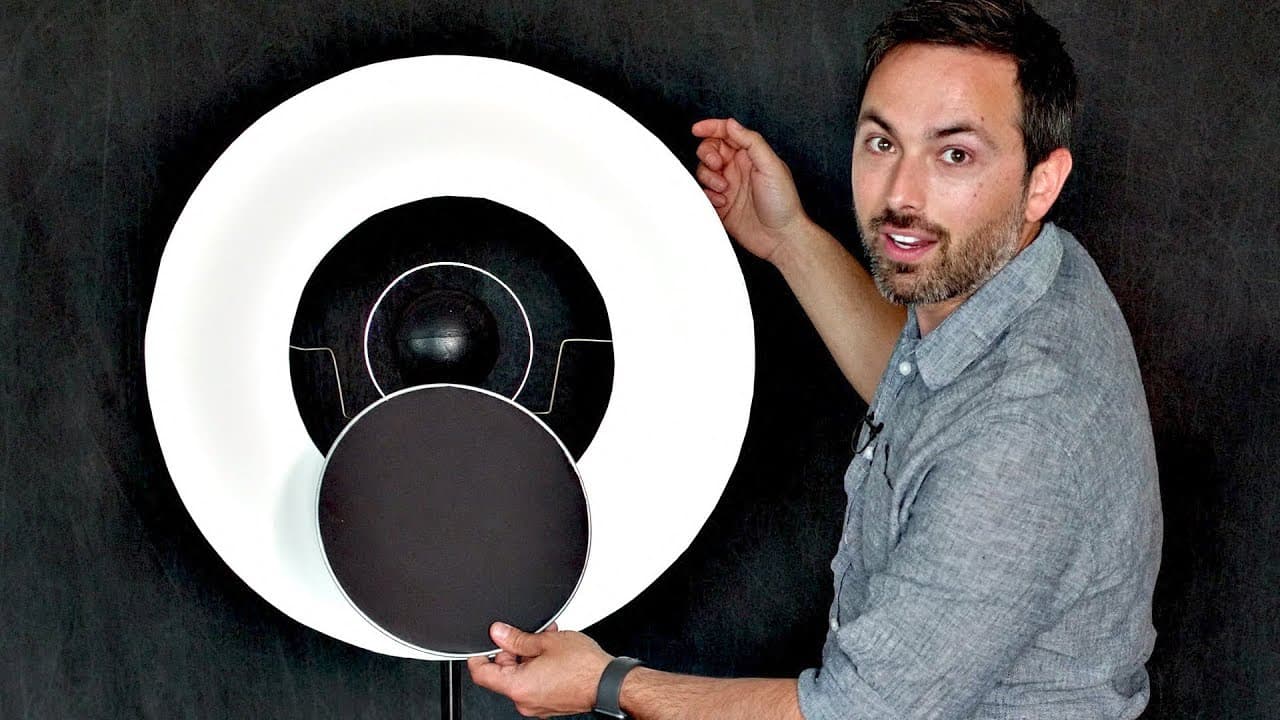
On Wednesday April 10th 2019 you will probably see the first-ever image of a black hole. That's when the Event Horizon Telescope will be releasing their results and I haven't seen them yet but I think they're going to look something like this and I can be relatively confident because well it's gonna look a bit like a fuzzy coffee mug stain. But if ... Read More
Key Insights
- 🖤 The first-ever image of a black hole will be released by the Event Horizon Telescope.
- 🖤 The image will show the event horizon, photon sphere, and the black hole's shadow.
- 💽 The matter in the accretion disk can cause variations in brightness and create interesting patterns in the image.
- 🖤 The image will provide valuable insights into the general theory of relativity and the dynamics around black holes.
- 🚥 The curved path of light rays around a black hole can result in the entire event horizon being visible in the shadow.
- 💽 Different angles of observation can reveal different aspects of the accretion disk and create unique images.
- 😁 Relativistic beaming causes one side of the accretion disk to appear brighter than the other.
Install to Summarize YouTube Videos and Get Transcripts
Explore YouTube Video Summarizer or Get YouTube Transcript Extractor
Questions & Answers
Q: What will the first-ever image of a black hole show?
The image will show the event horizon and the photon sphere, as well as the black hole's shadow, which is larger than the event horizon.
Q: How does the matter in the accretion disk around a black hole affect the image?
The matter in the accretion disk, which is swirling chaotically and moving close to the speed of light, can make certain parts of the disk appear brighter due to relativistic beaming.
Q: Will the image of a black hole look the same from all angles?
No, the image will vary depending on the observer's angle. Light rays can be bent by the black hole's gravity, allowing us to see the back of the accretion disk and create different patterns in the image.
Q: How does the first-ever image of a black hole help test the general theory of relativity?
By observing the black hole's structure and dynamics, the image can help verify if the general theory of relativity accurately predicts what happens in the strong gravity regime.
Summary & Key Takeaways
-
The first-ever image of a black hole, captured by the Event Horizon Telescope, will help test the general theory of relativity in the strong gravity regime.
-
The image shows the event horizon, the boundary beyond which not even light can escape, as well as the photon sphere where light can orbit.
-
The black hole's shadow, which appears larger than the event horizon, is a result of the curved path of light rays around the black hole.
Read in Other Languages (beta)
Share This Summary 📚
Summarize YouTube Videos and Get Video Transcripts with 1-Click
Try YouTube Summary with ChatGPT & Claude or YouTube Transcript Generator
Explore More Summaries from Veritasium 📚




Summarize YouTube Videos and Get Video Transcripts with 1-Click
Try YouTube Summary with ChatGPT & Claude or YouTube Transcript Generator