Let's teach for mastery -- not test scores | Sal Khan
TL;DR
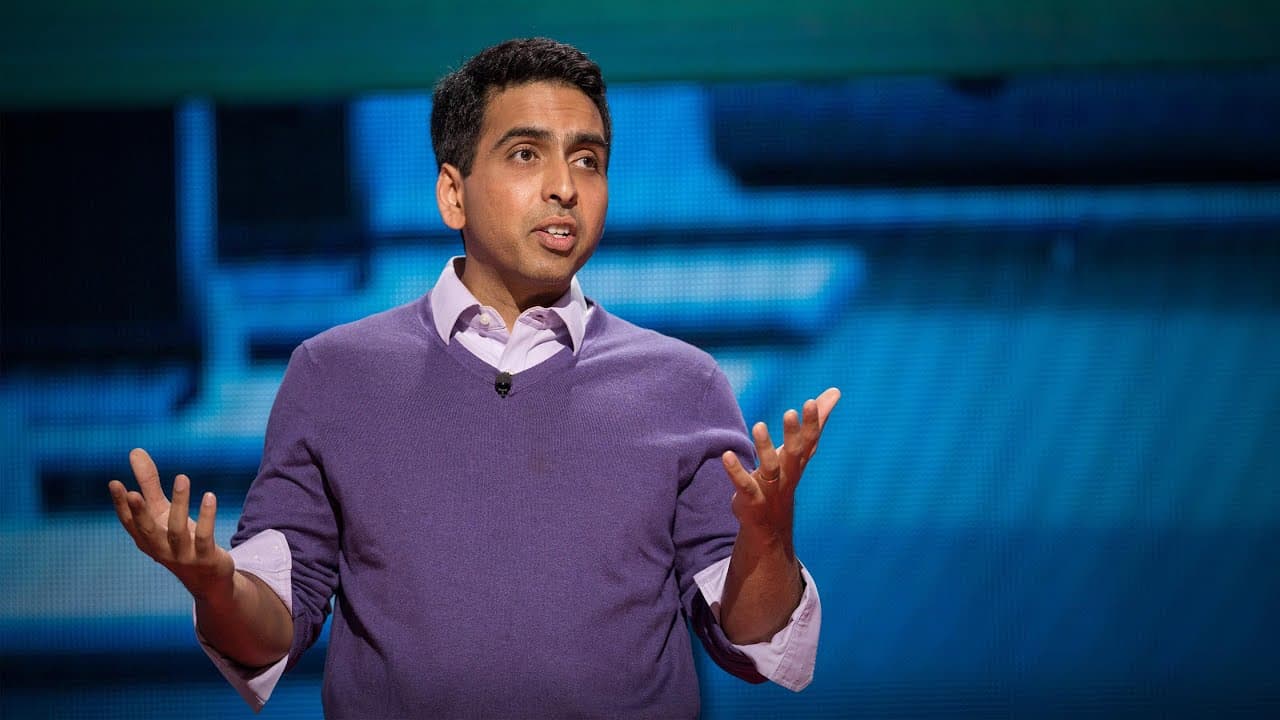
The speaker discusses the concepts of mastery and mindset in learning, highlighting the importance of personalized and mastery-based education for all students.
Transcript
I'm here today to talk about the two ideas that, at least based on my observations at Khan Academy, are kind of the core, or the key leverage points for learning. And it's the idea of mastery and the idea of mindset. I saw this in the early days working with my cousins. A lot of them were having trouble with math at first, because they had all of t... Read More
Key Insights
- 💡 Mastery and mindset are key leverage points for learning. Khan Academy helps students fill in knowledge gaps and master concepts, reinforcing the belief that they are capable of learning.
Install to Summarize YouTube Videos and Get Transcripts
Explore YouTube Video Summarizer or Get YouTube Transcript Extractor
Questions & Answers
Q: What are the two core ideas for learning mentioned in the video?
The two core ideas for learning mentioned in the video are mastery and mindset.
Q: How did Khan Academy help students who had gaps in their learning?
Khan Academy helped students with gaps in their learning by providing resources that allowed them to fill in those gaps and master the concepts.
Q: How does the traditional academic model differ from the idea of mastery learning?
The traditional academic model groups students together and moves them at the same pace, regardless of their individual mastery of the material. In contrast, mastery learning focuses on allowing students to master the material before moving on, regardless of how long it takes.
Q: How can mastery learning reinforce the right mindset muscles in students?
Mastery learning reinforces the right mindset muscles by teaching students that getting something wrong doesn't mean they can't learn it, but rather they should keep working on it, have grit, perseverance, and take agency over their learning.
Q: What is the argument for why mastery-based learning is now practical with the use of technology?
The argument is that with the use of on-demand videos, adaptive exercises, and other technological tools, mastery-based learning is now practical and scalable, allowing for personalized learning experiences for students.
Q: What is the potential social impact of embracing mastery-based learning?
Embracing mastery-based learning has the potential to create a more equitable society, as almost everyone can tap into their potential and participate as entrepreneurs, artists, and researchers. It can also accelerate the progress of civilization and create a large creative class.
Summary
In this video, Sal Khan discusses the concepts of mastery and mindset as crucial elements for effective learning. He shares personal anecdotes and observations from his experience at Khan Academy, highlighting how many students struggle with math due to accumulated gaps in their learning. He emphasizes the importance of developing a growth mindset and taking agency over one's learning to overcome these challenges. Khan also explains the limitations of traditional academic models and proposes a mastery-based approach that prioritizes true understanding and mastery of concepts over fixed timelines. He argues that with the tools and resources available today, such as on-demand explanations and adaptive exercises, personalized and mastery-based learning is now practical and achievable.
Questions & Answers
Q: What are the two core ideas for effective learning according to Sal Khan?
According to Sal Khan, the two core ideas for effective learning are mastery and mindset.
Q: How did Sal Khan observe the impact of accumulated gaps in learning?
Sal Khan observed the impact of accumulated gaps in learning through his work with his cousins and the early days of Khan Academy. Many students, including his cousins, struggled with math because they had gaps in their learning that hindered their progress in more advanced topics like algebra and calculus.
Q: How did students' mindset about math change after using Khan Academy?
After discovering resources like Khan Academy and using them to fill in their knowledge gaps and master mathematical concepts, students' mindset about math changed. They realized that their ability to learn math was not fixed and that they were capable of understanding and excelling in the subject.
Q: How does mastery learning differ from the traditional academic model?
Mastery learning differs from the traditional academic model in that it prioritizes true understanding and mastery of concepts rather than fixed timelines. In a traditional model, students progress through subjects at the same pace, irrespective of their individual understanding. However, in mastery learning, the focus is on ensuring that students truly master the material before moving on to more advanced topics.
Q: Why does Sal Khan consider traditional academic models to be broken?
Sal Khan considers traditional academic models to be broken because they often result in students accumulating gaps in their knowledge and moving on to more advanced topics without truly understanding the foundational concepts. This approach can lead to disengagement and difficulties later on.
Q: How does the mastery-based learning approach reinforce the right mindset in students?
The mastery-based learning approach reinforces the right mindset in students by making them realize that mistakes and gaps in knowledge do not define their abilities. By allowing students to continue working on a topic until they truly master it, the approach encourages perseverance, grit, and taking ownership of one's learning.
Q: Why do some skeptics find mastery-based learning impractical?
Some skeptics find mastery-based learning impractical because they believe it would require personalized instruction and resources for each student, making it logistically difficult to implement on a large scale. These concerns were also raised a century ago during experiments in mastery-based learning.
Q: How has technology made mastery-based learning more feasible?
Technology has made mastery-based learning more feasible by providing tools and resources that were not previously available. Students can now access on-demand explanations and personalized adaptive exercises to support their learning. These advancements have made it easier to implement mastery-based learning on a larger scale.
Q: What are some of the benefits of mastery-based learning in the classroom?
Mastery-based learning in the classroom offers several benefits, including deeper mastery of concepts, increased interaction among students, and the ability to engage in simulations and Socratic dialogues. It shifts the focus from lectures to active learning and empowers students to fully understand and engage with the material.
Q: What does Sal Khan believe is the social imperative of mastery-based learning?
Sal Khan believes that mastery-based learning is a social imperative, especially in the information revolution era. As automation takes over low-skilled labor and computers excel in information processing, society needs to question who participates in this new productivity. Mastery-based learning, with its focus on tapping into individual potential, can help create a large creative class where almost everyone can contribute as entrepreneurs, artists, or researchers.
Takeaways
Sal Khan's talk emphasizes the importance of mastery and mindset in learning. He highlights the limitations of traditional academic models that rely on fixed timelines rather than true understanding. Mastery-based learning, which prioritizes mastery of concepts and personalized progress, is now feasible thanks to advancements in technology. By empowering students to take ownership of their learning and fostering a growth mindset, mastery-based learning can unlock their potential and allow for broader participation in the information revolution.
Summary & Key Takeaways
-
Mastery and mindset are key leverage points for learning. Many students struggle with math due to gaps in their knowledge, but by taking agency and using resources like Khan Academy, they can fill in those gaps and master the concepts.
-
Traditional academic models often move students along at the same pace, regardless of their individual mastery of the material. This leads to gaps in knowledge that hinder further learning. The idea of mastery learning is to allow students to work at their own pace and ensure they actually master the material before moving on.
-
With the tools and resources available today, mastery-based learning is no longer impractical. Students can access personalized explanations and adaptive exercises to reinforce their learning. This approach not only helps students master concepts, but also builds a growth mindset and agency over their learning.
Read in Other Languages (beta)
Share This Summary 📚
Summarize YouTube Videos and Get Video Transcripts with 1-Click
Try YouTube Summary with ChatGPT & Claude or YouTube Transcript Generator
Explore More Summaries from TED 📚


Summarize YouTube Videos and Get Video Transcripts with 1-Click
Try YouTube Summary with ChatGPT & Claude or YouTube Transcript Generator