Products
Features
YouTube Video Summarizer
Summarize YouTube videos
Web & PDF Highlighter
Highlight web pages & PDFs
Chat with PDF
Ask any PDF questions with AI
Ask AI Clone
Chat with your highlights & memories
Audio Transcriber
Transcribe audio files to text
Glasp Reader
Read and highlight articles
Kindle Highlight Export
Export your Kindle highlights
Idea Hatch
Hatch ideas from your highlights
Integrations
Obsidian Plugin
Notion Integration
Pocket Integration
Instapaper Integration
Medium Integration
Readwise Integration
Snipd Integration
Hypothesis Integration
Apps & Extensions
Chrome Extension
Safari Extension
Edge Add-ons
Firefox Add-ons
iOS App
Android App
Discover
Discover
Ideas
Discover new ideas and insights
Articles
Curated articles and insights
Books
Book recommendations by great minds
Posts
Essays and notes from readers
Quotes
Inspiring quotes collection
Videos
Curated videos and summaries
Explore Glasp
Glasp Story
How we grew from 0 to 3 million users
Glasp Newsletter
Weekly insights and updates
Glasp Talk
Interview series with great minds
Glasp Blog
Latest news and articles
Glasp Use Cases
Learn how others use Glasp
Build & Support
Glasp API
Access Glasp's API for developers
MCP Connector
Connect Glasp to Claude & ChatGPT
Community
Glasp Reddit Community
Students
Student discount and benefits
FAQs
Frequently Asked Questions
AboutPricing
DashboardLog inSign up

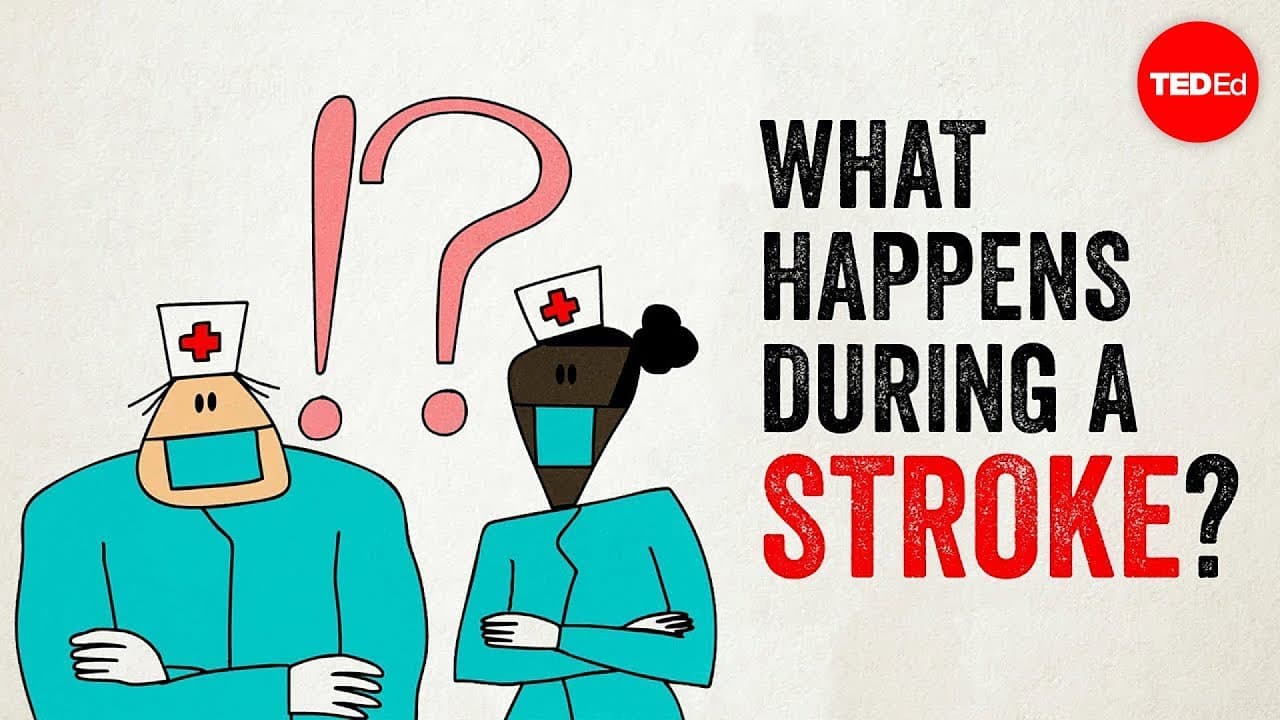
What happens during a stroke? - Vaibhav Goswami
2.9M views
•
February 1, 2018
by
TED-Ed
YouTube video player
What happens during a stroke? - Vaibhav Goswami

TL;DR

Strokes are a leading cause of death and disability due to oxygen deprivation in the brain. Quick medical care is crucial in preventing permanent brain damage.

Transcript

Every two seconds, someone somewhere in the world experiences a stroke. And one out of every six people will have one at some point in their lives. Strokes deprive brain cells of oxygen and are one of the most common causes of death and a leading cause of preventable disability. When someone experiences a stroke, quick medical care is critical,... Read More

Key Insights

  • 🥺 Strokes are a global health concern, occurring every two seconds worldwide and being a leading cause of preventable disability and death.
  • 🥳 Clots are the primary cause of strokes, either forming in the brain's arteries or traveling from other parts of the body.
  • 😒 Quick medical care is crucial in treating strokes, with the use of medication or procedures like endovascular thrombectomy significantly increasing survival chances and reducing long-term damage.
  • 😷 Recognizing the signs of a stroke, such as facial drooping, arm weakness, and slurred speech, is important in seeking immediate medical help.

Install to Summarize YouTube Videos and Get Transcripts

Explore YouTube Video Summarizer or Get YouTube Transcript Extractor

Questions & Answers

Q: What are the two main types of strokes?

The two main types of strokes are hemorrhagic strokes, caused by blood leakage, and ischemic strokes, caused by a blood clot blocking the flow of blood to the brain.

Q: How do clots form in ischemic strokes?

Ischemic strokes occur when a clot blocks a blood vessel supplying the brain. This can happen when there is a sudden change in heart rhythm, allowing the formation of a clot that travels to the brain's arteries.

Q: What are the common effects of a stroke?

The effects of a stroke depend on the area of the brain affected. Common effects include slurred speech, weakness or paralysis on one side of the body, and reduced brain function.

Q: How are strokes treated?

Strokes can be treated using an intravenous medication called Tissue Plasminogen Activator, which can dissolve the blood clot. Alternatively, an endovascular thrombectomy procedure may be performed to physically remove the clot.

Summary & Key Takeaways

  • Strokes are a common and potentially deadly medical emergency, with someone experiencing a stroke every two seconds worldwide.

  • Strokes can be caused by either hemorrhage (blood leakage) or ischemia (clot blockage) that interrupts the blood flow to the brain, leading to the death of brain cells.

  • Quick medical intervention, such as using medication or performing an endovascular thrombectomy, can help restore blood flow and avoid long-term consequences.


Read in Other Languages (beta)

English

Share This Summary 📚

Summarize YouTube Videos and Get Video Transcripts with 1-Click

Download browser extensions on:

Try YouTube Summary with ChatGPT & Claude or YouTube Transcript Generator

Explore More Summaries from TED-Ed 📚
What Is Activation Energy and How Do Enzymes Reduce It? thumbnail
What Is Activation Energy and How Do Enzymes Reduce It?
TED-Ed
What Is the Game Layer and How Will It Influence Us? thumbnail
What Is the Game Layer and How Will It Influence Us?
TED-Ed
The Infinite Hotel Paradox - Jeff Dekofsky thumbnail
The Infinite Hotel Paradox - Jeff Dekofsky
TED-Ed
How to build a fictional world - Kate Messner thumbnail
How to build a fictional world - Kate Messner
TED-Ed
What is schizophrenia? - Anees Bahji thumbnail
What is schizophrenia? - Anees Bahji
TED-Ed
The five major world religions - John Bellaimey thumbnail
The five major world religions - John Bellaimey
TED-Ed

Summarize YouTube Videos and Get Video Transcripts with 1-Click

Download browser extensions on:

Try YouTube Summary with ChatGPT & Claude or YouTube Transcript Generator

Apps & Extensions

  • Chrome Extension
  • Safari Extension
  • Edge Add-ons
  • Firefox Add-ons
  • iOS App
  • Android App

Key Features

  • YouTube Video Summarizer
  • Web & PDF Summarizer
  • Web & PDF Highlighter
  • Chat with PDF
  • Ask AI Clone
  • Audio Transcriber
  • Glasp Reader
  • Kindle Highlight Export
  • Idea Hatch

Integrations

  • Obsidian Plugin
  • Notion Integration
  • Pocket Integration
  • Instapaper Integration
  • Medium Integration
  • Readwise Integration
  • Snipd Integration
  • Hypothesis Integration

More Features

  • APIs
  • MCP Connector
  • Blog & Post
  • Embed Links
  • Image Highlight
  • Personality Test
  • Quote Shots
  • Open Graph Checker

Company

  • About us
  • Our Story
  • Blog
  • Community
  • FAQs
  • Job Board
  • Newsletter
  • Pricing
Terms

•

Privacy

•

Guidelines

© 2026 Glasp Inc. All rights reserved.